

37
able membrane [3–5] and the critical aggregation concentration
(i.e., the lowest concentration of host molecule that forms guest/
host aggregates and clusters) is determined [6–9, 11].
2 Materials
Prepare saturated guest molecule (e.g., drug) in various concentrations of host molecule (e.g., cyclodextrin) using ultrapure water,
purifying deionized water with 18 MΩ-cm at 25 °C and analytical
grade reagents. Add excess amount of guest to aqueous solution of
host molecule (see Note 1). Then heat, sonicate or autoclave suspensions to promote aggregate formation. Continue to add small
amount of the guest until precipitation is observed after equilibration. Equilibrate at room temperature (or some other temperature) for 3–7 days (see Note 2) under constant agitation using, for
example, orbital laboratory shaker. After equilibrium, filtrate the
suspensions through 0.45 μm cellulose acetate or comparable
membrane filter. Analyze the amount of guest permeating through
given membrane by an appropriate analytical method such as highperformance liquid chromatography (HPLC).
Prepare aqueous solutions containing various concentrations of
aggregating molecules (e.g., drug or cyclodextrin) using ultrapure
water and analytical grade reagents. Filtrate through 0.45 μm cellulose acetate or comparable membrane filter and analyze the
amount of compound permeating through membrane by an
appropriate analytical method.
Prepare aqueous solutions containing identical composition as saturated guest/host solution without guest compound or medium
in case of cluster solutions. Filtrate through 0.45 μm cellulose acetate membrane filter or sonicate to deaerate prior to use.
2.1 Tested Solutions
or Donor Solutions:
Saturated Guest/Host
Aggregate Solution
2.2 Self-Aggregate
or Cluster Solutions
2.3 Receptor
Solutions
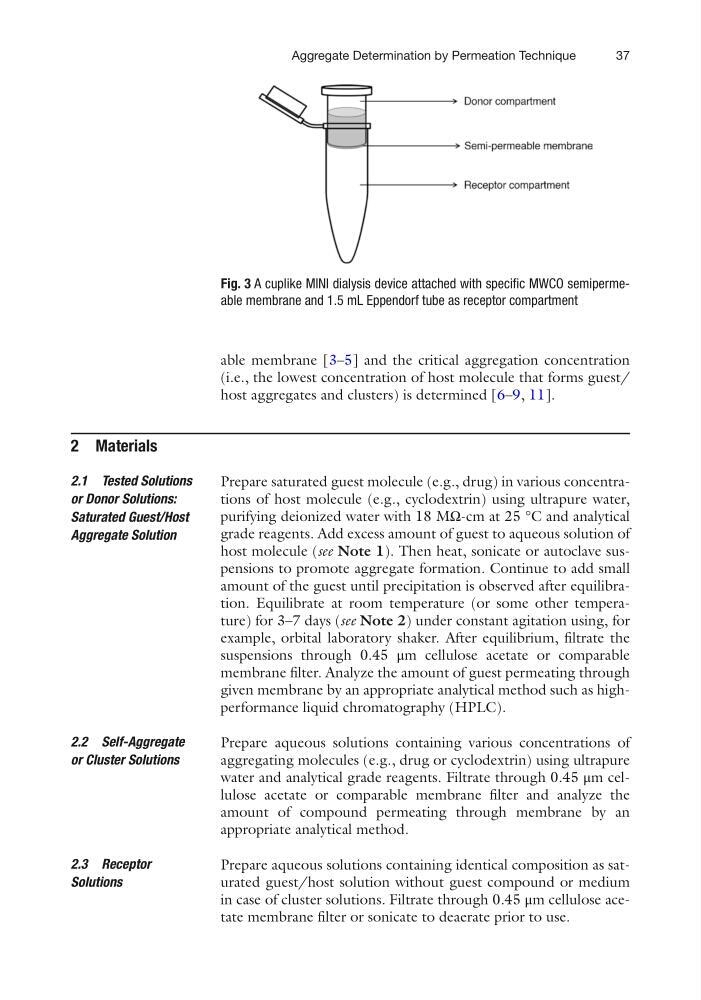
Fig. 3 A cuplike MINI dialysis device attached with specific MWCO semipermeable membrane and 1.5 mL Eppendorf tube as receptor compartment
Aggregate Determination by Permeation Technique
able membrane [3–5] and the critical aggregation concentration
(i.e., the lowest concentration of host molecule that forms guest/
host aggregates and clusters) is determined [6–9, 11].
2 Materials
Prepare saturated guest molecule (e.g., drug) in various concentrations of host molecule (e.g., cyclodextrin) using ultrapure water,
purifying deionized water with 18 MΩ-cm at 25 °C and analytical
grade reagents. Add excess amount of guest to aqueous solution of
host molecule (see Note 1). Then heat, sonicate or autoclave suspensions to promote aggregate formation. Continue to add small
amount of the guest until precipitation is observed after equilibration. Equilibrate at room temperature (or some other temperature) for 3–7 days (see Note 2) under constant agitation using, for
example, orbital laboratory shaker. After equilibrium, filtrate the
suspensions through 0.45 μm cellulose acetate or comparable
membrane filter. Analyze the amount of guest permeating through
given membrane by an appropriate analytical method such as highperformance liquid chromatography (HPLC).
Prepare aqueous solutions containing various concentrations of
aggregating molecules (e.g., drug or cyclodextrin) using ultrapure
water and analytical grade reagents. Filtrate through 0.45 μm cellulose acetate or comparable membrane filter and analyze the
amount of compound permeating through membrane by an
appropriate analytical method.
Prepare aqueous solutions containing identical composition as saturated guest/host solution without guest compound or medium
in case of cluster solutions. Filtrate through 0.45 μm cellulose acetate membrane filter or sonicate to deaerate prior to use.
2.1 Tested Solutions
or Donor Solutions:
Saturated Guest/Host
Aggregate Solution
2.2 Self-Aggregate
or Cluster Solutions
2.3 Receptor
Solutions
Fig. 3 A cuplike MINI dialysis device attached with specific MWCO semipermeable membrane and 1.5 mL Eppendorf tube as receptor compartment
Aggregate Determination by Permeation Technique