

329
affinity to a certain receptor, overexpressed or uniquely expressed
on the surface of the targeted cells. Also, the peptide should possess conjugatable groups (usually lysine and cysteine), but the conjugation site should be carefully selected since it could lead even to
the total abolishment of its binding affinity/selectivity to the certain receptor. The linker should be selected rationally as it plays a
crucial role in the properties of the final assembly, especially in the
stability of the conjugate and the release rate of the drug. Notably,
an improper linker could demolish the overall activity of the
bioconjugate.
Peptides are considered as an inextricable part of the armamentarium against cancer as they display high affinity and selectivity for certain receptors overexpressed on malignant tumor cells,
they possess low inherent toxicity, and they are facile to synthesize.
However, peptides also display a very short half-life during the
blood circulation mainly due to excretion by the kidneys, because
of their small size, and to a lesser extent caused by their susceptibility to proteases. As a result, PDCs display low bioavailability, rendering them inefficient against cancer.
An intriguing approach for extending the half-lives of PDCs is
by conjugating them to nanoparticles [5]. For instance, gold
nanoparticles (AuNPs) have been utilized for enhancing the halflife of certain PDCs from ~10 min, when administered alone, up to
~20 h when administrated as conjugates on AuNPS, while retaining their cytotoxicity profiles [6]. In addition, certain PDCs may
self-assemble into supramolecular structures like nanofibers, nanotubes, and hydrogels [7], offering two functions: They can act as
nanocarriers to selectively deliver the drug to malignant tumor
cells and/or can enhance the pharmacokinetic properties of the
utilized drug [8].
Although the common syntheses of PDCs are conducted in a
rapid and facile manner, various problems may arise. The most
usual ones appear during the synthesis and/or the purification of
the tumor-homing peptide as summarized below:
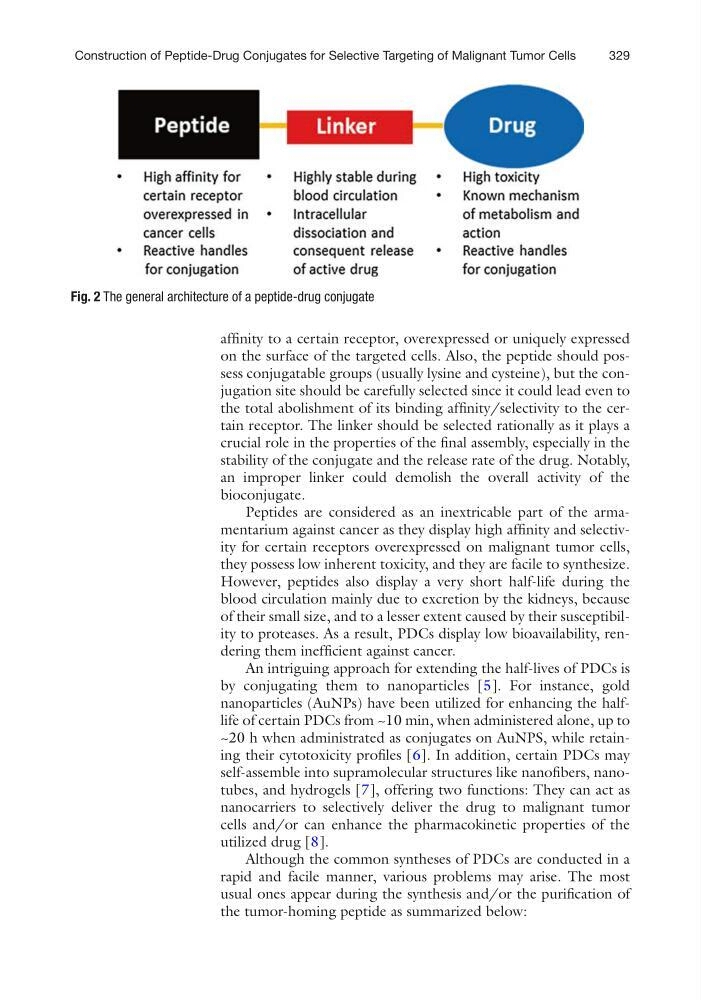
Fig. 2 The general architecture of a peptide-drug conjugate
Construction of Peptide-Drug Conjugates for Selective Targeting of Malignant Tumor Cells
affinity to a certain receptor, overexpressed or uniquely expressed
on the surface of the targeted cells. Also, the peptide should possess conjugatable groups (usually lysine and cysteine), but the conjugation site should be carefully selected since it could lead even to
the total abolishment of its binding affinity/selectivity to the certain receptor. The linker should be selected rationally as it plays a
crucial role in the properties of the final assembly, especially in the
stability of the conjugate and the release rate of the drug. Notably,
an improper linker could demolish the overall activity of the
bioconjugate.
Peptides are considered as an inextricable part of the armamentarium against cancer as they display high affinity and selectivity for certain receptors overexpressed on malignant tumor cells,
they possess low inherent toxicity, and they are facile to synthesize.
However, peptides also display a very short half-life during the
blood circulation mainly due to excretion by the kidneys, because
of their small size, and to a lesser extent caused by their susceptibility to proteases. As a result, PDCs display low bioavailability, rendering them inefficient against cancer.
An intriguing approach for extending the half-lives of PDCs is
by conjugating them to nanoparticles [5]. For instance, gold
nanoparticles (AuNPs) have been utilized for enhancing the halflife of certain PDCs from ~10 min, when administered alone, up to
~20 h when administrated as conjugates on AuNPS, while retaining their cytotoxicity profiles [6]. In addition, certain PDCs may
self-assemble into supramolecular structures like nanofibers, nanotubes, and hydrogels [7], offering two functions: They can act as
nanocarriers to selectively deliver the drug to malignant tumor
cells and/or can enhance the pharmacokinetic properties of the
utilized drug [8].
Although the common syntheses of PDCs are conducted in a
rapid and facile manner, various problems may arise. The most
usual ones appear during the synthesis and/or the purification of
the tumor-homing peptide as summarized below:
Fig. 2 The general architecture of a peptide-drug conjugate
Construction of Peptide-Drug Conjugates for Selective Targeting of Malignant Tumor Cells