

293
1. Insert the solution of electrolyte 0.1 M KCl or BRB buffer into
the electrochemical cell, and in the salt bridge of reference electrode. Fill the cathodic space of the electrolytical cell with
degassed electrolyte solution.
2. Mount all the electrodes on the cell. Record the cyclic voltammogram of the blank solution and of the target compound.
Polish the surface of the working electrode mechanically by
hand with alumina water suspension on DP-Nap prior to every
measurement of CV as mentioned above.
3. Bubble the solution by argon or nitrogen to remove any
remaining oxygen prior to every CV measurement.
4. Install in the cell a working electrode with a large surface (GC
or carbon paste electrode). Bubble again the solution by argon
and stir by an electromagnetic stirrer.
5. Transfer an aliquot of 100 μL of the solution by syringe to a
suitable vial and directly inject in HPLC-DAD or HPLC-MS/
MS systems (see below). The use of rubber septa allows the
transfer of the solution under anoxic conditions.
3.2.2 The Generation
of Oxidation Products by
Potential Controlled
Coulometry (Exhaustive
Electrolysis)
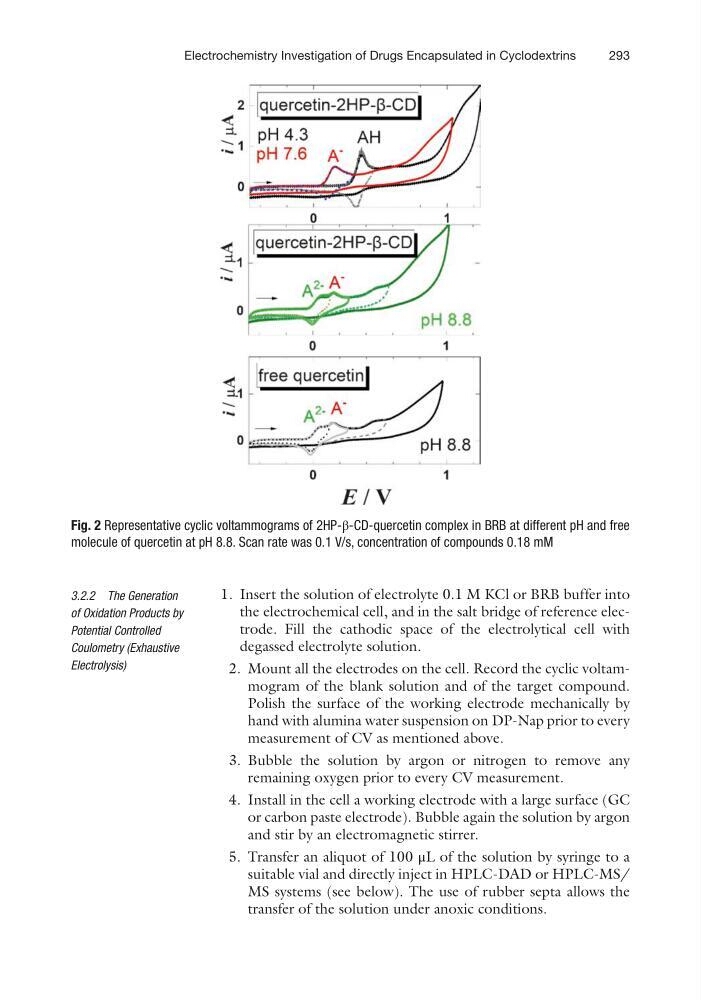
Fig. 2 Representative cyclic voltammograms of 2HP-β-CD-quercetin complex in BRB at different pH and free
molecule of quercetin at pH 8.8. Scan rate was 0.1 V/s, concentration of compounds 0.18 mM
Electrochemistry Investigation of Drugs Encapsulated in Cyclodextrins
1. Insert the solution of electrolyte 0.1 M KCl or BRB buffer into
the electrochemical cell, and in the salt bridge of reference electrode. Fill the cathodic space of the electrolytical cell with
degassed electrolyte solution.
2. Mount all the electrodes on the cell. Record the cyclic voltammogram of the blank solution and of the target compound.
Polish the surface of the working electrode mechanically by
hand with alumina water suspension on DP-Nap prior to every
measurement of CV as mentioned above.
3. Bubble the solution by argon or nitrogen to remove any
remaining oxygen prior to every CV measurement.
4. Install in the cell a working electrode with a large surface (GC
or carbon paste electrode). Bubble again the solution by argon
and stir by an electromagnetic stirrer.
5. Transfer an aliquot of 100 μL of the solution by syringe to a
suitable vial and directly inject in HPLC-DAD or HPLC-MS/
MS systems (see below). The use of rubber septa allows the
transfer of the solution under anoxic conditions.
3.2.2 The Generation
of Oxidation Products by
Potential Controlled
Coulometry (Exhaustive
Electrolysis)
Fig. 2 Representative cyclic voltammograms of 2HP-β-CD-quercetin complex in BRB at different pH and free
molecule of quercetin at pH 8.8. Scan rate was 0.1 V/s, concentration of compounds 0.18 mM
Electrochemistry Investigation of Drugs Encapsulated in Cyclodextrins