

844
M. Muslim et al.
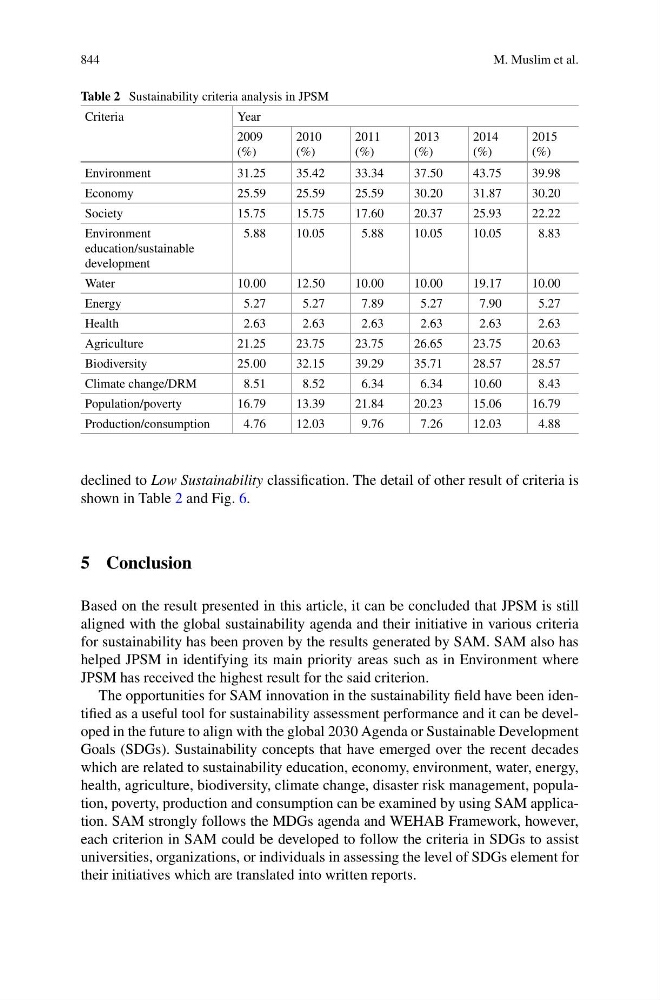
Table 2 Sustainability criteria analysis in JPSM
Criteria
Year
2009
(%)
2010
(%)
2011
(%)
2013
(%)
2014
(%)
2015
(%)
Environment
31.25
35.42
33.34
37.50
43.75
39.98
Economy
25.59
25.59
25.59
30.20
31.87
30.20
Society
15.75
15.75
17.60
20.37
25.93
22.22
Environment
education/sustainable
development
5.88
10.05
5.88
10.05
10.05
8.83
Water
10.00
12.50
10.00
10.00
19.17
10.00
Energy
5.27
5.27
7.89
5.27
7.90
5.27
Health
2.63
2.63
2.63
2.63
2.63
2.63
Agriculture
21.25
23.75
23.75
26.65
23.75
20.63
Biodiversity
25.00
32.15
39.29
35.71
28.57
28.57
Climate change/DRM
8.51
8.52
6.34
6.34
10.60
8.43
Population/poverty
16.79
13.39
21.84
20.23
15.06
16.79
Production/consumption
4.76
12.03
9.76
7.26
12.03
4.88
declined to Low Sustainability classification. The detail of other result of criteria is
shown in Table 2 and Fig. 6.
5 Conclusion
Based on the result presented in this article, it can be concluded that JPSM is still
aligned with the global sustainability agenda and their initiative in various criteria
for sustainability has been proven by the results generated by SAM. SAM also has
helped JPSM in identifying its main priority areas such as in Environment where
JPSM has received the highest result for the said criterion.
The opportunities for SAM innovation in the sustainability field have been identified as a useful tool for sustainability assessment performance and it can be developed in the future to align with the global 2030 Agenda or Sustainable Development
Goals (SDGs). Sustainability concepts that have emerged over the recent decades
which are related to sustainability education, economy, environment, water, energy,
health, agriculture, biodiversity, climate change, disaster risk management, population, poverty, production and consumption can be examined by using SAM application. SAM strongly follows the MDGs agenda and WEHAB Framework, however,
each criterion in SAM could be developed to follow the criteria in SDGs to assist
universities, organizations, or individuals in assessing the level of SDGs element for
their initiatives which are translated into written reports.