

The Role of Green Areas in University Campuses …
55
0
2
4
6
8
10
12
14
0
10
20
30
40
50
60
70
Percentage (%)
Number of respondents
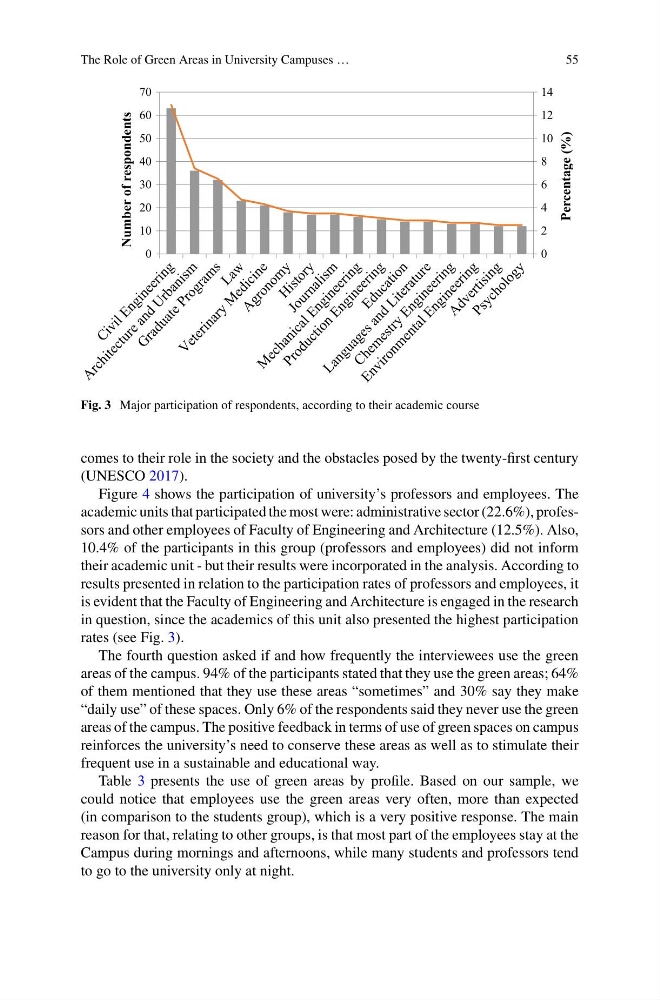
Fig. 3 Major participation of respondents, according to their academic course
comes to their role in the society and the obstacles posed by the twenty-first century
(UNESCO 2017).
Figure 4 shows the participation of university’s professors and employees. The
academic units that participated the most were: administrative sector (22.6%), professors and other employees of Faculty of Engineering and Architecture (12.5%). Also,
10.4% of the participants in this group (professors and employees) did not inform
their academic unit - but their results were incorporated in the analysis. According to
results presented in relation to the participation rates of professors and employees, it
is evident that the Faculty of Engineering and Architecture is engaged in the research
in question, since the academics of this unit also presented the highest participation
rates (see Fig. 3).
The fourth question asked if and how frequently the interviewees use the green
areas of the campus. 94% of the participants stated that they use the green areas; 64%
of them mentioned that they use these areas “sometimes” and 30% say they make
“daily use” of these spaces. Only 6% of the respondents said they never use the green
areas of the campus. The positive feedback in terms of use of green spaces on campus
reinforces the university’s need to conserve these areas as well as to stimulate their
frequent use in a sustainable and educational way.
Table 3 presents the use of green areas by profile. Based on our sample, we
could notice that employees use the green areas very often, more than expected
(in comparison to the students group), which is a very positive response. The main
reason for that, relating to other groups, is that most part of the employees stay at the
Campus during mornings and afternoons, while many students and professors tend
to go to the university only at night.
55
0
2
4
6
8
10
12
14
0
10
20
30
40
50
60
70
Percentage (%)
Number of respondents
Fig. 3 Major participation of respondents, according to their academic course
comes to their role in the society and the obstacles posed by the twenty-first century
(UNESCO 2017).
Figure 4 shows the participation of university’s professors and employees. The
academic units that participated the most were: administrative sector (22.6%), professors and other employees of Faculty of Engineering and Architecture (12.5%). Also,
10.4% of the participants in this group (professors and employees) did not inform
their academic unit - but their results were incorporated in the analysis. According to
results presented in relation to the participation rates of professors and employees, it
is evident that the Faculty of Engineering and Architecture is engaged in the research
in question, since the academics of this unit also presented the highest participation
rates (see Fig. 3).
The fourth question asked if and how frequently the interviewees use the green
areas of the campus. 94% of the participants stated that they use the green areas; 64%
of them mentioned that they use these areas “sometimes” and 30% say they make
“daily use” of these spaces. Only 6% of the respondents said they never use the green
areas of the campus. The positive feedback in terms of use of green spaces on campus
reinforces the university’s need to conserve these areas as well as to stimulate their
frequent use in a sustainable and educational way.
Table 3 presents the use of green areas by profile. Based on our sample, we
could notice that employees use the green areas very often, more than expected
(in comparison to the students group), which is a very positive response. The main
reason for that, relating to other groups, is that most part of the employees stay at the
Campus during mornings and afternoons, while many students and professors tend
to go to the university only at night.