

626
H. Pundt and A. Heilmann
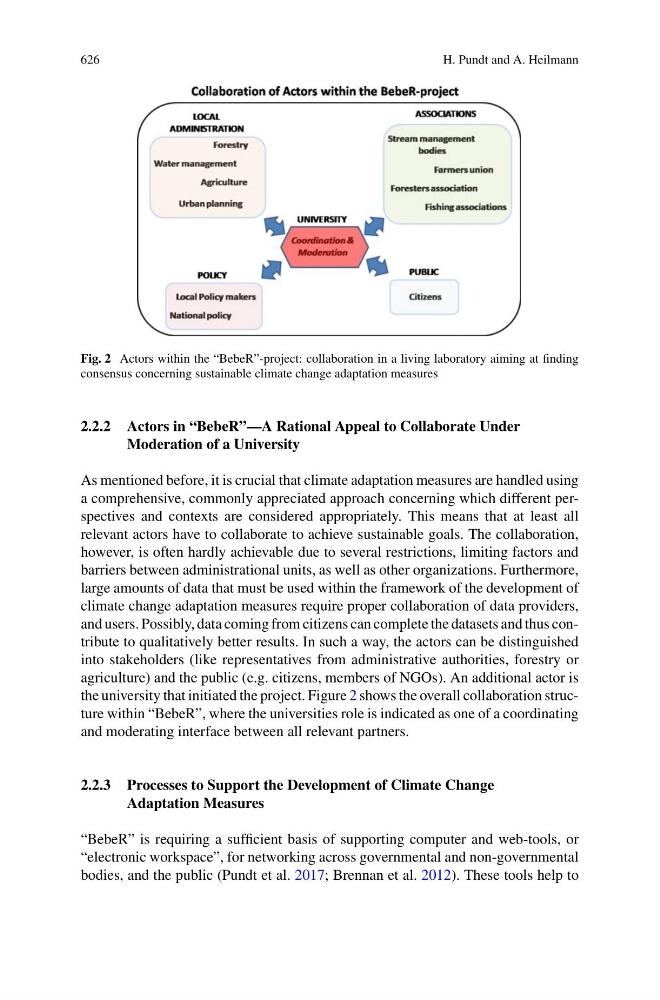
Fig. 2 Actors within the “BebeR”-project: collaboration in a living laboratory aiming at finding
consensus concerning sustainable climate change adaptation measures
2.2.2 Actors in “BebeR”—A Rational Appeal to Collaborate Under
Moderation of a University
As mentioned before, it is crucial that climate adaptation measures are handled using
a comprehensive, commonly appreciated approach concerning which different perspectives and contexts are considered appropriately. This means that at least all
relevant actors have to collaborate to achieve sustainable goals. The collaboration,
however, is often hardly achievable due to several restrictions, limiting factors and
barriers between administrational units, as well as other organizations. Furthermore,
large amounts of data that must be used within the framework of the development of
climate change adaptation measures require proper collaboration of data providers,
and users. Possibly, data coming from citizens can complete the datasets and thus contribute to qualitatively better results. In such a way, the actors can be distinguished
into stakeholders (like representatives from administrative authorities, forestry or
agriculture) and the public (e.g. citizens, members of NGOs). An additional actor is
the university that initiated the project. Figure 2 shows the overall collaboration structure within “BebeR”, where the universities role is indicated as one of a coordinating
and moderating interface between all relevant partners.
2.2.3 Processes to Support the Development of Climate Change
Adaptation Measures
“BebeR” is requiring a sufficient basis of supporting computer and web-tools, or
“electronic workspace”, for networking across governmental and non-governmental
bodies, and the public (Pundt et al. 2017; Brennan et al. 2012). These tools help to
H. Pundt and A. Heilmann
Fig. 2 Actors within the “BebeR”-project: collaboration in a living laboratory aiming at finding
consensus concerning sustainable climate change adaptation measures
2.2.2 Actors in “BebeR”—A Rational Appeal to Collaborate Under
Moderation of a University
As mentioned before, it is crucial that climate adaptation measures are handled using
a comprehensive, commonly appreciated approach concerning which different perspectives and contexts are considered appropriately. This means that at least all
relevant actors have to collaborate to achieve sustainable goals. The collaboration,
however, is often hardly achievable due to several restrictions, limiting factors and
barriers between administrational units, as well as other organizations. Furthermore,
large amounts of data that must be used within the framework of the development of
climate change adaptation measures require proper collaboration of data providers,
and users. Possibly, data coming from citizens can complete the datasets and thus contribute to qualitatively better results. In such a way, the actors can be distinguished
into stakeholders (like representatives from administrative authorities, forestry or
agriculture) and the public (e.g. citizens, members of NGOs). An additional actor is
the university that initiated the project. Figure 2 shows the overall collaboration structure within “BebeR”, where the universities role is indicated as one of a coordinating
and moderating interface between all relevant partners.
2.2.3 Processes to Support the Development of Climate Change
Adaptation Measures
“BebeR” is requiring a sufficient basis of supporting computer and web-tools, or
“electronic workspace”, for networking across governmental and non-governmental
bodies, and the public (Pundt et al. 2017; Brennan et al. 2012). These tools help to