

572
S. Y. Teh and H. L. Koh
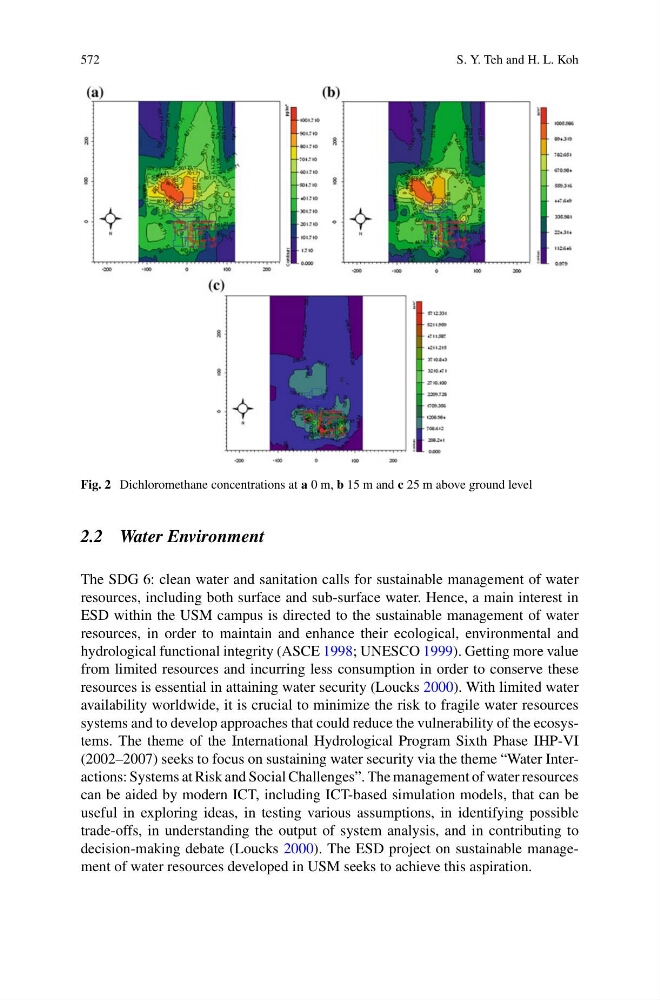
Fig. 2 Dichloromethane concentrations at a 0 m, b 15 m and c 25 m above ground level
2.2 Water Environment
The SDG 6: clean water and sanitation calls for sustainable management of water
resources, including both surface and sub-surface water. Hence, a main interest in
ESD within the USM campus is directed to the sustainable management of water
resources, in order to maintain and enhance their ecological, environmental and
hydrological functional integrity (ASCE 1998; UNESCO 1999). Getting more value
from limited resources and incurring less consumption in order to conserve these
resources is essential in attaining water security (Loucks 2000). With limited water
availability worldwide, it is crucial to minimize the risk to fragile water resources
systems and to develop approaches that could reduce the vulnerability of the ecosystems. The theme of the International Hydrological Program Sixth Phase IHP-VI
(2002–2007) seeks to focus on sustaining water security via the theme “Water Interactions: Systems at Risk and Social Challenges”. The management of water resources
can be aided by modern ICT, including ICT-based simulation models, that can be
useful in exploring ideas, in testing various assumptions, in identifying possible
trade-offs, in understanding the output of system analysis, and in contributing to
decision-making debate (Loucks 2000). The ESD project on sustainable management of water resources developed in USM seeks to achieve this aspiration.
S. Y. Teh and H. L. Koh
Fig. 2 Dichloromethane concentrations at a 0 m, b 15 m and c 25 m above ground level
2.2 Water Environment
The SDG 6: clean water and sanitation calls for sustainable management of water
resources, including both surface and sub-surface water. Hence, a main interest in
ESD within the USM campus is directed to the sustainable management of water
resources, in order to maintain and enhance their ecological, environmental and
hydrological functional integrity (ASCE 1998; UNESCO 1999). Getting more value
from limited resources and incurring less consumption in order to conserve these
resources is essential in attaining water security (Loucks 2000). With limited water
availability worldwide, it is crucial to minimize the risk to fragile water resources
systems and to develop approaches that could reduce the vulnerability of the ecosystems. The theme of the International Hydrological Program Sixth Phase IHP-VI
(2002–2007) seeks to focus on sustaining water security via the theme “Water Interactions: Systems at Risk and Social Challenges”. The management of water resources
can be aided by modern ICT, including ICT-based simulation models, that can be
useful in exploring ideas, in testing various assumptions, in identifying possible
trade-offs, in understanding the output of system analysis, and in contributing to
decision-making debate (Loucks 2000). The ESD project on sustainable management of water resources developed in USM seeks to achieve this aspiration.