

Mainstreaming Education for Sustainable Development …
551
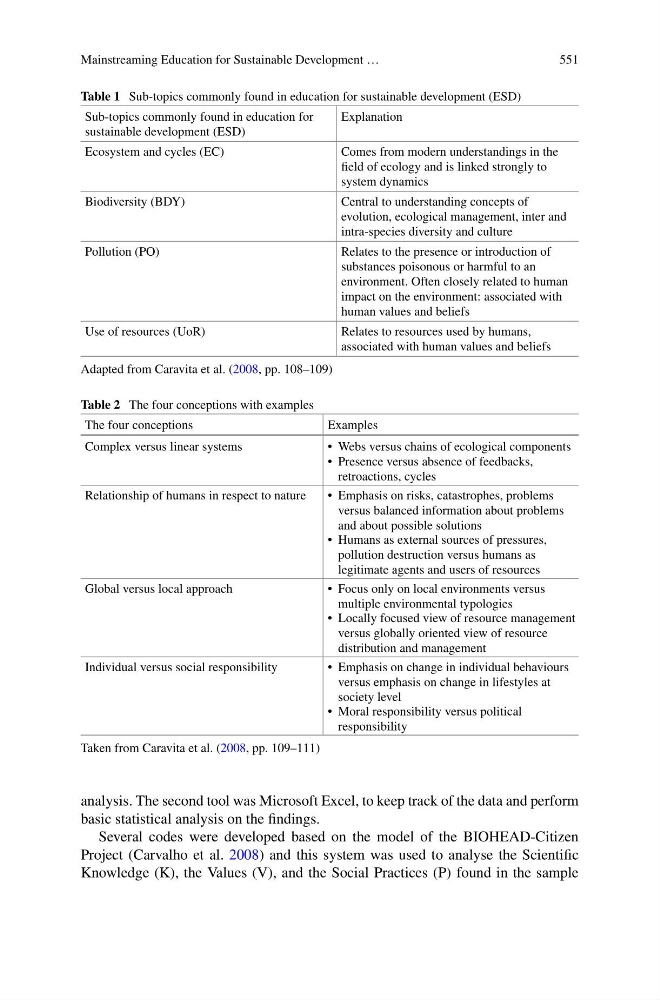
Table 1 Sub-topics commonly found in education for sustainable development (ESD)
Sub-topics commonly found in education for
sustainable development (ESD)
Explanation
Ecosystem and cycles (EC)
Comes from modern understandings in the
field of ecology and is linked strongly to
system dynamics
Biodiversity (BDY)
Central to understanding concepts of
evolution, ecological management, inter and
intra-species diversity and culture
Pollution (PO)
Relates to the presence or introduction of
substances poisonous or harmful to an
environment. Often closely related to human
impact on the environment: associated with
human values and beliefs
Use of resources (UoR)
Relates to resources used by humans,
associated with human values and beliefs
Adapted from Caravita et al. (2008, pp. 108–109)
Table 2 The four conceptions with examples
The four conceptions
Examples
Complex versus linear systems
• Webs versus chains of ecological components
• Presence versus absence of feedbacks,
retroactions, cycles
Relationship of humans in respect to nature
• Emphasis on risks, catastrophes, problems
versus balanced information about problems
and about possible solutions
• Humans as external sources of pressures,
pollution destruction versus humans as
legitimate agents and users of resources
Global versus local approach
• Focus only on local environments versus
multiple environmental typologies
• Locally focused view of resource management
versus globally oriented view of resource
distribution and management
Individual versus social responsibility
• Emphasis on change in individual behaviours
versus emphasis on change in lifestyles at
society level
• Moral responsibility versus political
responsibility
Taken from Caravita et al. (2008, pp. 109–111)
analysis. The second tool was Microsoft Excel, to keep track of the data and perform
basic statistical analysis on the findings.
Several codes were developed based on the model of the BIOHEAD-Citizen
Project (Carvalho et al. 2008) and this system was used to analyse the Scientific
Knowledge (K), the Values (V), and the Social Practices (P) found in the sample
551
Table 1 Sub-topics commonly found in education for sustainable development (ESD)
Sub-topics commonly found in education for
sustainable development (ESD)
Explanation
Ecosystem and cycles (EC)
Comes from modern understandings in the
field of ecology and is linked strongly to
system dynamics
Biodiversity (BDY)
Central to understanding concepts of
evolution, ecological management, inter and
intra-species diversity and culture
Pollution (PO)
Relates to the presence or introduction of
substances poisonous or harmful to an
environment. Often closely related to human
impact on the environment: associated with
human values and beliefs
Use of resources (UoR)
Relates to resources used by humans,
associated with human values and beliefs
Adapted from Caravita et al. (2008, pp. 108–109)
Table 2 The four conceptions with examples
The four conceptions
Examples
Complex versus linear systems
• Webs versus chains of ecological components
• Presence versus absence of feedbacks,
retroactions, cycles
Relationship of humans in respect to nature
• Emphasis on risks, catastrophes, problems
versus balanced information about problems
and about possible solutions
• Humans as external sources of pressures,
pollution destruction versus humans as
legitimate agents and users of resources
Global versus local approach
• Focus only on local environments versus
multiple environmental typologies
• Locally focused view of resource management
versus globally oriented view of resource
distribution and management
Individual versus social responsibility
• Emphasis on change in individual behaviours
versus emphasis on change in lifestyles at
society level
• Moral responsibility versus political
responsibility
Taken from Caravita et al. (2008, pp. 109–111)
analysis. The second tool was Microsoft Excel, to keep track of the data and perform
basic statistical analysis on the findings.
Several codes were developed based on the model of the BIOHEAD-Citizen
Project (Carvalho et al. 2008) and this system was used to analyse the Scientific
Knowledge (K), the Values (V), and the Social Practices (P) found in the sample