

Measuring the Effectiveness of Sustainability-Related Course …
539
The course content
is clear and
understandable,
(8.8%)
The course is easy
to score, (1.2%)
Peer pressure,
(0.7%)
Self-Interest and
awareness on
sustainabile
development,
(56.8%)
To meet university
course requirement,
(19.4%)
To cultivate the
skills needed to
develop
sustainabilityoriented program,
(13%)
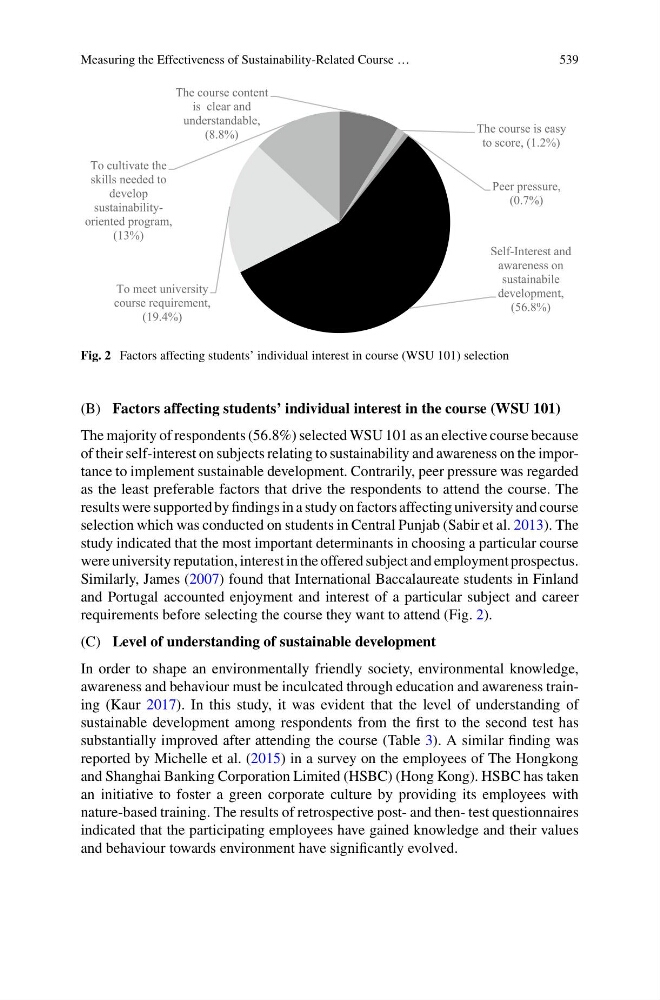
Fig. 2 Factors affecting students’ individual interest in course (WSU 101) selection
(B) Factors affecting students’ individual interest in the course (WSU 101)
The majority of respondents (56.8%) selected WSU 101 as an elective course because
of their self-interest on subjects relating to sustainability and awareness on the importance to implement sustainable development. Contrarily, peer pressure was regarded
as the least preferable factors that drive the respondents to attend the course. The
results were supported by findings in a study on factors affecting university and course
selection which was conducted on students in Central Punjab (Sabir et al. 2013). The
study indicated that the most important determinants in choosing a particular course
were university reputation, interest in the offered subject and employment prospectus.
Similarly, James (2007) found that International Baccalaureate students in Finland
and Portugal accounted enjoyment and interest of a particular subject and career
requirements before selecting the course they want to attend (Fig. 2).
(C) Level of understanding of sustainable development
In order to shape an environmentally friendly society, environmental knowledge,
awareness and behaviour must be inculcated through education and awareness training (Kaur 2017). In this study, it was evident that the level of understanding of
sustainable development among respondents from the first to the second test has
substantially improved after attending the course (Table 3). A similar finding was
reported by Michelle et al. (2015) in a survey on the employees of The Hongkong
and Shanghai Banking Corporation Limited (HSBC) (Hong Kong). HSBC has taken
an initiative to foster a green corporate culture by providing its employees with
nature-based training. The results of retrospective post- and then- test questionnaires
indicated that the participating employees have gained knowledge and their values
and behaviour towards environment have significantly evolved.
539
The course content
is clear and
understandable,
(8.8%)
The course is easy
to score, (1.2%)
Peer pressure,
(0.7%)
Self-Interest and
awareness on
sustainabile
development,
(56.8%)
To meet university
course requirement,
(19.4%)
To cultivate the
skills needed to
develop
sustainabilityoriented program,
(13%)
Fig. 2 Factors affecting students’ individual interest in course (WSU 101) selection
(B) Factors affecting students’ individual interest in the course (WSU 101)
The majority of respondents (56.8%) selected WSU 101 as an elective course because
of their self-interest on subjects relating to sustainability and awareness on the importance to implement sustainable development. Contrarily, peer pressure was regarded
as the least preferable factors that drive the respondents to attend the course. The
results were supported by findings in a study on factors affecting university and course
selection which was conducted on students in Central Punjab (Sabir et al. 2013). The
study indicated that the most important determinants in choosing a particular course
were university reputation, interest in the offered subject and employment prospectus.
Similarly, James (2007) found that International Baccalaureate students in Finland
and Portugal accounted enjoyment and interest of a particular subject and career
requirements before selecting the course they want to attend (Fig. 2).
(C) Level of understanding of sustainable development
In order to shape an environmentally friendly society, environmental knowledge,
awareness and behaviour must be inculcated through education and awareness training (Kaur 2017). In this study, it was evident that the level of understanding of
sustainable development among respondents from the first to the second test has
substantially improved after attending the course (Table 3). A similar finding was
reported by Michelle et al. (2015) in a survey on the employees of The Hongkong
and Shanghai Banking Corporation Limited (HSBC) (Hong Kong). HSBC has taken
an initiative to foster a green corporate culture by providing its employees with
nature-based training. The results of retrospective post- and then- test questionnaires
indicated that the participating employees have gained knowledge and their values
and behaviour towards environment have significantly evolved.