

Integrating Sustainability within University Sustainability …
503
and academic-support strategies, which are intended to address the distinct learning needs, interests, aspirations, or cultural backgrounds of individuals who need a
variety of educational methods with different learning styles, abilities (physical and
non-physical), types of activities, the students’ level of understanding or knowledge,
multiple intelligences, and even divergent academic and non-academic interests of
the students (Abdul Razak et al. 2008; Student-Centered Learning 2014). The curricula must be flexible, encouraging social learning collaborations and suitable for
transdisciplinary approach for disseminating skills and tools, particularly that can
change individual’s lifestyle towards sustainability such as problem-based learning
(PBL) and outcome-based education (OBE). Furthermore, alternative assessments
are methods in implementing student-centred curricula using portfolios, rubrics,
matrices, peer assessments and personal reflections, which will take into account
each student’s learning style, multiple intelligence, analytical capabilities and interests. On the other hand, market relevance is vital to prevent students from being
jobless. The theories and knowledge they have obtained during their varsity life
must be in line with the need and requirements of practical and industry market
(Abdul Razak et al. 2008).
E-learning which embraces infostructure, new markets, new applications, open
access, social networking and video-conferencing categorised as technologyenhanced learning (TEL) that is getting wider acceptability as it enhances learning
experience for the digital natives familiar with podcasting, blogging, massively multiplayer online role-playing games (MMORPG), electronic forums, multitasking,
instant gratification, and so on (Higher Education Academy 2015). Then, nurturing
skills or competencies are necessarily to be disseminated by capable and acquire all
needed skills lecturers to nurture learning and relinquish their role in mentoring and
facilitating students.
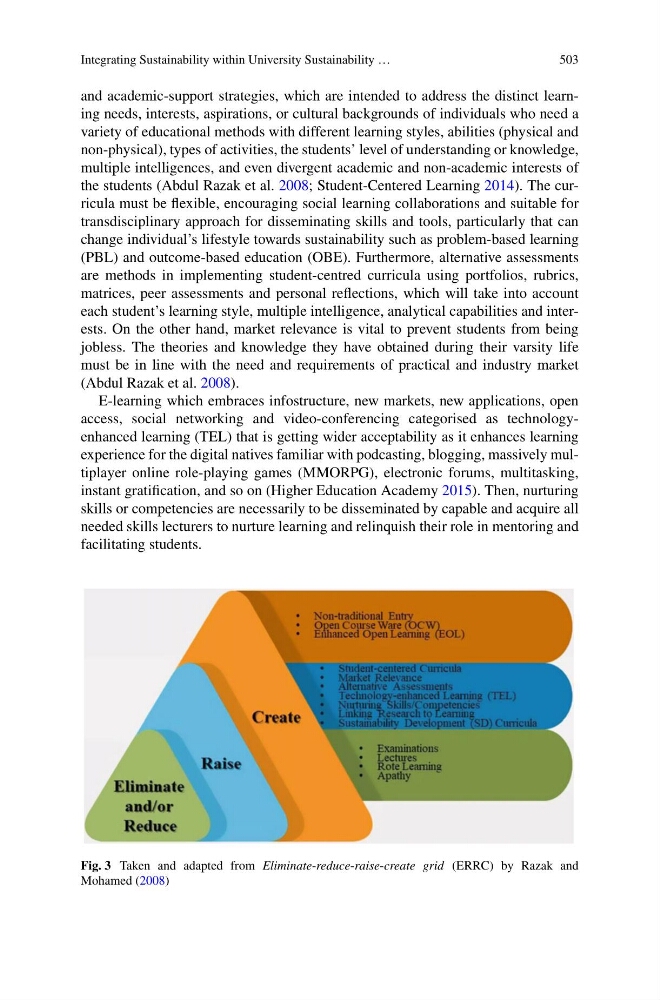
Fig. 3 Taken and adapted from Eliminate-reduce-raise-create grid (ERRC) by Razak and
Mohamed (2008)
503
and academic-support strategies, which are intended to address the distinct learning needs, interests, aspirations, or cultural backgrounds of individuals who need a
variety of educational methods with different learning styles, abilities (physical and
non-physical), types of activities, the students’ level of understanding or knowledge,
multiple intelligences, and even divergent academic and non-academic interests of
the students (Abdul Razak et al. 2008; Student-Centered Learning 2014). The curricula must be flexible, encouraging social learning collaborations and suitable for
transdisciplinary approach for disseminating skills and tools, particularly that can
change individual’s lifestyle towards sustainability such as problem-based learning
(PBL) and outcome-based education (OBE). Furthermore, alternative assessments
are methods in implementing student-centred curricula using portfolios, rubrics,
matrices, peer assessments and personal reflections, which will take into account
each student’s learning style, multiple intelligence, analytical capabilities and interests. On the other hand, market relevance is vital to prevent students from being
jobless. The theories and knowledge they have obtained during their varsity life
must be in line with the need and requirements of practical and industry market
(Abdul Razak et al. 2008).
E-learning which embraces infostructure, new markets, new applications, open
access, social networking and video-conferencing categorised as technologyenhanced learning (TEL) that is getting wider acceptability as it enhances learning
experience for the digital natives familiar with podcasting, blogging, massively multiplayer online role-playing games (MMORPG), electronic forums, multitasking,
instant gratification, and so on (Higher Education Academy 2015). Then, nurturing
skills or competencies are necessarily to be disseminated by capable and acquire all
needed skills lecturers to nurture learning and relinquish their role in mentoring and
facilitating students.
Fig. 3 Taken and adapted from Eliminate-reduce-raise-create grid (ERRC) by Razak and
Mohamed (2008)