

108
J. M. P. Ribeiro et al.
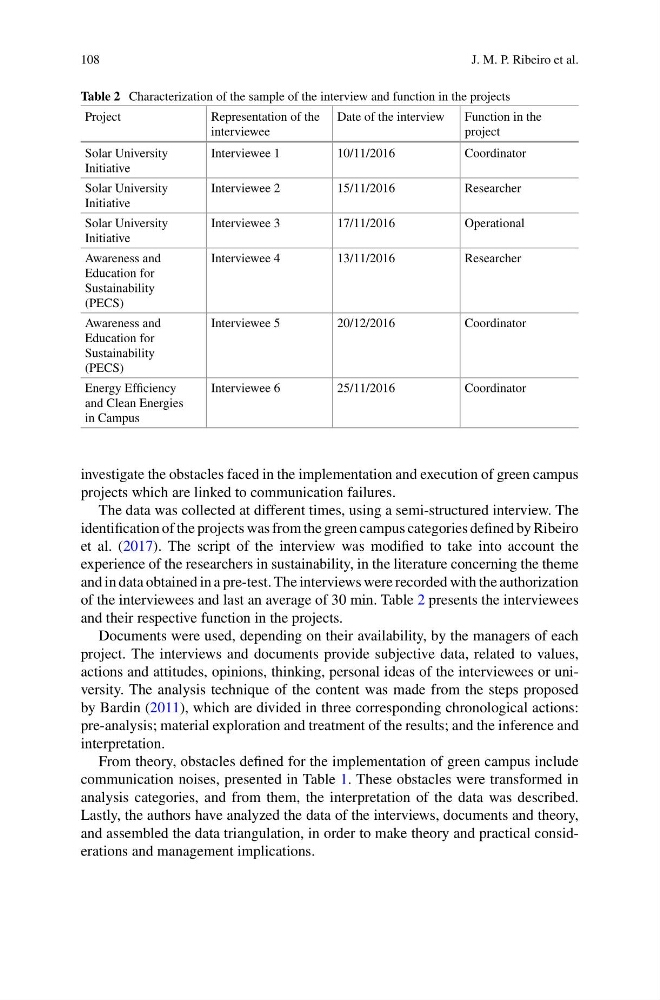
Table 2 Characterization of the sample of the interview and function in the projects
Project
Representation of the
interviewee
Date of the interview
Function in the
project
Solar University
Initiative
Interviewee 1
10/11/2016
Coordinator
Solar University
Initiative
Interviewee 2
15/11/2016
Researcher
Solar University
Initiative
Interviewee 3
17/11/2016
Operational
Awareness and
Education for
Sustainability
(PECS)
Interviewee 4
13/11/2016
Researcher
Awareness and
Education for
Sustainability
(PECS)
Interviewee 5
20/12/2016
Coordinator
Energy Efficiency
and Clean Energies
in Campus
Interviewee 6
25/11/2016
Coordinator
investigate the obstacles faced in the implementation and execution of green campus
projects which are linked to communication failures.
The data was collected at different times, using a semi-structured interview. The
identification of the projects was from the green campus categories defined by Ribeiro
et al. (2017). The script of the interview was modified to take into account the
experience of the researchers in sustainability, in the literature concerning the theme
and in data obtained in a pre-test. The interviews were recorded with the authorization
of the interviewees and last an average of 30 min. Table 2 presents the interviewees
and their respective function in the projects.
Documents were used, depending on their availability, by the managers of each
project. The interviews and documents provide subjective data, related to values,
actions and attitudes, opinions, thinking, personal ideas of the interviewees or university. The analysis technique of the content was made from the steps proposed
by Bardin (2011), which are divided in three corresponding chronological actions:
pre-analysis; material exploration and treatment of the results; and the inference and
interpretation.
From theory, obstacles defined for the implementation of green campus include
communication noises, presented in Table 1. These obstacles were transformed in
analysis categories, and from them, the interpretation of the data was described.
Lastly, the authors have analyzed the data of the interviews, documents and theory,
and assembled the data triangulation, in order to make theory and practical considerations and management implications.
J. M. P. Ribeiro et al.
Table 2 Characterization of the sample of the interview and function in the projects
Project
Representation of the
interviewee
Date of the interview
Function in the
project
Solar University
Initiative
Interviewee 1
10/11/2016
Coordinator
Solar University
Initiative
Interviewee 2
15/11/2016
Researcher
Solar University
Initiative
Interviewee 3
17/11/2016
Operational
Awareness and
Education for
Sustainability
(PECS)
Interviewee 4
13/11/2016
Researcher
Awareness and
Education for
Sustainability
(PECS)
Interviewee 5
20/12/2016
Coordinator
Energy Efficiency
and Clean Energies
in Campus
Interviewee 6
25/11/2016
Coordinator
investigate the obstacles faced in the implementation and execution of green campus
projects which are linked to communication failures.
The data was collected at different times, using a semi-structured interview. The
identification of the projects was from the green campus categories defined by Ribeiro
et al. (2017). The script of the interview was modified to take into account the
experience of the researchers in sustainability, in the literature concerning the theme
and in data obtained in a pre-test. The interviews were recorded with the authorization
of the interviewees and last an average of 30 min. Table 2 presents the interviewees
and their respective function in the projects.
Documents were used, depending on their availability, by the managers of each
project. The interviews and documents provide subjective data, related to values,
actions and attitudes, opinions, thinking, personal ideas of the interviewees or university. The analysis technique of the content was made from the steps proposed
by Bardin (2011), which are divided in three corresponding chronological actions:
pre-analysis; material exploration and treatment of the results; and the inference and
interpretation.
From theory, obstacles defined for the implementation of green campus include
communication noises, presented in Table 1. These obstacles were transformed in
analysis categories, and from them, the interpretation of the data was described.
Lastly, the authors have analyzed the data of the interviews, documents and theory,
and assembled the data triangulation, in order to make theory and practical considerations and management implications.