

220
A. K. Yadav and S. Dash
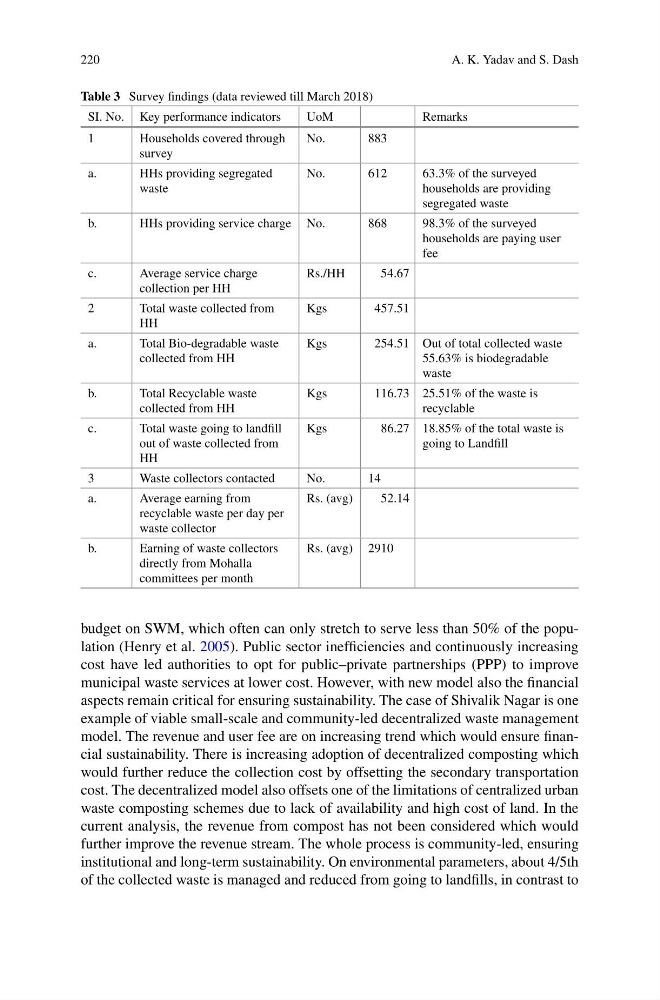
Table 3 Survey findings (data reviewed till March 2018)
SI. No. Key performance indicators
UoM
Remarks
1
Households covered through
survey
No.
883
a.
HHs providing segregated
waste
No.
612
63.3% of the surveyed
households are providing
segregated waste
b.
HHs providing service charge No.
868
98.3% of the surveyed
households are paying user
fee
c.
Average service charge
collection per HH
Rs./HH
54.67
2
Total waste collected from
HH
Kgs
457.51
a.
Total Bio-degradable waste
collected from HH
Kgs
254.51 Out of total collected waste
55.63% is biodegradable
waste
b.
Total Recyclable waste
collected from HH
Kgs
116.73 25.51% of the waste is
recyclable
c.
Total waste going to landfill
out of waste collected from
HH
Kgs
86.27 18.85% of the total waste is
going to Landfill
3
Waste collectors contacted
No.
14
a.
Average earning from
recyclable waste per day per
waste collector
Rs. (avg)
52.14
b.
Earning of waste collectors
directly from Mohalla
committees per month
Rs. (avg) 2910
budget on SWM, which often can only stretch to serve less than 50% of the population (Henry et al. 2005). Public sector inefficiencies and continuously increasing
cost have led authorities to opt for public–private partnerships (PPP) to improve
municipal waste services at lower cost. However, with new model also the financial
aspects remain critical for ensuring sustainability. The case of Shivalik Nagar is one
example of viable small-scale and community-led decentralized waste management
model. The revenue and user fee are on increasing trend which would ensure financial sustainability. There is increasing adoption of decentralized composting which
would further reduce the collection cost by offsetting the secondary transportation
cost. The decentralized model also offsets one of the limitations of centralized urban
waste composting schemes due to lack of availability and high cost of land. In the
current analysis, the revenue from compost has not been considered which would
further improve the revenue stream. The whole process is community-led, ensuring
institutional and long-term sustainability. On environmental parameters, about 4/5th
of the collected waste is managed and reduced from going to landfills, in contrast to
A. K. Yadav and S. Dash
Table 3 Survey findings (data reviewed till March 2018)
SI. No. Key performance indicators
UoM
Remarks
1
Households covered through
survey
No.
883
a.
HHs providing segregated
waste
No.
612
63.3% of the surveyed
households are providing
segregated waste
b.
HHs providing service charge No.
868
98.3% of the surveyed
households are paying user
fee
c.
Average service charge
collection per HH
Rs./HH
54.67
2
Total waste collected from
HH
Kgs
457.51
a.
Total Bio-degradable waste
collected from HH
Kgs
254.51 Out of total collected waste
55.63% is biodegradable
waste
b.
Total Recyclable waste
collected from HH
Kgs
116.73 25.51% of the waste is
recyclable
c.
Total waste going to landfill
out of waste collected from
HH
Kgs
86.27 18.85% of the total waste is
going to Landfill
3
Waste collectors contacted
No.
14
a.
Average earning from
recyclable waste per day per
waste collector
Rs. (avg)
52.14
b.
Earning of waste collectors
directly from Mohalla
committees per month
Rs. (avg) 2910
budget on SWM, which often can only stretch to serve less than 50% of the population (Henry et al. 2005). Public sector inefficiencies and continuously increasing
cost have led authorities to opt for public–private partnerships (PPP) to improve
municipal waste services at lower cost. However, with new model also the financial
aspects remain critical for ensuring sustainability. The case of Shivalik Nagar is one
example of viable small-scale and community-led decentralized waste management
model. The revenue and user fee are on increasing trend which would ensure financial sustainability. There is increasing adoption of decentralized composting which
would further reduce the collection cost by offsetting the secondary transportation
cost. The decentralized model also offsets one of the limitations of centralized urban
waste composting schemes due to lack of availability and high cost of land. In the
current analysis, the revenue from compost has not been considered which would
further improve the revenue stream. The whole process is community-led, ensuring
institutional and long-term sustainability. On environmental parameters, about 4/5th
of the collected waste is managed and reduced from going to landfills, in contrast to