

194
A. Khatoon
0
50
100
Bimdatta
Birendranagar
Buddhabhumi
Chandrapur
Damak
Dullu
Gorkha
Hetauda
Janakpur
Kathmandu
Pokhara
Mahalaxmi
Shikhar
Solududhkunda
Suryabinak
Tansen
Total no. of response for Nondegradable waste burning
Total no. of response for
Degradable waste burning
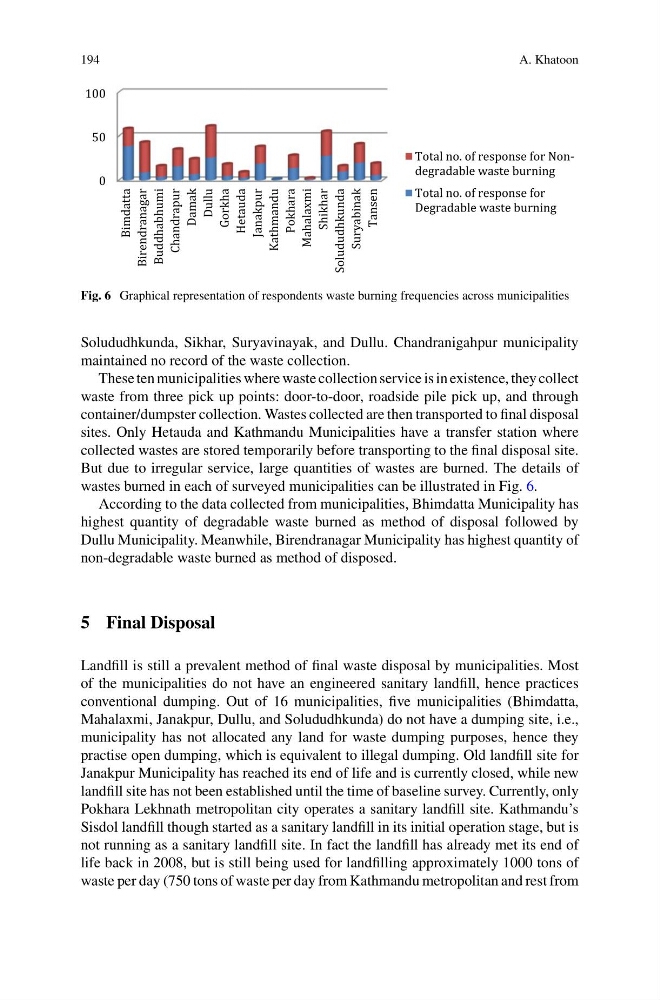
Fig. 6 Graphical representation of respondents waste burning frequencies across municipalities
Solududhkunda, Sikhar, Suryavinayak, and Dullu. Chandranigahpur municipality
maintained no record of the waste collection.
These ten municipalities where waste collection service is in existence, they collect
waste from three pick up points: door-to-door, roadside pile pick up, and through
container/dumpster collection. Wastes collected are then transported to final disposal
sites. Only Hetauda and Kathmandu Municipalities have a transfer station where
collected wastes are stored temporarily before transporting to the final disposal site.
But due to irregular service, large quantities of wastes are burned. The details of
wastes burned in each of surveyed municipalities can be illustrated in Fig. 6.
According to the data collected from municipalities, Bhimdatta Municipality has
highest quantity of degradable waste burned as method of disposal followed by
Dullu Municipality. Meanwhile, Birendranagar Municipality has highest quantity of
non-degradable waste burned as method of disposed.
5 Final Disposal
Landfill is still a prevalent method of final waste disposal by municipalities. Most
of the municipalities do not have an engineered sanitary landfill, hence practices
conventional dumping. Out of 16 municipalities, five municipalities (Bhimdatta,
Mahalaxmi, Janakpur, Dullu, and Solududhkunda) do not have a dumping site, i.e.,
municipality has not allocated any land for waste dumping purposes, hence they
practise open dumping, which is equivalent to illegal dumping. Old landfill site for
Janakpur Municipality has reached its end of life and is currently closed, while new
landfill site has not been established until the time of baseline survey. Currently, only
Pokhara Lekhnath metropolitan city operates a sanitary landfill site. Kathmandu’s
Sisdol landfill though started as a sanitary landfill in its initial operation stage, but is
not running as a sanitary landfill site. In fact the landfill has already met its end of
life back in 2008, but is still being used for landfilling approximately 1000 tons of
waste per day (750 tons of waste per day from Kathmandu metropolitan and rest from
A. Khatoon
0
50
100
Bimdatta
Birendranagar
Buddhabhumi
Chandrapur
Damak
Dullu
Gorkha
Hetauda
Janakpur
Kathmandu
Pokhara
Mahalaxmi
Shikhar
Solududhkunda
Suryabinak
Tansen
Total no. of response for Nondegradable waste burning
Total no. of response for
Degradable waste burning
Fig. 6 Graphical representation of respondents waste burning frequencies across municipalities
Solududhkunda, Sikhar, Suryavinayak, and Dullu. Chandranigahpur municipality
maintained no record of the waste collection.
These ten municipalities where waste collection service is in existence, they collect
waste from three pick up points: door-to-door, roadside pile pick up, and through
container/dumpster collection. Wastes collected are then transported to final disposal
sites. Only Hetauda and Kathmandu Municipalities have a transfer station where
collected wastes are stored temporarily before transporting to the final disposal site.
But due to irregular service, large quantities of wastes are burned. The details of
wastes burned in each of surveyed municipalities can be illustrated in Fig. 6.
According to the data collected from municipalities, Bhimdatta Municipality has
highest quantity of degradable waste burned as method of disposal followed by
Dullu Municipality. Meanwhile, Birendranagar Municipality has highest quantity of
non-degradable waste burned as method of disposed.
5 Final Disposal
Landfill is still a prevalent method of final waste disposal by municipalities. Most
of the municipalities do not have an engineered sanitary landfill, hence practices
conventional dumping. Out of 16 municipalities, five municipalities (Bhimdatta,
Mahalaxmi, Janakpur, Dullu, and Solududhkunda) do not have a dumping site, i.e.,
municipality has not allocated any land for waste dumping purposes, hence they
practise open dumping, which is equivalent to illegal dumping. Old landfill site for
Janakpur Municipality has reached its end of life and is currently closed, while new
landfill site has not been established until the time of baseline survey. Currently, only
Pokhara Lekhnath metropolitan city operates a sanitary landfill site. Kathmandu’s
Sisdol landfill though started as a sanitary landfill in its initial operation stage, but is
not running as a sanitary landfill site. In fact the landfill has already met its end of
life back in 2008, but is still being used for landfilling approximately 1000 tons of
waste per day (750 tons of waste per day from Kathmandu metropolitan and rest from