

Design of Capacity Building Strategy for Municipal Solid …
107
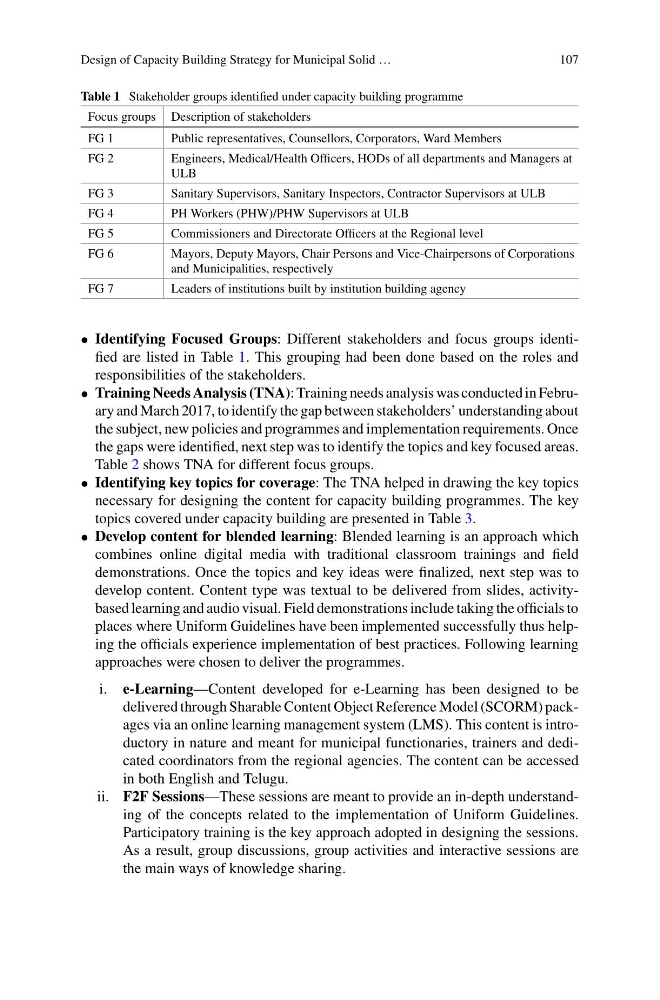
Table 1 Stakeholder groups identified under capacity building programme
Focus groups Description of stakeholders
FG 1
Public representatives, Counsellors, Corporators, Ward Members
FG 2
Engineers, Medical/Health Officers, HODs of all departments and Managers at
ULB
FG 3
Sanitary Supervisors, Sanitary Inspectors, Contractor Supervisors at ULB
FG 4
PH Workers (PHW)/PHW Supervisors at ULB
FG 5
Commissioners and Directorate Officers at the Regional level
FG 6
Mayors, Deputy Mayors, Chair Persons and Vice-Chairpersons of Corporations
and Municipalities, respectively
FG 7
Leaders of institutions built by institution building agency
• Identifying Focused Groups: Different stakeholders and focus groups identified are listed in Table 1. This grouping had been done based on the roles and
responsibilities of the stakeholders.
• Training Needs Analysis (TNA): Training needs analysis was conducted in February and March 2017, to identify the gap between stakeholders’ understanding about
the subject, new policies and programmes and implementation requirements. Once
the gaps were identified, next step was to identify the topics and key focused areas.
Table 2 shows TNA for different focus groups.
• Identifying key topics for coverage: The TNA helped in drawing the key topics
necessary for designing the content for capacity building programmes. The key
topics covered under capacity building are presented in Table 3.
• Develop content for blended learning: Blended learning is an approach which
combines online digital media with traditional classroom trainings and field
demonstrations. Once the topics and key ideas were finalized, next step was to
develop content. Content type was textual to be delivered from slides, activitybased learning and audio visual. Field demonstrations include taking the officials to
places where Uniform Guidelines have been implemented successfully thus helping the officials experience implementation of best practices. Following learning
approaches were chosen to deliver the programmes.
i. e-Learning—Content developed for e-Learning has been designed to be
delivered through Sharable Content Object Reference Model (SCORM) packages via an online learning management system (LMS). This content is introductory in nature and meant for municipal functionaries, trainers and dedicated coordinators from the regional agencies. The content can be accessed
in both English and Telugu.
ii. F2F Sessions—These sessions are meant to provide an in-depth understanding of the concepts related to the implementation of Uniform Guidelines.
Participatory training is the key approach adopted in designing the sessions.
As a result, group discussions, group activities and interactive sessions are
the main ways of knowledge sharing.
107
Table 1 Stakeholder groups identified under capacity building programme
Focus groups Description of stakeholders
FG 1
Public representatives, Counsellors, Corporators, Ward Members
FG 2
Engineers, Medical/Health Officers, HODs of all departments and Managers at
ULB
FG 3
Sanitary Supervisors, Sanitary Inspectors, Contractor Supervisors at ULB
FG 4
PH Workers (PHW)/PHW Supervisors at ULB
FG 5
Commissioners and Directorate Officers at the Regional level
FG 6
Mayors, Deputy Mayors, Chair Persons and Vice-Chairpersons of Corporations
and Municipalities, respectively
FG 7
Leaders of institutions built by institution building agency
• Identifying Focused Groups: Different stakeholders and focus groups identified are listed in Table 1. This grouping had been done based on the roles and
responsibilities of the stakeholders.
• Training Needs Analysis (TNA): Training needs analysis was conducted in February and March 2017, to identify the gap between stakeholders’ understanding about
the subject, new policies and programmes and implementation requirements. Once
the gaps were identified, next step was to identify the topics and key focused areas.
Table 2 shows TNA for different focus groups.
• Identifying key topics for coverage: The TNA helped in drawing the key topics
necessary for designing the content for capacity building programmes. The key
topics covered under capacity building are presented in Table 3.
• Develop content for blended learning: Blended learning is an approach which
combines online digital media with traditional classroom trainings and field
demonstrations. Once the topics and key ideas were finalized, next step was to
develop content. Content type was textual to be delivered from slides, activitybased learning and audio visual. Field demonstrations include taking the officials to
places where Uniform Guidelines have been implemented successfully thus helping the officials experience implementation of best practices. Following learning
approaches were chosen to deliver the programmes.
i. e-Learning—Content developed for e-Learning has been designed to be
delivered through Sharable Content Object Reference Model (SCORM) packages via an online learning management system (LMS). This content is introductory in nature and meant for municipal functionaries, trainers and dedicated coordinators from the regional agencies. The content can be accessed
in both English and Telugu.
ii. F2F Sessions—These sessions are meant to provide an in-depth understanding of the concepts related to the implementation of Uniform Guidelines.
Participatory training is the key approach adopted in designing the sessions.
As a result, group discussions, group activities and interactive sessions are
the main ways of knowledge sharing.