

136
M. Fukuda et al.
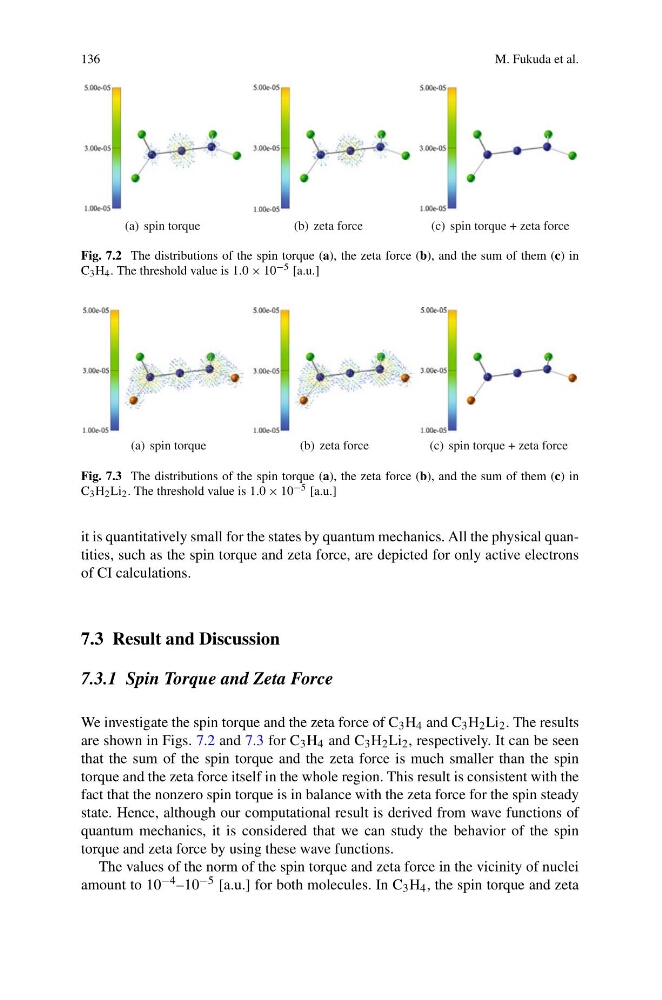
Fig. 7.2 The distributions of the spin torque (a), the zeta force (b), and the sum of them (c) in
C 3 H 4 . The threshold value is 1.0 × 10 −5 [a.u.]
Fig. 7.3 The distributions of the spin torque (a), the zeta force (b), and the sum of them (c) in
C 3 H 2 Li 2 . The threshold value is 1.0 × 10 −5 [a.u.]
it is quantitatively small for the states by quantum mechanics. All the physical quantities, such as the spin torque and zeta force, are depicted for only active electrons
of CI calculations.
7.3 Result and Discussion
7.3.1 Spin Torque and Zeta Force
We investigate the spin torque and the zeta force of C 3 H 4 and C 3 H 2 Li 2 . The results
are shown in Figs. 7.2 and 7.3 for C 3 H 4 and C 3 H 2 Li 2 , respectively. It can be seen
that the sum of the spin torque and the zeta force is much smaller than the spin
torque and the zeta force itself in the whole region. This result is consistent with the
fact that the nonzero spin torque is in balance with the zeta force for the spin steady
state. Hence, although our computational result is derived from wave functions of
quantum mechanics, it is considered that we can study the behavior of the spin
torque and zeta force by using these wave functions.
The values of the norm of the spin torque and zeta force in the vicinity of nuclei
amount to 10 −4 –10 −5 [a.u.] for both molecules. In C 3 H 4 , the spin torque and zeta
M. Fukuda et al.
Fig. 7.2 The distributions of the spin torque (a), the zeta force (b), and the sum of them (c) in
C 3 H 4 . The threshold value is 1.0 × 10 −5 [a.u.]
Fig. 7.3 The distributions of the spin torque (a), the zeta force (b), and the sum of them (c) in
C 3 H 2 Li 2 . The threshold value is 1.0 × 10 −5 [a.u.]
it is quantitatively small for the states by quantum mechanics. All the physical quantities, such as the spin torque and zeta force, are depicted for only active electrons
of CI calculations.
7.3 Result and Discussion
7.3.1 Spin Torque and Zeta Force
We investigate the spin torque and the zeta force of C 3 H 4 and C 3 H 2 Li 2 . The results
are shown in Figs. 7.2 and 7.3 for C 3 H 4 and C 3 H 2 Li 2 , respectively. It can be seen
that the sum of the spin torque and the zeta force is much smaller than the spin
torque and the zeta force itself in the whole region. This result is consistent with the
fact that the nonzero spin torque is in balance with the zeta force for the spin steady
state. Hence, although our computational result is derived from wave functions of
quantum mechanics, it is considered that we can study the behavior of the spin
torque and zeta force by using these wave functions.
The values of the norm of the spin torque and zeta force in the vicinity of nuclei
amount to 10 −4 –10 −5 [a.u.] for both molecules. In C 3 H 4 , the spin torque and zeta