

15
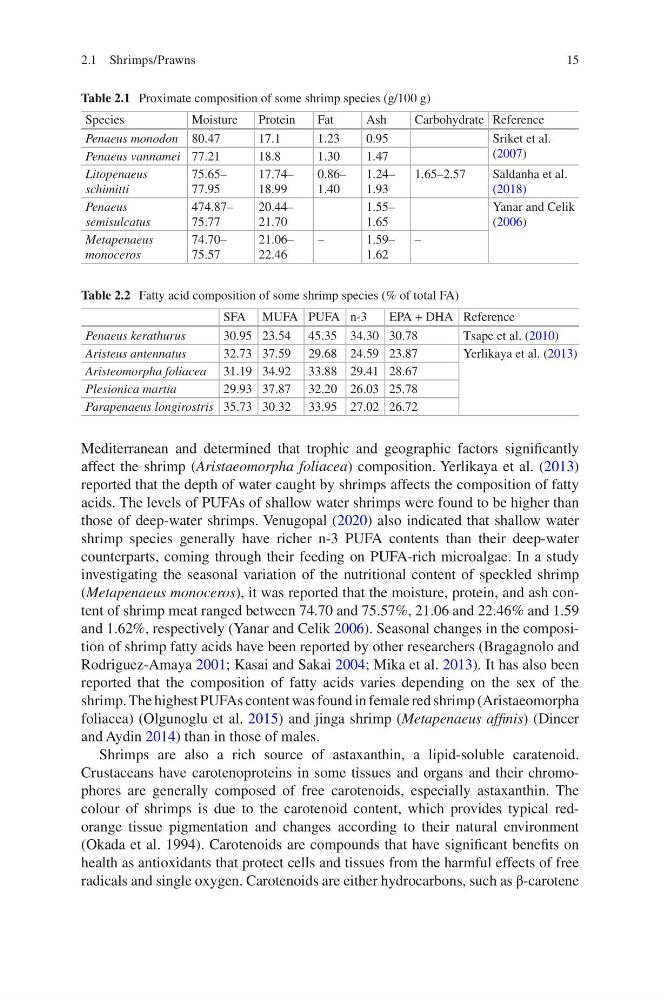
Mediterranean and determined that trophic and geographic factors significantly
affect the shrimp (Aristaeomorpha foliacea) composition. Yerlikaya et al. (2013)
reported that the depth of water caught by shrimps affects the composition of fatty
acids. The levels of PUFAs of shallow water shrimps were found to be higher than
those of deep-water shrimps. Venugopal (2020) also indicated that shallow water
shrimp species generally have richer n-3 PUFA contents than their deep-water
counterparts, coming through their feeding on PUFA-rich microalgae. In a study
investigating the seasonal variation of the nutritional content of speckled shrimp
(Metapenaeus monoceros), it was reported that the moisture, protein, and ash content of shrimp meat ranged between 74.70 and 75.57%, 21.06 and 22.46% and 1.59
and 1.62%, respectively (Yanar and Celik 2006). Seasonal changes in the composition of shrimp fatty acids have been reported by other researchers (Bragagnolo and
Rodriguez-Amaya 2001; Kasai and Sakai 2004; Mika et al. 2013). It has also been
reported that the composition of fatty acids varies depending on the sex of the
shrimp. The highest PUFAs content was found in female red shrimp (Aristaeomorpha
foliacea) (Olgunoglu et al. 2015) and jinga shrimp (Metapenaeus affinis) (Dincer
and Aydin 2014) than in those of males.
Shrimps are also a rich source of astaxanthin, a lipid-soluble caratenoid.
Crustaceans have carotenoproteins in some tissues and organs and their chromophores are generally composed of free carotenoids, especially astaxanthin. The
colour of shrimps is due to the carotenoid content, which provides typical redorange tissue pigmentation and changes according to their natural environment
(Okada et al. 1994). Carotenoids are compounds that have significant benefits on
health as antioxidants that protect cells and tissues from the harmful effects of free
radicals and single oxygen. Carotenoids are either hydrocarbons, such as β-carotene
Table 2.1 Proximate composition of some shrimp species (g/100 g)
Species
Moisture
Protein
Fat
Ash
Carbohydrate Reference
Penaeus monodon 80.47
17.1
1.23
0.95
Sriket et al.
(2007)
Penaeus vannamei 77.21
18.8
1.30
1.47
Litopenaeus
schimitti
75.65–
77.95
17.74–
18.99
0.86–
1.40
1.24–
1.93
1.65–2.57
Saldanha et al.
(2018)
Penaeus
semisulcatus
474.87–
75.77
20.44–
21.70
1.55–
1.65
Yanar and Celik
(2006)
Metapenaeus
monoceros
74.70–
75.57
21.06–
22.46
–
1.59–
1.62
–
Table 2.2 Fatty acid composition of some shrimp species (% of total FA)
SFA MUFA PUFA n-3
EPA + DHA Reference
Penaeus kerathurus
30.95 23.54 45.35 34.30 30.78
Tsape et al. (2010)
Aristeus antennatus
32.73 37.59 29.68 24.59 23.87
Yerlikaya et al. (2013)
Aristeomorpha foliacea 31.19 34.92 33.88 29.41 28.67
Plesionica martia
29.93 37.87 32.20 26.03 25.78
Parapenaeus longirostris 35.73 30.32 33.95 27.02 26.72
2.1 Shrimps/Prawns
Mediterranean and determined that trophic and geographic factors significantly
affect the shrimp (Aristaeomorpha foliacea) composition. Yerlikaya et al. (2013)
reported that the depth of water caught by shrimps affects the composition of fatty
acids. The levels of PUFAs of shallow water shrimps were found to be higher than
those of deep-water shrimps. Venugopal (2020) also indicated that shallow water
shrimp species generally have richer n-3 PUFA contents than their deep-water
counterparts, coming through their feeding on PUFA-rich microalgae. In a study
investigating the seasonal variation of the nutritional content of speckled shrimp
(Metapenaeus monoceros), it was reported that the moisture, protein, and ash content of shrimp meat ranged between 74.70 and 75.57%, 21.06 and 22.46% and 1.59
and 1.62%, respectively (Yanar and Celik 2006). Seasonal changes in the composition of shrimp fatty acids have been reported by other researchers (Bragagnolo and
Rodriguez-Amaya 2001; Kasai and Sakai 2004; Mika et al. 2013). It has also been
reported that the composition of fatty acids varies depending on the sex of the
shrimp. The highest PUFAs content was found in female red shrimp (Aristaeomorpha
foliacea) (Olgunoglu et al. 2015) and jinga shrimp (Metapenaeus affinis) (Dincer
and Aydin 2014) than in those of males.
Shrimps are also a rich source of astaxanthin, a lipid-soluble caratenoid.
Crustaceans have carotenoproteins in some tissues and organs and their chromophores are generally composed of free carotenoids, especially astaxanthin. The
colour of shrimps is due to the carotenoid content, which provides typical redorange tissue pigmentation and changes according to their natural environment
(Okada et al. 1994). Carotenoids are compounds that have significant benefits on
health as antioxidants that protect cells and tissues from the harmful effects of free
radicals and single oxygen. Carotenoids are either hydrocarbons, such as β-carotene
Table 2.1 Proximate composition of some shrimp species (g/100 g)
Species
Moisture
Protein
Fat
Ash
Carbohydrate Reference
Penaeus monodon 80.47
17.1
1.23
0.95
Sriket et al.
(2007)
Penaeus vannamei 77.21
18.8
1.30
1.47
Litopenaeus
schimitti
75.65–
77.95
17.74–
18.99
0.86–
1.40
1.24–
1.93
1.65–2.57
Saldanha et al.
(2018)
Penaeus
semisulcatus
474.87–
75.77
20.44–
21.70
1.55–
1.65
Yanar and Celik
(2006)
Metapenaeus
monoceros
74.70–
75.57
21.06–
22.46
–
1.59–
1.62
–
Table 2.2 Fatty acid composition of some shrimp species (% of total FA)
SFA MUFA PUFA n-3
EPA + DHA Reference
Penaeus kerathurus
30.95 23.54 45.35 34.30 30.78
Tsape et al. (2010)
Aristeus antennatus
32.73 37.59 29.68 24.59 23.87
Yerlikaya et al. (2013)
Aristeomorpha foliacea 31.19 34.92 33.88 29.41 28.67
Plesionica martia
29.93 37.87 32.20 26.03 25.78
Parapenaeus longirostris 35.73 30.32 33.95 27.02 26.72
2.1 Shrimps/Prawns