

138
dramatic increase in protein but a decrease in lipids between June and July in horsebearded mussel (Modius barbatus). M. galloprovincialis was found to contain low
protein due to ovulation in the months when water temperature was highest (Stratev
et al. 2017).
Food availability in the environment is also an important factor affecting the
composition of mussels. The food quality is a determinative factor for the growth of
mussels, and microalgae are the major fatty acid source for bivalve molluscs. Since
bivalves are generally regarded as herbivores, it is assumed that phytoplankton is
the main components of their diet and FA profiles. Phytoplankton, algae, and other
plants are at the base of the marine food chain and they can synthesize these unsaturated PUFAs in high quantities. In a study which investigated fatty acid compositions of freshwater mussel (Unio elongatulus) collected from four different
locations, it was found that mussel collected from the river which is rich in fauna
and flora and feeding activity is more intense contained higher n3 fatty acids (Ekin
et al. 2011).
The development of gamete in mussels affects the chemical composition. During
the maturation of gonads, an increase in lipid and protein content is observed. This
increase continues until spawning. Increases in the levels of polyunsaturated fatty
acids in bivalves occur during periods of high primary productivity. Gametes contain high levels of lipid reserves, and lipid levels vary according to reproductive
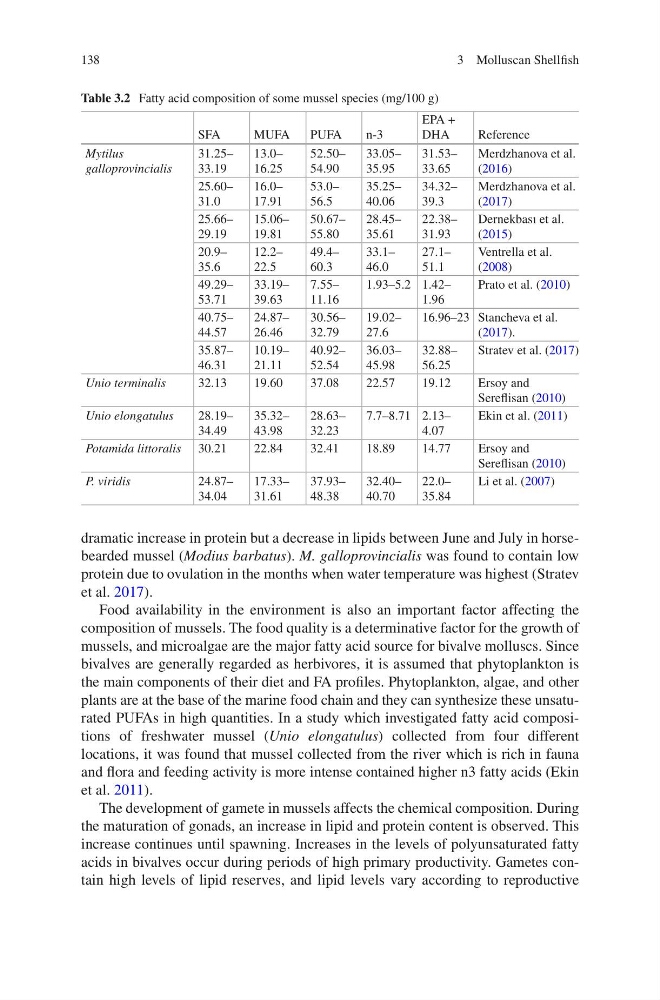
Table 3.2 Fatty acid composition of some mussel species (mg/100 g)
SFA
MUFA
PUFA
n-3
EPA +
DHA
Reference
Mytilus
galloprovincialis
31.25–
33.19
13.0–
16.25
52.50–
54.90
33.05–
35.95
31.53–
33.65
Merdzhanova et al.
(2016)
25.60–
31.0
16.0–
17.91
53.0–
56.5
35.25–
40.06
34.32–
39.3
Merdzhanova et al.
(2017)
25.66–
29.19
15.06–
19.81
50.67–
55.80
28.45–
35.61
22.38–
31.93
Dernekbası et al.
(2015)
20.9–
35.6
12.2–
22.5
49.4–
60.3
33.1–
46.0
27.1–
51.1
Ventrella et al.
(2008)
49.29–
53.71
33.19–
39.63
7.55–
11.16
1.93–5.2 1.42–
1.96
Prato et al. (2010)
40.75–
44.57
24.87–
26.46
30.56–
32.79
19.02–
27.6
16.96–23 Stancheva et al.
(2017).
35.87–
46.31
10.19–
21.11
40.92–
52.54
36.03–
45.98
32.88–
56.25
Stratev et al. (2017)
Unio terminalis
32.13
19.60
37.08
22.57
19.12
Ersoy and
Sereflisan (2010)
Unio elongatulus
28.19–
34.49
35.32–
43.98
28.63–
32.23
7.7–8.71 2.13–
4.07
Ekin et al. (2011)
Potamida littoralis 30.21
22.84
32.41
18.89
14.77
Ersoy and
Sereflisan (2010)
P. viridis
24.87–
34.04
17.33–
31.61
37.93–
48.38
32.40–
40.70
22.0–
35.84
Li et al. (2007)
3 Molluscan Shellfish
dramatic increase in protein but a decrease in lipids between June and July in horsebearded mussel (Modius barbatus). M. galloprovincialis was found to contain low
protein due to ovulation in the months when water temperature was highest (Stratev
et al. 2017).
Food availability in the environment is also an important factor affecting the
composition of mussels. The food quality is a determinative factor for the growth of
mussels, and microalgae are the major fatty acid source for bivalve molluscs. Since
bivalves are generally regarded as herbivores, it is assumed that phytoplankton is
the main components of their diet and FA profiles. Phytoplankton, algae, and other
plants are at the base of the marine food chain and they can synthesize these unsaturated PUFAs in high quantities. In a study which investigated fatty acid compositions of freshwater mussel (Unio elongatulus) collected from four different
locations, it was found that mussel collected from the river which is rich in fauna
and flora and feeding activity is more intense contained higher n3 fatty acids (Ekin
et al. 2011).
The development of gamete in mussels affects the chemical composition. During
the maturation of gonads, an increase in lipid and protein content is observed. This
increase continues until spawning. Increases in the levels of polyunsaturated fatty
acids in bivalves occur during periods of high primary productivity. Gametes contain high levels of lipid reserves, and lipid levels vary according to reproductive
Table 3.2 Fatty acid composition of some mussel species (mg/100 g)
SFA
MUFA
PUFA
n-3
EPA +
DHA
Reference
Mytilus
galloprovincialis
31.25–
33.19
13.0–
16.25
52.50–
54.90
33.05–
35.95
31.53–
33.65
Merdzhanova et al.
(2016)
25.60–
31.0
16.0–
17.91
53.0–
56.5
35.25–
40.06
34.32–
39.3
Merdzhanova et al.
(2017)
25.66–
29.19
15.06–
19.81
50.67–
55.80
28.45–
35.61
22.38–
31.93
Dernekbası et al.
(2015)
20.9–
35.6
12.2–
22.5
49.4–
60.3
33.1–
46.0
27.1–
51.1
Ventrella et al.
(2008)
49.29–
53.71
33.19–
39.63
7.55–
11.16
1.93–5.2 1.42–
1.96
Prato et al. (2010)
40.75–
44.57
24.87–
26.46
30.56–
32.79
19.02–
27.6
16.96–23 Stancheva et al.
(2017).
35.87–
46.31
10.19–
21.11
40.92–
52.54
36.03–
45.98
32.88–
56.25
Stratev et al. (2017)
Unio terminalis
32.13
19.60
37.08
22.57
19.12
Ersoy and
Sereflisan (2010)
Unio elongatulus
28.19–
34.49
35.32–
43.98
28.63–
32.23
7.7–8.71 2.13–
4.07
Ekin et al. (2011)
Potamida littoralis 30.21
22.84
32.41
18.89
14.77
Ersoy and
Sereflisan (2010)
P. viridis
24.87–
34.04
17.33–
31.61
37.93–
48.38
32.40–
40.70
22.0–
35.84
Li et al. (2007)
3 Molluscan Shellfish