

137
in other meat-based sources of protein such as B-vitamins and trace minerals.
Mussels are relatively high in EPA and DHA (Carboni et al. 2019).
Factors such as water temperature, nutrient availability and reproductive cycle,
and season can influence biochemical composition of bivalve molluscs. There are
many studies that examine the lipid content of mussels seasonally. The total lipid
content of P. viridis was found higher in spring than in the other seasons (Li et al.
2007). Similar results were reported for M. edulis (Lin et al. 2003). In a study comparing the lipid contents of mussels obtained from the Black Sea coast of Bulgaria,
total lipid content of cultured mussels (2.95%) was found to be higher than that of
wild mussels (2.05%) (Stancheva et al. 2017). Similar results for M. galloprovincialis were reported from the Romanian Black Sea coast (Sirbu et al. 2011). Contrary
results have been reported from the Mediterranean coast of Greece (Zlatanos 2008),
from the Adriatic Sea (Ventrella et al. 2008) and from Italy (Prato et al. 2010). A
previous study conducted on M. galloprovincialis, mussels seasonally harvested in
two sites in Italy showed differences in biochemical composition depending on the
different environmental conditions. As the result, it has been reported that the sessile
habitat of mussels revealed the fact that their chemical composition strongly
depended on the presence of phytoplankton sources and hence the harvest season.
Moreover, it has been found that mussels from both sites were characterised by low
lipid contents, especially the lipid fraction contained elevated levels of n-3 polyunsaturated fatty acids, cholesterol, plant sterols and carotenoids and low levels of n-6
polyunsaturated fatty acids (Orban et al. 2002). In another study, Baker and
Hornbach (2001) found significant seasonal differences in the chemical composition of Actinonaias ligementina and Amblema plicata. Various environmental factors such as temperature, food availability, plankton composition, and physiological
factors have contributed to these differences. Mladineo et al. (2007) reported a
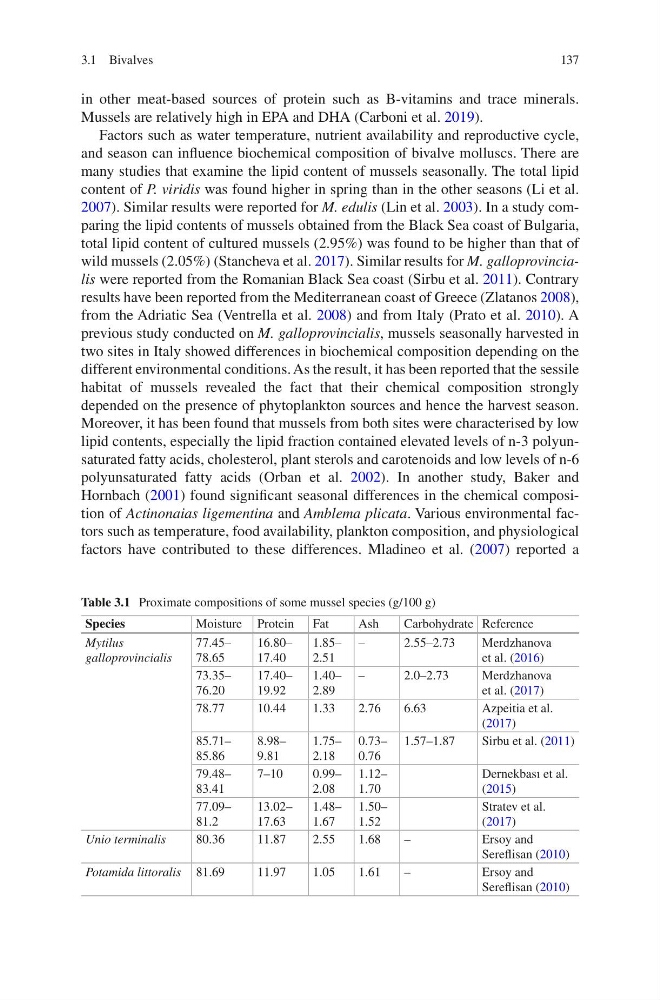
Table 3.1 Proximate compositions of some mussel species (g/100 g)
Species
Moisture Protein Fat
Ash
Carbohydrate Reference
Mytilus
galloprovincialis
77.45–
78.65
16.80–
17.40
1.85–
2.51
–
2.55–2.73
Merdzhanova
et al. (2016)
73.35–
76.20
17.40–
19.92
1.40–
2.89
–
2.0–2.73
Merdzhanova
et al. (2017)
78.77
10.44
1.33
2.76
6.63
Azpeitia et al.
(2017)
85.71–
85.86
8.98–
9.81
1.75–
2.18
0.73–
0.76
1.57–1.87
Sirbu et al. (2011)
79.48–
83.41
7–10
0.99–
2.08
1.12–
1.70
Dernekbası et al.
(2015)
77.09–
81.2
13.02–
17.63
1.48–
1.67
1.50–
1.52
Stratev et al.
(2017)
Unio terminalis
80.36
11.87
2.55
1.68
–
Ersoy and
Sereflisan (2010)
Potamida littoralis 81.69
11.97
1.05
1.61
–
Ersoy and
Sereflisan (2010)
3.1 Bivalves
in other meat-based sources of protein such as B-vitamins and trace minerals.
Mussels are relatively high in EPA and DHA (Carboni et al. 2019).
Factors such as water temperature, nutrient availability and reproductive cycle,
and season can influence biochemical composition of bivalve molluscs. There are
many studies that examine the lipid content of mussels seasonally. The total lipid
content of P. viridis was found higher in spring than in the other seasons (Li et al.
2007). Similar results were reported for M. edulis (Lin et al. 2003). In a study comparing the lipid contents of mussels obtained from the Black Sea coast of Bulgaria,
total lipid content of cultured mussels (2.95%) was found to be higher than that of
wild mussels (2.05%) (Stancheva et al. 2017). Similar results for M. galloprovincialis were reported from the Romanian Black Sea coast (Sirbu et al. 2011). Contrary
results have been reported from the Mediterranean coast of Greece (Zlatanos 2008),
from the Adriatic Sea (Ventrella et al. 2008) and from Italy (Prato et al. 2010). A
previous study conducted on M. galloprovincialis, mussels seasonally harvested in
two sites in Italy showed differences in biochemical composition depending on the
different environmental conditions. As the result, it has been reported that the sessile
habitat of mussels revealed the fact that their chemical composition strongly
depended on the presence of phytoplankton sources and hence the harvest season.
Moreover, it has been found that mussels from both sites were characterised by low
lipid contents, especially the lipid fraction contained elevated levels of n-3 polyunsaturated fatty acids, cholesterol, plant sterols and carotenoids and low levels of n-6
polyunsaturated fatty acids (Orban et al. 2002). In another study, Baker and
Hornbach (2001) found significant seasonal differences in the chemical composition of Actinonaias ligementina and Amblema plicata. Various environmental factors such as temperature, food availability, plankton composition, and physiological
factors have contributed to these differences. Mladineo et al. (2007) reported a
Table 3.1 Proximate compositions of some mussel species (g/100 g)
Species
Moisture Protein Fat
Ash
Carbohydrate Reference
Mytilus
galloprovincialis
77.45–
78.65
16.80–
17.40
1.85–
2.51
–
2.55–2.73
Merdzhanova
et al. (2016)
73.35–
76.20
17.40–
19.92
1.40–
2.89
–
2.0–2.73
Merdzhanova
et al. (2017)
78.77
10.44
1.33
2.76
6.63
Azpeitia et al.
(2017)
85.71–
85.86
8.98–
9.81
1.75–
2.18
0.73–
0.76
1.57–1.87
Sirbu et al. (2011)
79.48–
83.41
7–10
0.99–
2.08
1.12–
1.70
Dernekbası et al.
(2015)
77.09–
81.2
13.02–
17.63
1.48–
1.67
1.50–
1.52
Stratev et al.
(2017)
Unio terminalis
80.36
11.87
2.55
1.68
–
Ersoy and
Sereflisan (2010)
Potamida littoralis 81.69
11.97
1.05
1.61
–
Ersoy and
Sereflisan (2010)
3.1 Bivalves