

47
nologies have improved the capabilities of metagenomic studies to a greater strength
but at the same time have led to the generation of large data sets that require highend algorithms and computational tools for data analysis and storage. Analysis of
the resulting data requires data mining approaches to find novel genes and gene
families that can be connected with the functions of the microbial communities
within the habitat. Metagenomics applicable to the group of integrated genomic
cum in silico computational approaches that directly analyzes complete genome of
belowground microorganisms and attempts to link them to corresponding functions
(Rastogi and Sani 2011; Creer et al. 2016). This highly emerging field is now
accountable for significant improvements in microbial studies related to their within
and between interactions and evolvements under myriads of the environments. In
the past decades, different research laboratories worldwide are now enthusiastically
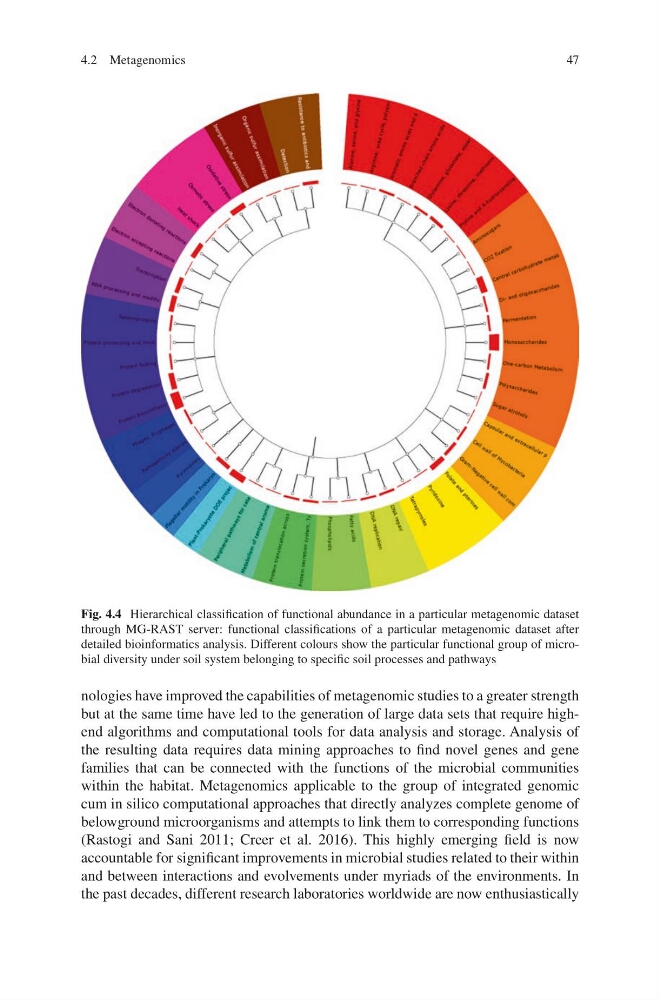
Fig. 4.4 Hierarchical classification of functional abundance in a particular metagenomic dataset
through MG-RAST server: functional classifications of a particular metagenomic dataset after
detailed bioinformatics analysis. Different colours show the particular functional group of microbial diversity under soil system belonging to specific soil processes and pathways
4.2 Metagenomics
nologies have improved the capabilities of metagenomic studies to a greater strength
but at the same time have led to the generation of large data sets that require highend algorithms and computational tools for data analysis and storage. Analysis of
the resulting data requires data mining approaches to find novel genes and gene
families that can be connected with the functions of the microbial communities
within the habitat. Metagenomics applicable to the group of integrated genomic
cum in silico computational approaches that directly analyzes complete genome of
belowground microorganisms and attempts to link them to corresponding functions
(Rastogi and Sani 2011; Creer et al. 2016). This highly emerging field is now
accountable for significant improvements in microbial studies related to their within
and between interactions and evolvements under myriads of the environments. In
the past decades, different research laboratories worldwide are now enthusiastically
Fig. 4.4 Hierarchical classification of functional abundance in a particular metagenomic dataset
through MG-RAST server: functional classifications of a particular metagenomic dataset after
detailed bioinformatics analysis. Different colours show the particular functional group of microbial diversity under soil system belonging to specific soil processes and pathways
4.2 Metagenomics