

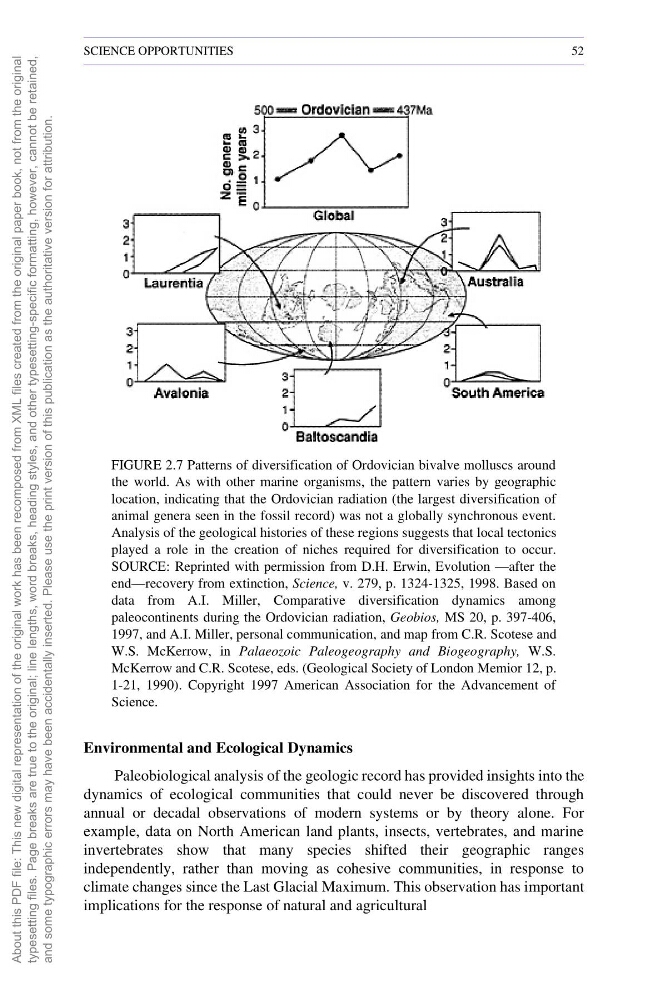
FIGURE 2.7 Patterns of diversification of Ordovician bivalve molluscs around
the world. As with other marine organisms, the pattern varies by geographic
location, indicating that the Ordovician radiation (the largest diversification of
animal genera seen in the fossil record) was not a globally synchronous event.
Analysis of the geological histories of these regions suggests that local tectonics
played a role in the creation of niches required for diversification to occur.
SOURCE: Reprinted with permission from D.H. Erwin, Evolution —after the
end—recovery from extinction, Science, v. 279, p. 1324-1325, 1998. Based on
data from A.I. Miller, Comparative diversification dynamics among
paleocontinents during the Ordovician radiation, Geobios, MS 20, p. 397-406,
1997, and A.I. Miller, personal communication, and map from C.R. Scotese and
W.S. McKerrow, in Palaeozoic Paleogeography and Biogeography, W.S.
McKerrow and C.R. Scotese, eds. (Geological Society of London Memior 12, p.
1-21, 1990). Copyright 1997 American Association for the Advancement of
Science.
Environmental and Ecological Dynamics
Paleobiological analysis of the geologic record has provided insights into the
dynamics of ecological communities that could never be discovered through
annual or decadal observations of modern systems or by theory alone. For
example, data on North American land plants, insects, vertebrates, and marine
invertebrates show that many species shifted their geographic ranges
independently, rather than moving as cohesive communities, in response to
climate changes since the Last Glacial Maximum. This observation has important
implications for the response of natural and agricultural
SCIENCE OPPORTUNITIES
52
About this PDF file: This new digital representation of the
original work has been recomposed from XML files created
from the original paper book, not from the original
typesetting files. Page breaks are true to the original; line lengths,
word breaks, heading styles, and other typesetting-specific
formatting, however, cannot be retained,
and some typographic errors may have been accidentally inserted.
Please use the print version of this publication as the authoritative
version for attribution.
the world. As with other marine organisms, the pattern varies by geographic
location, indicating that the Ordovician radiation (the largest diversification of
animal genera seen in the fossil record) was not a globally synchronous event.
Analysis of the geological histories of these regions suggests that local tectonics
played a role in the creation of niches required for diversification to occur.
SOURCE: Reprinted with permission from D.H. Erwin, Evolution —after the
end—recovery from extinction, Science, v. 279, p. 1324-1325, 1998. Based on
data from A.I. Miller, Comparative diversification dynamics among
paleocontinents during the Ordovician radiation, Geobios, MS 20, p. 397-406,
1997, and A.I. Miller, personal communication, and map from C.R. Scotese and
W.S. McKerrow, in Palaeozoic Paleogeography and Biogeography, W.S.
McKerrow and C.R. Scotese, eds. (Geological Society of London Memior 12, p.
1-21, 1990). Copyright 1997 American Association for the Advancement of
Science.
Environmental and Ecological Dynamics
Paleobiological analysis of the geologic record has provided insights into the
dynamics of ecological communities that could never be discovered through
annual or decadal observations of modern systems or by theory alone. For
example, data on North American land plants, insects, vertebrates, and marine
invertebrates show that many species shifted their geographic ranges
independently, rather than moving as cohesive communities, in response to
climate changes since the Last Glacial Maximum. This observation has important
implications for the response of natural and agricultural
SCIENCE OPPORTUNITIES
52
About this PDF file: This new digital representation of the
original work has been recomposed from XML files created
from the original paper book, not from the original
typesetting files. Page breaks are true to the original; line lengths,
word breaks, heading styles, and other typesetting-specific
formatting, however, cannot be retained,
and some typographic errors may have been accidentally inserted.
Please use the print version of this publication as the authoritative
version for attribution.