

612
R. Pangestuti et al.
25.1 Microalgae
Ocean is a congested place of abundance biological diversity which offers tremendous
resource for novel compounds. Each of them is unique and widely various, yet mostly
undiscovered (Pangestuti and Arifin 2017). Microalgae is one of the most overflowing
organisms living in this ecosystem, containing potential products such as carotenoids,
fatty acids, polysaccharides, vitamins, enzymes, and other potential compounds that
need to be discovered. In fact, from more than 50.000 of known microalgae species,
only about 3.000 of them have been studied (Mata et al. 2010).
Microalgae is a group of prokaryotic and eukaryotic microorganisms with various
cell morphology, ranging from 11 μm to less than a millimeter in size. In a single
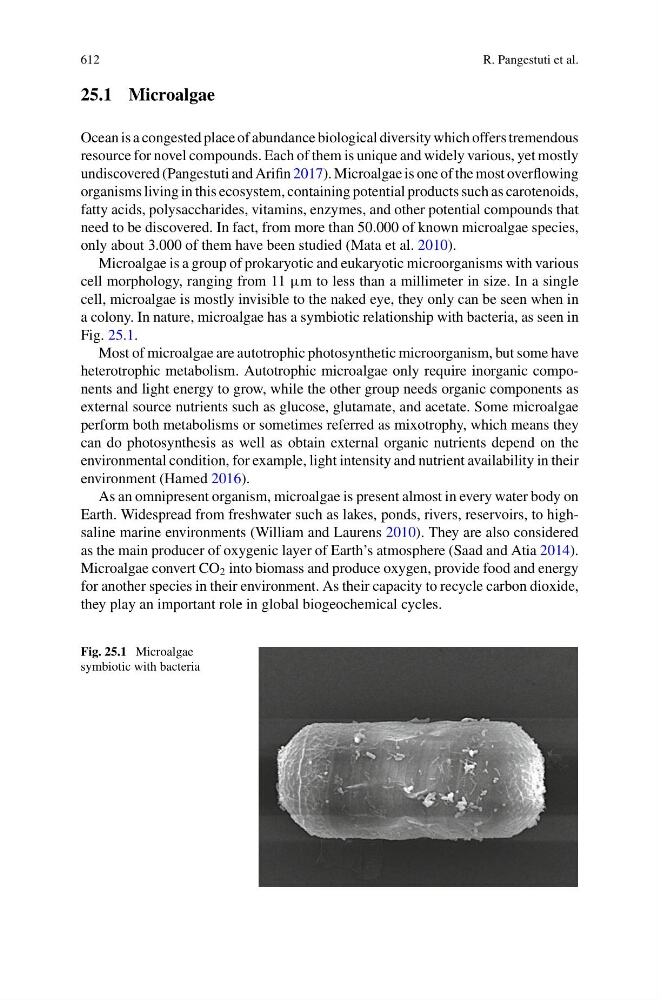
cell, microalgae is mostly invisible to the naked eye, they only can be seen when in
a colony. In nature, microalgae has a symbiotic relationship with bacteria, as seen in
Fig. 25.1.
Most of microalgae are autotrophic photosynthetic microorganism, but some have
heterotrophic metabolism. Autotrophic microalgae only require inorganic components and light energy to grow, while the other group needs organic components as
external source nutrients such as glucose, glutamate, and acetate. Some microalgae
perform both metabolisms or sometimes referred as mixotrophy, which means they
can do photosynthesis as well as obtain external organic nutrients depend on the
environmental condition, for example, light intensity and nutrient availability in their
environment (Hamed 2016).
As an omnipresent organism, microalgae is present almost in every water body on
Earth. Widespread from freshwater such as lakes, ponds, rivers, reservoirs, to highsaline marine environments (William and Laurens 2010). They are also considered
as the main producer of oxygenic layer of Earth’s atmosphere (Saad and Atia 2014).
Microalgae convert CO 2 into biomass and produce oxygen, provide food and energy
for another species in their environment. As their capacity to recycle carbon dioxide,
they play an important role in global biogeochemical cycles.
Fig. 25.1 Microalgae
symbiotic with bacteria