

24 Diagnostic Applications of Phycobiliproteins
599
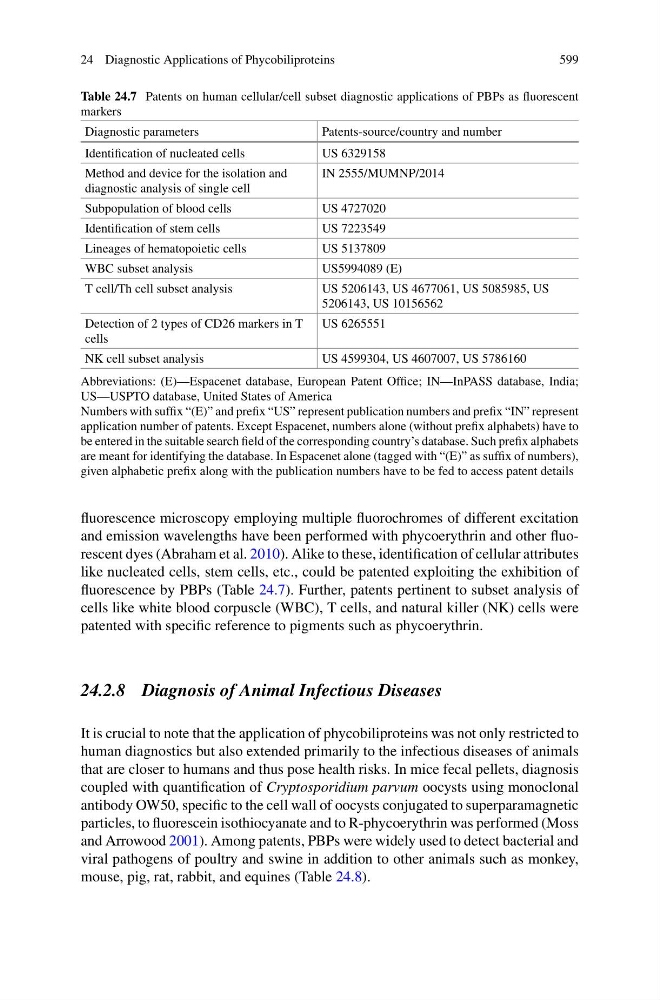
Table 24.7 Patents on human cellular/cell subset diagnostic applications of PBPs as fluorescent
markers
Diagnostic parameters
Patents-source/country and number
Identification of nucleated cells
US 6329158
Method and device for the isolation and
diagnostic analysis of single cell
IN 2555/MUMNP/2014
Subpopulation of blood cells
US 4727020
Identification of stem cells
US 7223549
Lineages of hematopoietic cells
US 5137809
WBC subset analysis
US5994089 (E)
T cell/Th cell subset analysis
US 5206143, US 4677061, US 5085985, US
5206143, US 10156562
Detection of 2 types of CD26 markers in T
cells
US 6265551
NK cell subset analysis
US 4599304, US 4607007, US 5786160
Abbreviations: (E)—Espacenet database, European Patent Office; IN—InPASS database, India;
US—USPTO database, United States of America
Numbers with suffix “(E)” and prefix “US” represent publication numbers and prefix “IN” represent
application number of patents. Except Espacenet, numbers alone (without prefix alphabets) have to
be entered in the suitable search field of the corresponding country’s database. Such prefix alphabets
are meant for identifying the database. In Espacenet alone (tagged with “(E)” as suffix of numbers),
given alphabetic prefix along with the publication numbers have to be fed to access patent details
fluorescence microscopy employing multiple fluorochromes of different excitation
and emission wavelengths have been performed with phycoerythrin and other fluorescent dyes (Abraham et al. 2010). Alike to these, identification of cellular attributes
like nucleated cells, stem cells, etc., could be patented exploiting the exhibition of
fluorescence by PBPs (Table 24.7). Further, patents pertinent to subset analysis of
cells like white blood corpuscle (WBC), T cells, and natural killer (NK) cells were
patented with specific reference to pigments such as phycoerythrin.
24.2.8 Diagnosis of Animal Infectious Diseases
It is crucial to note that the application of phycobiliproteins was not only restricted to
human diagnostics but also extended primarily to the infectious diseases of animals
that are closer to humans and thus pose health risks. In mice fecal pellets, diagnosis
coupled with quantification of Cryptosporidium parvum oocysts using monoclonal
antibody OW50, specific to the cell wall of oocysts conjugated to superparamagnetic
particles, to fluorescein isothiocyanate and to R-phycoerythrin was performed (Moss
and Arrowood 2001). Among patents, PBPs were widely used to detect bacterial and
viral pathogens of poultry and swine in addition to other animals such as monkey,
mouse, pig, rat, rabbit, and equines (Table 24.8).