

530
P. F. Surai and I. I. Kochish
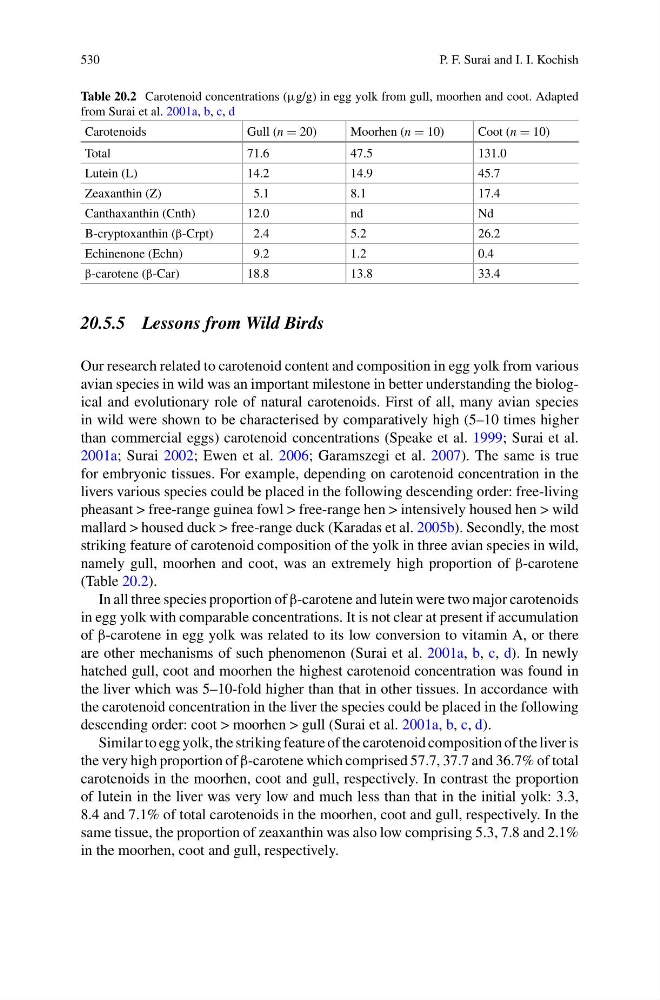
Table 20.2 Carotenoid concentrations (μg/g) in egg yolk from gull, moorhen and coot. Adapted
from Surai et al. 2001a, b, c, d
Carotenoids
Gull (n = 20)
Moorhen (n = 10)
Coot (n = 10)
Total
71.6
47.5
131.0
Lutein (L)
14.2
14.9
45.7
Zeaxanthin (Z)
5.1
8.1
17.4
Canthaxanthin (Cnth)
12.0
nd
Nd
B-cryptoxanthin (β-Crpt)
2.4
5.2
26.2
Echinenone (Echn)
9.2
1.2
0.4
β-carotene (β-Car)
18.8
13.8
33.4
20.5.5 Lessons from Wild Birds
Our research related to carotenoid content and composition in egg yolk from various
avian species in wild was an important milestone in better understanding the biological and evolutionary role of natural carotenoids. First of all, many avian species
in wild were shown to be characterised by comparatively high (5–10 times higher
than commercial eggs) carotenoid concentrations (Speake et al. 1999; Surai et al.
2001a; Surai 2002; Ewen et al. 2006; Garamszegi et al. 2007). The same is true
for embryonic tissues. For example, depending on carotenoid concentration in the
livers various species could be placed in the following descending order: free-living
pheasant > free-range guinea fowl > free-range hen > intensively housed hen > wild
mallard > housed duck > free-range duck (Karadas et al. 2005b). Secondly, the most
striking feature of carotenoid composition of the yolk in three avian species in wild,
namely gull, moorhen and coot, was an extremely high proportion of β-carotene
(Table 20.2).
In all three species proportion of β-carotene and lutein were two major carotenoids
in egg yolk with comparable concentrations. It is not clear at present if accumulation
of β-carotene in egg yolk was related to its low conversion to vitamin A, or there
are other mechanisms of such phenomenon (Surai et al. 2001a, b, c, d). In newly
hatched gull, coot and moorhen the highest carotenoid concentration was found in
the liver which was 5–10-fold higher than that in other tissues. In accordance with
the carotenoid concentration in the liver the species could be placed in the following
descending order: coot > moorhen > gull (Surai et al. 2001a, b, c, d).
Similar to egg yolk, the striking feature of the carotenoid composition of the liver is
the very high proportion of β-carotene which comprised 57.7, 37.7 and 36.7% of total
carotenoids in the moorhen, coot and gull, respectively. In contrast the proportion
of lutein in the liver was very low and much less than that in the initial yolk: 3.3,
8.4 and 7.1% of total carotenoids in the moorhen, coot and gull, respectively. In the
same tissue, the proportion of zeaxanthin was also low comprising 5.3, 7.8 and 2.1%
in the moorhen, coot and gull, respectively.
P. F. Surai and I. I. Kochish
Table 20.2 Carotenoid concentrations (μg/g) in egg yolk from gull, moorhen and coot. Adapted
from Surai et al. 2001a, b, c, d
Carotenoids
Gull (n = 20)
Moorhen (n = 10)
Coot (n = 10)
Total
71.6
47.5
131.0
Lutein (L)
14.2
14.9
45.7
Zeaxanthin (Z)
5.1
8.1
17.4
Canthaxanthin (Cnth)
12.0
nd
Nd
B-cryptoxanthin (β-Crpt)
2.4
5.2
26.2
Echinenone (Echn)
9.2
1.2
0.4
β-carotene (β-Car)
18.8
13.8
33.4
20.5.5 Lessons from Wild Birds
Our research related to carotenoid content and composition in egg yolk from various
avian species in wild was an important milestone in better understanding the biological and evolutionary role of natural carotenoids. First of all, many avian species
in wild were shown to be characterised by comparatively high (5–10 times higher
than commercial eggs) carotenoid concentrations (Speake et al. 1999; Surai et al.
2001a; Surai 2002; Ewen et al. 2006; Garamszegi et al. 2007). The same is true
for embryonic tissues. For example, depending on carotenoid concentration in the
livers various species could be placed in the following descending order: free-living
pheasant > free-range guinea fowl > free-range hen > intensively housed hen > wild
mallard > housed duck > free-range duck (Karadas et al. 2005b). Secondly, the most
striking feature of carotenoid composition of the yolk in three avian species in wild,
namely gull, moorhen and coot, was an extremely high proportion of β-carotene
(Table 20.2).
In all three species proportion of β-carotene and lutein were two major carotenoids
in egg yolk with comparable concentrations. It is not clear at present if accumulation
of β-carotene in egg yolk was related to its low conversion to vitamin A, or there
are other mechanisms of such phenomenon (Surai et al. 2001a, b, c, d). In newly
hatched gull, coot and moorhen the highest carotenoid concentration was found in
the liver which was 5–10-fold higher than that in other tissues. In accordance with
the carotenoid concentration in the liver the species could be placed in the following
descending order: coot > moorhen > gull (Surai et al. 2001a, b, c, d).
Similar to egg yolk, the striking feature of the carotenoid composition of the liver is
the very high proportion of β-carotene which comprised 57.7, 37.7 and 36.7% of total
carotenoids in the moorhen, coot and gull, respectively. In contrast the proportion
of lutein in the liver was very low and much less than that in the initial yolk: 3.3,
8.4 and 7.1% of total carotenoids in the moorhen, coot and gull, respectively. In the
same tissue, the proportion of zeaxanthin was also low comprising 5.3, 7.8 and 2.1%
in the moorhen, coot and gull, respectively.