

17 Carotenoids as Food Additives
433
17.2.6 β-Cryptoxanthin
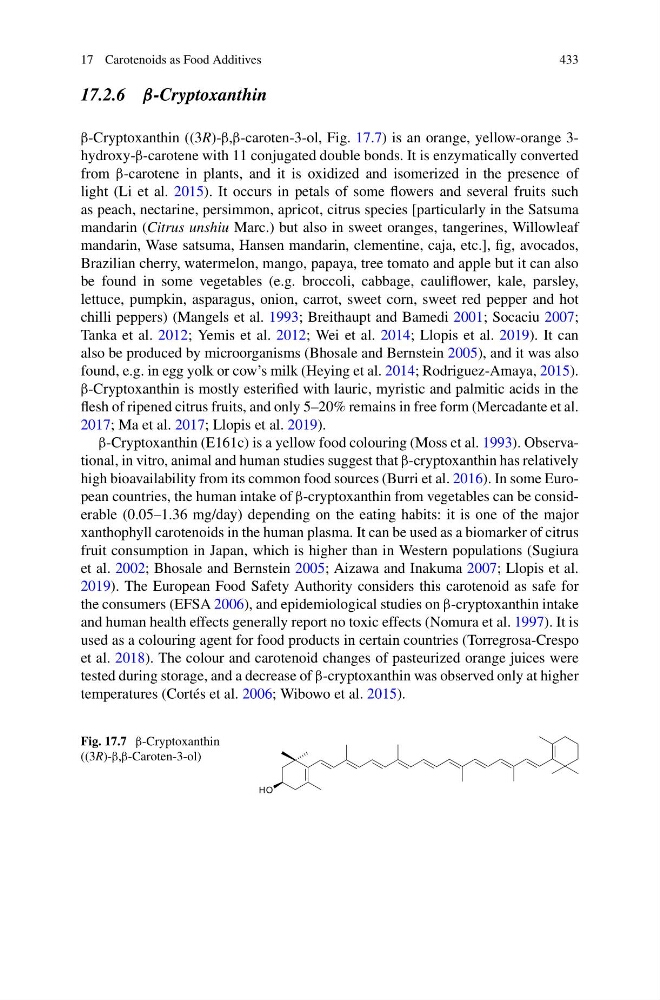
β-Cryptoxanthin ((3R)-β,β-caroten-3-ol, Fig. 17.7) is an orange, yellow-orange 3hydroxy-β-carotene with 11 conjugated double bonds. It is enzymatically converted
from β-carotene in plants, and it is oxidized and isomerized in the presence of
light (Li et al. 2015). It occurs in petals of some flowers and several fruits such
as peach, nectarine, persimmon, apricot, citrus species [particularly in the Satsuma
mandarin (Citrus unshiu Marc.) but also in sweet oranges, tangerines, Willowleaf
mandarin, Wase satsuma, Hansen mandarin, clementine, caja, etc.], fig, avocados,
Brazilian cherry, watermelon, mango, papaya, tree tomato and apple but it can also
be found in some vegetables (e.g. broccoli, cabbage, cauliflower, kale, parsley,
lettuce, pumpkin, asparagus, onion, carrot, sweet corn, sweet red pepper and hot
chilli peppers) (Mangels et al. 1993; Breithaupt and Bamedi 2001; Socaciu 2007;
Tanka et al. 2012; Yemis et al. 2012; Wei et al. 2014; Llopis et al. 2019). It can
also be produced by microorganisms (Bhosale and Bernstein 2005), and it was also
found, e.g. in egg yolk or cow’s milk (Heying et al. 2014; Rodriguez-Amaya, 2015).
β-Cryptoxanthin is mostly esterified with lauric, myristic and palmitic acids in the
flesh of ripened citrus fruits, and only 5–20% remains in free form (Mercadante et al.
2017; Ma et al. 2017; Llopis et al. 2019).
β-Cryptoxanthin (E161c) is a yellow food colouring (Moss et al. 1993). Observational, in vitro, animal and human studies suggest that β-cryptoxanthin has relatively
high bioavailability from its common food sources (Burri et al. 2016). In some European countries, the human intake of β-cryptoxanthin from vegetables can be considerable (0.05–1.36 mg/day) depending on the eating habits: it is one of the major
xanthophyll carotenoids in the human plasma. It can be used as a biomarker of citrus
fruit consumption in Japan, which is higher than in Western populations (Sugiura
et al. 2002; Bhosale and Bernstein 2005; Aizawa and Inakuma 2007; Llopis et al.
2019). The European Food Safety Authority considers this carotenoid as safe for
the consumers (EFSA 2006), and epidemiological studies on β-cryptoxanthin intake
and human health effects generally report no toxic effects (Nomura et al. 1997). It is
used as a colouring agent for food products in certain countries (Torregrosa-Crespo
et al. 2018). The colour and carotenoid changes of pasteurized orange juices were
tested during storage, and a decrease of β-cryptoxanthin was observed only at higher
temperatures (Cortés et al. 2006; Wibowo et al. 2015).
Fig. 17.7 β-Cryptoxanthin
((3R)-β,β-Caroten-3-ol)
O
H
433
17.2.6 β-Cryptoxanthin
β-Cryptoxanthin ((3R)-β,β-caroten-3-ol, Fig. 17.7) is an orange, yellow-orange 3hydroxy-β-carotene with 11 conjugated double bonds. It is enzymatically converted
from β-carotene in plants, and it is oxidized and isomerized in the presence of
light (Li et al. 2015). It occurs in petals of some flowers and several fruits such
as peach, nectarine, persimmon, apricot, citrus species [particularly in the Satsuma
mandarin (Citrus unshiu Marc.) but also in sweet oranges, tangerines, Willowleaf
mandarin, Wase satsuma, Hansen mandarin, clementine, caja, etc.], fig, avocados,
Brazilian cherry, watermelon, mango, papaya, tree tomato and apple but it can also
be found in some vegetables (e.g. broccoli, cabbage, cauliflower, kale, parsley,
lettuce, pumpkin, asparagus, onion, carrot, sweet corn, sweet red pepper and hot
chilli peppers) (Mangels et al. 1993; Breithaupt and Bamedi 2001; Socaciu 2007;
Tanka et al. 2012; Yemis et al. 2012; Wei et al. 2014; Llopis et al. 2019). It can
also be produced by microorganisms (Bhosale and Bernstein 2005), and it was also
found, e.g. in egg yolk or cow’s milk (Heying et al. 2014; Rodriguez-Amaya, 2015).
β-Cryptoxanthin is mostly esterified with lauric, myristic and palmitic acids in the
flesh of ripened citrus fruits, and only 5–20% remains in free form (Mercadante et al.
2017; Ma et al. 2017; Llopis et al. 2019).
β-Cryptoxanthin (E161c) is a yellow food colouring (Moss et al. 1993). Observational, in vitro, animal and human studies suggest that β-cryptoxanthin has relatively
high bioavailability from its common food sources (Burri et al. 2016). In some European countries, the human intake of β-cryptoxanthin from vegetables can be considerable (0.05–1.36 mg/day) depending on the eating habits: it is one of the major
xanthophyll carotenoids in the human plasma. It can be used as a biomarker of citrus
fruit consumption in Japan, which is higher than in Western populations (Sugiura
et al. 2002; Bhosale and Bernstein 2005; Aizawa and Inakuma 2007; Llopis et al.
2019). The European Food Safety Authority considers this carotenoid as safe for
the consumers (EFSA 2006), and epidemiological studies on β-cryptoxanthin intake
and human health effects generally report no toxic effects (Nomura et al. 1997). It is
used as a colouring agent for food products in certain countries (Torregrosa-Crespo
et al. 2018). The colour and carotenoid changes of pasteurized orange juices were
tested during storage, and a decrease of β-cryptoxanthin was observed only at higher
temperatures (Cortés et al. 2006; Wibowo et al. 2015).
Fig. 17.7 β-Cryptoxanthin
((3R)-β,β-Caroten-3-ol)
O
H