

17 Carotenoids as Food Additives
431
β-Carotene is the precursor of vitamin A, which is synthesized from carotenoids
via the action of the enzyme β-carotene 15,15’-monooxygenase (Torregrosa-Crespo
et al. 2018). In this group of carotenoids, β-carotene possesses the highest bioactivity
as vitamin A precursor (Bogacz-Radomska and Harasym 2018).
The anti-cancer activities of carotenoids have been widely demonstrated by a large
number of in vitro and in vivo studies. β-Carotene, astaxanthin, canthaxanthin and
zeaxanthin were shown to reduce the sizes and numbers of liver neoplasias (Nishino
et al. 2002). The dietary intake of carotenoids was reported to reduce the risk of
developing colon cancer (Senesse et al. 2005; Ramadas et al. 2010). Administration
of a combination of β-carotene, vitamin E and selenium was found to decrease the
incidence of mortality due to cancer (Blot et al. 1993). β-Carotene was reported to
have anti-angiogenic activity, by reducing the number of tumour-directed capillaries,
suppressing the proliferation, migration and tube formation of endothelial cells, as
well as affecting serum cytokine levels and inhibiting the activation and nuclear
translocation of transcription factors (Guruvayoorappan and Kuttan 2007).
Carotenoids were reported to reduce the risk of type 2 diabetes mellitus in several
studies. Higher concentrations of β-carotene in the blood are associated with lower
insulin resistance (Ylonen et al. 2003; Sluijs et al. 2015). Also, it was demonstrated
that serum concentrations of β-carotene, lutein, lycopene and zeaxanthin were significantly lower in diabetic subjects (Ylonen et al. 2003). In addition, serum levels of
β-carotene were found to be important determinants of metabolic syndrome outcome
(Suzuki et al. 2011).
As a strong antioxidant, β-carotene can prevent the formation of free radicals that
can cause premature ageing of skin cells (Lee et al. 2004).
The lipophilic nature of β-carotene allows its accumulation in the body. Overconsumption of β-carotene may cause carotenosis, a benign condition when the skin turns
orange. Chronic intake of high doses of β-carotene supplementation was found to
correlate with increased probability of lung cancer in cigarette smokers (Tanvetyanon
and Bepler 2008).
17.2.5 Crocin
Crocin can be found in the spice saffron (dried stigmas of the flowers of crocus,
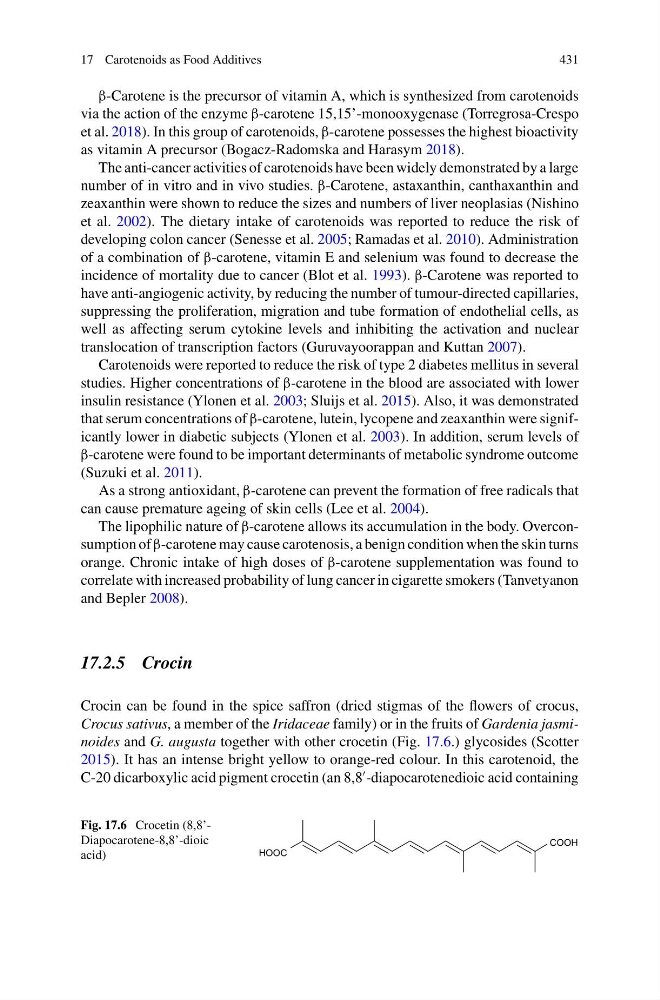
Crocus sativus, a member of the Iridaceae family) or in the fruits of Gardenia jasminoides and G. augusta together with other crocetin (Fig. 17.6.) glycosides (Scotter
2015). It has an intense bright yellow to orange-red colour. In this carotenoid, the
C-20 dicarboxylic acid pigment crocetin (an 8,8
-diapocarotenedioic acid containing
Fig. 17.6 Crocetin (8,8’Diapocarotene-8,8’-dioic
acid)
COOH
HOOC
431
β-Carotene is the precursor of vitamin A, which is synthesized from carotenoids
via the action of the enzyme β-carotene 15,15’-monooxygenase (Torregrosa-Crespo
et al. 2018). In this group of carotenoids, β-carotene possesses the highest bioactivity
as vitamin A precursor (Bogacz-Radomska and Harasym 2018).
The anti-cancer activities of carotenoids have been widely demonstrated by a large
number of in vitro and in vivo studies. β-Carotene, astaxanthin, canthaxanthin and
zeaxanthin were shown to reduce the sizes and numbers of liver neoplasias (Nishino
et al. 2002). The dietary intake of carotenoids was reported to reduce the risk of
developing colon cancer (Senesse et al. 2005; Ramadas et al. 2010). Administration
of a combination of β-carotene, vitamin E and selenium was found to decrease the
incidence of mortality due to cancer (Blot et al. 1993). β-Carotene was reported to
have anti-angiogenic activity, by reducing the number of tumour-directed capillaries,
suppressing the proliferation, migration and tube formation of endothelial cells, as
well as affecting serum cytokine levels and inhibiting the activation and nuclear
translocation of transcription factors (Guruvayoorappan and Kuttan 2007).
Carotenoids were reported to reduce the risk of type 2 diabetes mellitus in several
studies. Higher concentrations of β-carotene in the blood are associated with lower
insulin resistance (Ylonen et al. 2003; Sluijs et al. 2015). Also, it was demonstrated
that serum concentrations of β-carotene, lutein, lycopene and zeaxanthin were significantly lower in diabetic subjects (Ylonen et al. 2003). In addition, serum levels of
β-carotene were found to be important determinants of metabolic syndrome outcome
(Suzuki et al. 2011).
As a strong antioxidant, β-carotene can prevent the formation of free radicals that
can cause premature ageing of skin cells (Lee et al. 2004).
The lipophilic nature of β-carotene allows its accumulation in the body. Overconsumption of β-carotene may cause carotenosis, a benign condition when the skin turns
orange. Chronic intake of high doses of β-carotene supplementation was found to
correlate with increased probability of lung cancer in cigarette smokers (Tanvetyanon
and Bepler 2008).
17.2.5 Crocin
Crocin can be found in the spice saffron (dried stigmas of the flowers of crocus,
Crocus sativus, a member of the Iridaceae family) or in the fruits of Gardenia jasminoides and G. augusta together with other crocetin (Fig. 17.6.) glycosides (Scotter
2015). It has an intense bright yellow to orange-red colour. In this carotenoid, the
C-20 dicarboxylic acid pigment crocetin (an 8,8
-diapocarotenedioic acid containing
Fig. 17.6 Crocetin (8,8’Diapocarotene-8,8’-dioic
acid)
COOH
HOOC