

376
M. C. Deprá et al.
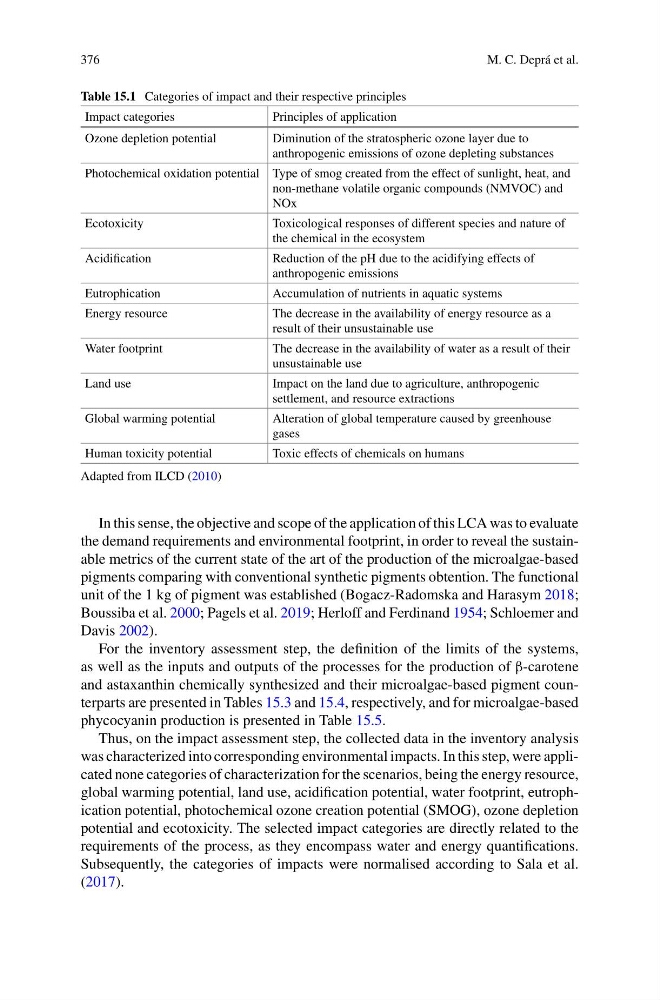
Table 15.1 Categories of impact and their respective principles
Impact categories
Principles of application
Ozone depletion potential
Diminution of the stratospheric ozone layer due to
anthropogenic emissions of ozone depleting substances
Photochemical oxidation potential Type of smog created from the effect of sunlight, heat, and
non-methane volatile organic compounds (NMVOC) and
NOx
Ecotoxicity
Toxicological responses of different species and nature of
the chemical in the ecosystem
Acidification
Reduction of the pH due to the acidifying effects of
anthropogenic emissions
Eutrophication
Accumulation of nutrients in aquatic systems
Energy resource
The decrease in the availability of energy resource as a
result of their unsustainable use
Water footprint
The decrease in the availability of water as a result of their
unsustainable use
Land use
Impact on the land due to agriculture, anthropogenic
settlement, and resource extractions
Global warming potential
Alteration of global temperature caused by greenhouse
gases
Human toxicity potential
Toxic effects of chemicals on humans
Adapted from ILCD (2010)
In this sense, the objective and scope of the application of this LCA was to evaluate
the demand requirements and environmental footprint, in order to reveal the sustainable metrics of the current state of the art of the production of the microalgae-based
pigments comparing with conventional synthetic pigments obtention. The functional
unit of the 1 kg of pigment was established (Bogacz-Radomska and Harasym 2018;
Boussiba et al. 2000; Pagels et al. 2019; Herloff and Ferdinand 1954; Schloemer and
Davis 2002).
For the inventory assessment step, the definition of the limits of the systems,
as well as the inputs and outputs of the processes for the production of β-carotene
and astaxanthin chemically synthesized and their microalgae-based pigment counterparts are presented in Tables 15.3 and 15.4, respectively, and for microalgae-based
phycocyanin production is presented in Table 15.5.
Thus, on the impact assessment step, the collected data in the inventory analysis
was characterized into corresponding environmental impacts. In this step, were applicated none categories of characterization for the scenarios, being the energy resource,
global warming potential, land use, acidification potential, water footprint, eutrophication potential, photochemical ozone creation potential (SMOG), ozone depletion
potential and ecotoxicity. The selected impact categories are directly related to the
requirements of the process, as they encompass water and energy quantifications.
Subsequently, the categories of impacts were normalised according to Sala et al.
(2017).
M. C. Deprá et al.
Table 15.1 Categories of impact and their respective principles
Impact categories
Principles of application
Ozone depletion potential
Diminution of the stratospheric ozone layer due to
anthropogenic emissions of ozone depleting substances
Photochemical oxidation potential Type of smog created from the effect of sunlight, heat, and
non-methane volatile organic compounds (NMVOC) and
NOx
Ecotoxicity
Toxicological responses of different species and nature of
the chemical in the ecosystem
Acidification
Reduction of the pH due to the acidifying effects of
anthropogenic emissions
Eutrophication
Accumulation of nutrients in aquatic systems
Energy resource
The decrease in the availability of energy resource as a
result of their unsustainable use
Water footprint
The decrease in the availability of water as a result of their
unsustainable use
Land use
Impact on the land due to agriculture, anthropogenic
settlement, and resource extractions
Global warming potential
Alteration of global temperature caused by greenhouse
gases
Human toxicity potential
Toxic effects of chemicals on humans
Adapted from ILCD (2010)
In this sense, the objective and scope of the application of this LCA was to evaluate
the demand requirements and environmental footprint, in order to reveal the sustainable metrics of the current state of the art of the production of the microalgae-based
pigments comparing with conventional synthetic pigments obtention. The functional
unit of the 1 kg of pigment was established (Bogacz-Radomska and Harasym 2018;
Boussiba et al. 2000; Pagels et al. 2019; Herloff and Ferdinand 1954; Schloemer and
Davis 2002).
For the inventory assessment step, the definition of the limits of the systems,
as well as the inputs and outputs of the processes for the production of β-carotene
and astaxanthin chemically synthesized and their microalgae-based pigment counterparts are presented in Tables 15.3 and 15.4, respectively, and for microalgae-based
phycocyanin production is presented in Table 15.5.
Thus, on the impact assessment step, the collected data in the inventory analysis
was characterized into corresponding environmental impacts. In this step, were applicated none categories of characterization for the scenarios, being the energy resource,
global warming potential, land use, acidification potential, water footprint, eutrophication potential, photochemical ozone creation potential (SMOG), ozone depletion
potential and ecotoxicity. The selected impact categories are directly related to the
requirements of the process, as they encompass water and energy quantifications.
Subsequently, the categories of impacts were normalised according to Sala et al.
(2017).