

284
R. Halim
Scenedesmus dimorphus, Zimmerman and Soh (2011), however, found that extraction from wet slurry was able to achieve similar lipid and fatty-acid methyl ester
yields to that from freeze-dried biomass. These findings are in conflict with current
consensus in the field and allude to the fact that further research may be needed in
order to examine the ability of SCCO 2 to extract bio-compounds from wet biomass.
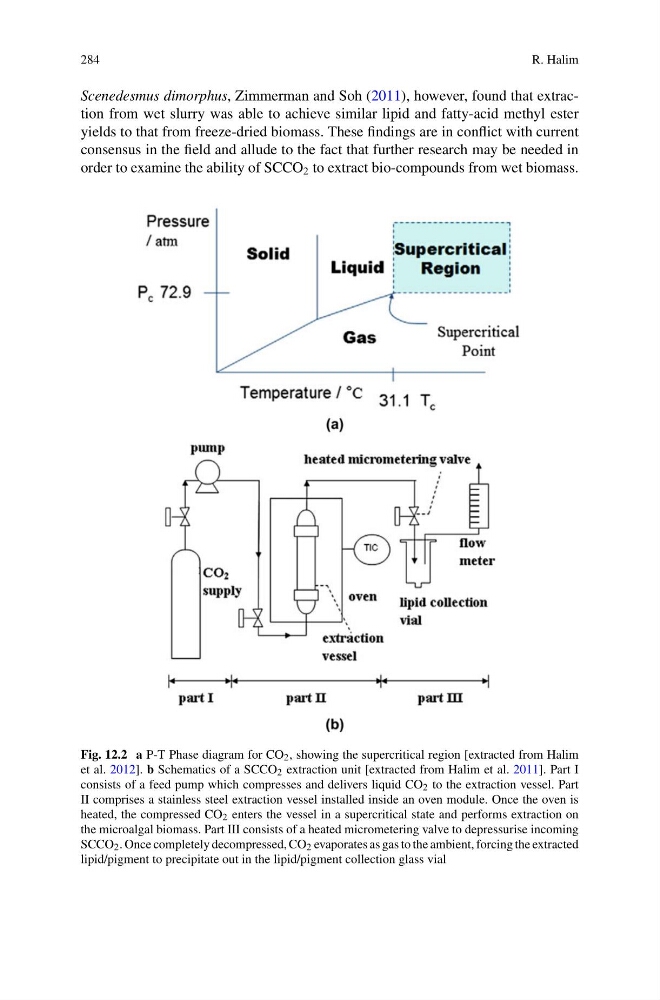
Fig. 12.2 a P-T Phase diagram for CO 2 , showing the supercritical region [extracted from Halim
et al. 2012]. b Schematics of a SCCO 2 extraction unit [extracted from Halim et al. 2011]. Part I
consists of a feed pump which compresses and delivers liquid CO 2 to the extraction vessel. Part
II comprises a stainless steel extraction vessel installed inside an oven module. Once the oven is
heated, the compressed CO 2 enters the vessel in a supercritical state and performs extraction on
the microalgal biomass. Part III consists of a heated micrometering valve to depressurise incoming
SCCO 2 . Once completely decompressed, CO 2 evaporates as gas to the ambient, forcing the extracted
lipid/pigment to precipitate out in the lipid/pigment collection glass vial
R. Halim
Scenedesmus dimorphus, Zimmerman and Soh (2011), however, found that extraction from wet slurry was able to achieve similar lipid and fatty-acid methyl ester
yields to that from freeze-dried biomass. These findings are in conflict with current
consensus in the field and allude to the fact that further research may be needed in
order to examine the ability of SCCO 2 to extract bio-compounds from wet biomass.
Fig. 12.2 a P-T Phase diagram for CO 2 , showing the supercritical region [extracted from Halim
et al. 2012]. b Schematics of a SCCO 2 extraction unit [extracted from Halim et al. 2011]. Part I
consists of a feed pump which compresses and delivers liquid CO 2 to the extraction vessel. Part
II comprises a stainless steel extraction vessel installed inside an oven module. Once the oven is
heated, the compressed CO 2 enters the vessel in a supercritical state and performs extraction on
the microalgal biomass. Part III consists of a heated micrometering valve to depressurise incoming
SCCO 2 . Once completely decompressed, CO 2 evaporates as gas to the ambient, forcing the extracted
lipid/pigment to precipitate out in the lipid/pigment collection glass vial