

11 Microalgae-Based Processes for Pigments Production
243
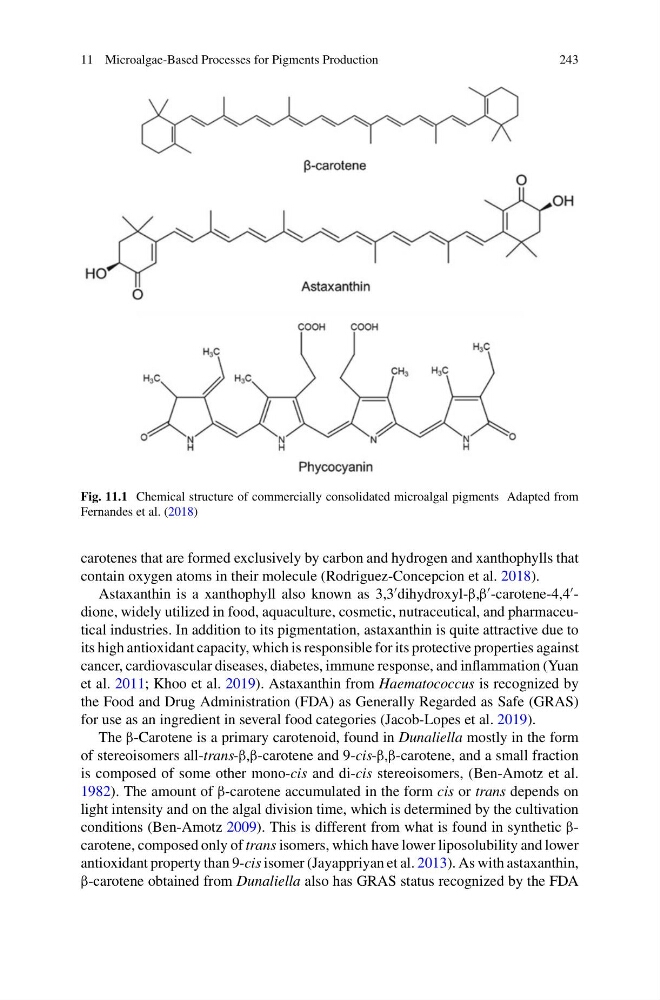
Fig. 11.1 Chemical structure of commercially consolidated microalgal pigments Adapted from
Fernandes et al. (2018)
carotenes that are formed exclusively by carbon and hydrogen and xanthophylls that
contain oxygen atoms in their molecule (Rodriguez-Concepcion et al. 2018).
Astaxanthin is a xanthophyll also known as 3,3
dihydroxyl-β,β
-carotene-4,4
-
dione, widely utilized in food, aquaculture, cosmetic, nutraceutical, and pharmaceutical industries. In addition to its pigmentation, astaxanthin is quite attractive due to
its high antioxidant capacity, which is responsible for its protective properties against
cancer, cardiovascular diseases, diabetes, immune response, and inflammation (Yuan
et al. 2011; Khoo et al. 2019). Astaxanthin from Haematococcus is recognized by
the Food and Drug Administration (FDA) as Generally Regarded as Safe (GRAS)
for use as an ingredient in several food categories (Jacob-Lopes et al. 2019).
The β-Carotene is a primary carotenoid, found in Dunaliella mostly in the form
of stereoisomers all-trans-β,β-carotene and 9-cis-β,β-carotene, and a small fraction
is composed of some other mono-cis and di-cis stereoisomers, (Ben-Amotz et al.
1982). The amount of β-carotene accumulated in the form cis or trans depends on
light intensity and on the algal division time, which is determined by the cultivation
conditions (Ben-Amotz 2009). This is different from what is found in synthetic βcarotene, composed only of trans isomers, which have lower liposolubility and lower
antioxidant property than 9-cis isomer (Jayappriyan et al. 2013). As with astaxanthin,
β-carotene obtained from Dunaliella also has GRAS status recognized by the FDA
243
Fig. 11.1 Chemical structure of commercially consolidated microalgal pigments Adapted from
Fernandes et al. (2018)
carotenes that are formed exclusively by carbon and hydrogen and xanthophylls that
contain oxygen atoms in their molecule (Rodriguez-Concepcion et al. 2018).
Astaxanthin is a xanthophyll also known as 3,3
dihydroxyl-β,β
-carotene-4,4
-
dione, widely utilized in food, aquaculture, cosmetic, nutraceutical, and pharmaceutical industries. In addition to its pigmentation, astaxanthin is quite attractive due to
its high antioxidant capacity, which is responsible for its protective properties against
cancer, cardiovascular diseases, diabetes, immune response, and inflammation (Yuan
et al. 2011; Khoo et al. 2019). Astaxanthin from Haematococcus is recognized by
the Food and Drug Administration (FDA) as Generally Regarded as Safe (GRAS)
for use as an ingredient in several food categories (Jacob-Lopes et al. 2019).
The β-Carotene is a primary carotenoid, found in Dunaliella mostly in the form
of stereoisomers all-trans-β,β-carotene and 9-cis-β,β-carotene, and a small fraction
is composed of some other mono-cis and di-cis stereoisomers, (Ben-Amotz et al.
1982). The amount of β-carotene accumulated in the form cis or trans depends on
light intensity and on the algal division time, which is determined by the cultivation
conditions (Ben-Amotz 2009). This is different from what is found in synthetic βcarotene, composed only of trans isomers, which have lower liposolubility and lower
antioxidant property than 9-cis isomer (Jayappriyan et al. 2013). As with astaxanthin,
β-carotene obtained from Dunaliella also has GRAS status recognized by the FDA