

232
A. R. C. Braga and V. V. de Rosso
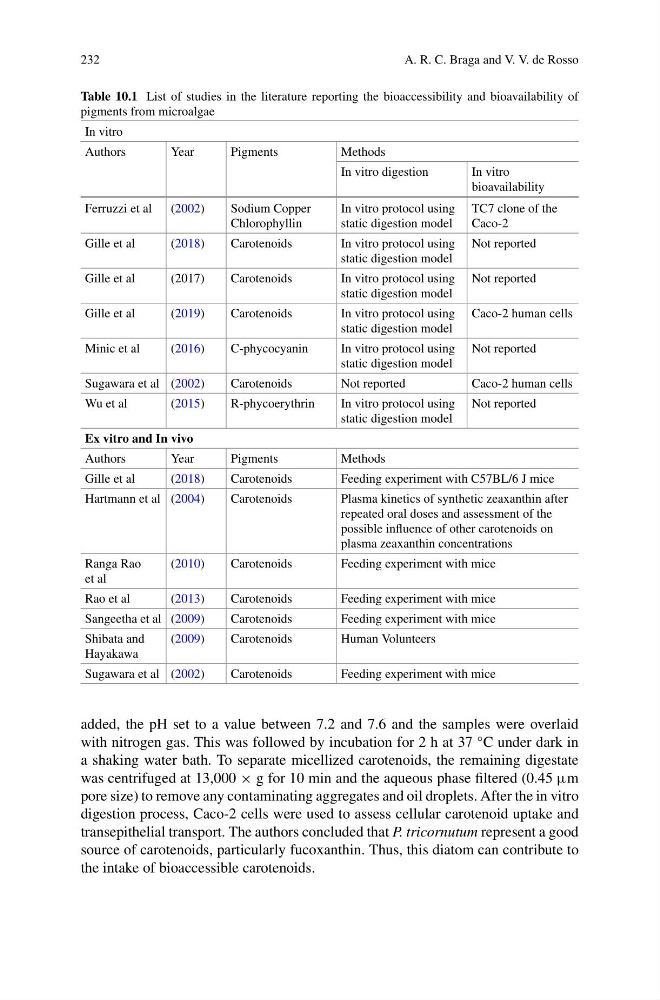
Table 10.1 List of studies in the literature reporting the bioaccessibility and bioavailability of
pigments from microalgae
In vitro
Authors
Year
Pigments
Methods
In vitro digestion
In vitro
bioavailability
Ferruzzi et al (2002)
Sodium Copper
Chlorophyllin
In vitro protocol using
static digestion model
TC7 clone of the
Caco-2
Gille et al
(2018)
Carotenoids
In vitro protocol using
static digestion model
Not reported
Gille et al
(2017)
Carotenoids
In vitro protocol using
static digestion model
Not reported
Gille et al
(2019)
Carotenoids
In vitro protocol using
static digestion model
Caco-2 human cells
Minic et al
(2016)
C-phycocyanin
In vitro protocol using
static digestion model
Not reported
Sugawara et al (2002)
Carotenoids
Not reported
Caco-2 human cells
Wu et al
(2015)
R-phycoerythrin
In vitro protocol using
static digestion model
Not reported
Ex vitro and In vivo
Authors
Year
Pigments
Methods
Gille et al
(2018)
Carotenoids
Feeding experiment with C57BL/6 J mice
Hartmann et al (2004)
Carotenoids
Plasma kinetics of synthetic zeaxanthin after
repeated oral doses and assessment of the
possible influence of other carotenoids on
plasma zeaxanthin concentrations
Ranga Rao
et al
(2010)
Carotenoids
Feeding experiment with mice
Rao et al
(2013)
Carotenoids
Feeding experiment with mice
Sangeetha et al (2009)
Carotenoids
Feeding experiment with mice
Shibata and
Hayakawa
(2009)
Carotenoids
Human Volunteers
Sugawara et al (2002)
Carotenoids
Feeding experiment with mice
added, the pH set to a value between 7.2 and 7.6 and the samples were overlaid
with nitrogen gas. This was followed by incubation for 2 h at 37 °C under dark in
a shaking water bath. To separate micellized carotenoids, the remaining digestate
was centrifuged at 13,000 × g for 10 min and the aqueous phase filtered (0.45 μm
pore size) to remove any contaminating aggregates and oil droplets. After the in vitro
digestion process, Caco-2 cells were used to assess cellular carotenoid uptake and
transepithelial transport. The authors concluded that P. tricornutum represent a good
source of carotenoids, particularly fucoxanthin. Thus, this diatom can contribute to
the intake of bioaccessible carotenoids.
A. R. C. Braga and V. V. de Rosso
Table 10.1 List of studies in the literature reporting the bioaccessibility and bioavailability of
pigments from microalgae
In vitro
Authors
Year
Pigments
Methods
In vitro digestion
In vitro
bioavailability
Ferruzzi et al (2002)
Sodium Copper
Chlorophyllin
In vitro protocol using
static digestion model
TC7 clone of the
Caco-2
Gille et al
(2018)
Carotenoids
In vitro protocol using
static digestion model
Not reported
Gille et al
(2017)
Carotenoids
In vitro protocol using
static digestion model
Not reported
Gille et al
(2019)
Carotenoids
In vitro protocol using
static digestion model
Caco-2 human cells
Minic et al
(2016)
C-phycocyanin
In vitro protocol using
static digestion model
Not reported
Sugawara et al (2002)
Carotenoids
Not reported
Caco-2 human cells
Wu et al
(2015)
R-phycoerythrin
In vitro protocol using
static digestion model
Not reported
Ex vitro and In vivo
Authors
Year
Pigments
Methods
Gille et al
(2018)
Carotenoids
Feeding experiment with C57BL/6 J mice
Hartmann et al (2004)
Carotenoids
Plasma kinetics of synthetic zeaxanthin after
repeated oral doses and assessment of the
possible influence of other carotenoids on
plasma zeaxanthin concentrations
Ranga Rao
et al
(2010)
Carotenoids
Feeding experiment with mice
Rao et al
(2013)
Carotenoids
Feeding experiment with mice
Sangeetha et al (2009)
Carotenoids
Feeding experiment with mice
Shibata and
Hayakawa
(2009)
Carotenoids
Human Volunteers
Sugawara et al (2002)
Carotenoids
Feeding experiment with mice
added, the pH set to a value between 7.2 and 7.6 and the samples were overlaid
with nitrogen gas. This was followed by incubation for 2 h at 37 °C under dark in
a shaking water bath. To separate micellized carotenoids, the remaining digestate
was centrifuged at 13,000 × g for 10 min and the aqueous phase filtered (0.45 μm
pore size) to remove any contaminating aggregates and oil droplets. After the in vitro
digestion process, Caco-2 cells were used to assess cellular carotenoid uptake and
transepithelial transport. The authors concluded that P. tricornutum represent a good
source of carotenoids, particularly fucoxanthin. Thus, this diatom can contribute to
the intake of bioaccessible carotenoids.