

224
T. Casagrande do Nascimento et al.
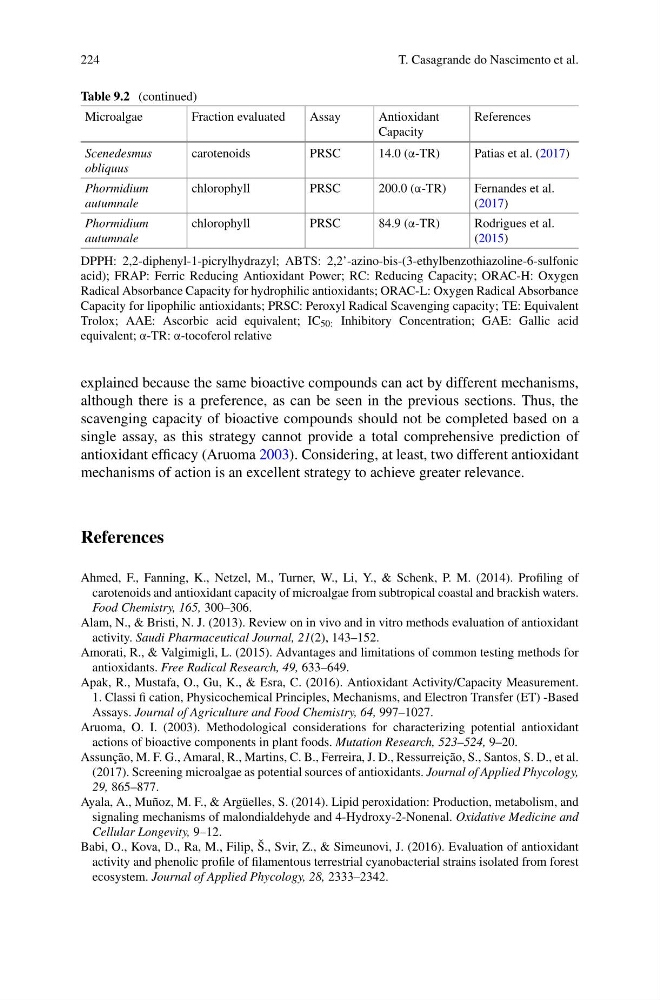
Table 9.2 (continued)
Microalgae
Fraction evaluated
Assay
Antioxidant
Capacity
References
Scenedesmus
obliquus
carotenoids
PRSC
14.0 (α-TR)
Patias et al. (2017)
Phormidium
autumnale
chlorophyll
PRSC
200.0 (α-TR)
Fernandes et al.
(2017)
Phormidium
autumnale
chlorophyll
PRSC
84.9 (α-TR)
Rodrigues et al.
(2015)
DPPH: 2,2-diphenyl-1-picrylhydrazyl; ABTS: 2,2’-azino-bis-(3-ethylbenzothiazoline-6-sulfonic
acid); FRAP: Ferric Reducing Antioxidant Power; RC: Reducing Capacity; ORAC-H: Oxygen
Radical Absorbance Capacity for hydrophilic antioxidants; ORAC-L: Oxygen Radical Absorbance
Capacity for lipophilic antioxidants; PRSC: Peroxyl Radical Scavenging capacity; TE: Equivalent
Trolox; AAE: Ascorbic acid equivalent; IC 50: Inhibitory Concentration; GAE: Gallic acid
equivalent; α-TR: α-tocoferol relative
explained because the same bioactive compounds can act by different mechanisms,
although there is a preference, as can be seen in the previous sections. Thus, the
scavenging capacity of bioactive compounds should not be completed based on a
single assay, as this strategy cannot provide a total comprehensive prediction of
antioxidant efficacy (Aruoma 2003). Considering, at least, two different antioxidant
mechanisms of action is an excellent strategy to achieve greater relevance.
References
Ahmed, F., Fanning, K., Netzel, M., Turner, W., Li, Y., & Schenk, P. M. (2014). Profiling of
carotenoids and antioxidant capacity of microalgae from subtropical coastal and brackish waters.
Food Chemistry, 165, 300–306.
Alam, N., & Bristi, N. J. (2013). Review on in vivo and in vitro methods evaluation of antioxidant
activity. Saudi Pharmaceutical Journal, 21(2), 143–152.
Amorati, R., & Valgimigli, L. (2015). Advantages and limitations of common testing methods for
antioxidants. Free Radical Research, 49, 633–649.
Apak, R., Mustafa, O., Gu, K., & Esra, C. (2016). Antioxidant Activity/Capacity Measurement.
1. Classi fi cation, Physicochemical Principles, Mechanisms, and Electron Transfer (ET) -Based
Assays. Journal of Agriculture and Food Chemistry, 64, 997–1027.
Aruoma, O. I. (2003). Methodological considerations for characterizing potential antioxidant
actions of bioactive components in plant foods. Mutation Research, 523–524, 9–20.
Assunção, M. F. G., Amaral, R., Martins, C. B., Ferreira, J. D., Ressurreição, S., Santos, S. D., et al.
(2017). Screening microalgae as potential sources of antioxidants. Journal of Applied Phycology,
29, 865–877.
Ayala, A., Muñoz, M. F., & Argüelles, S. (2014). Lipid peroxidation: Production, metabolism, and
signaling mechanisms of malondialdehyde and 4-Hydroxy-2-Nonenal. Oxidative Medicine and
Cellular Longevity, 9–12.
Babi, O., Kova, D., Ra, M., Filip, Š., Svir, Z., & Simeunovi, J. (2016). Evaluation of antioxidant
activity and phenolic profile of filamentous terrestrial cyanobacterial strains isolated from forest
ecosystem. Journal of Applied Phycology, 28, 2333–2342.
T. Casagrande do Nascimento et al.
Table 9.2 (continued)
Microalgae
Fraction evaluated
Assay
Antioxidant
Capacity
References
Scenedesmus
obliquus
carotenoids
PRSC
14.0 (α-TR)
Patias et al. (2017)
Phormidium
autumnale
chlorophyll
PRSC
200.0 (α-TR)
Fernandes et al.
(2017)
Phormidium
autumnale
chlorophyll
PRSC
84.9 (α-TR)
Rodrigues et al.
(2015)
DPPH: 2,2-diphenyl-1-picrylhydrazyl; ABTS: 2,2’-azino-bis-(3-ethylbenzothiazoline-6-sulfonic
acid); FRAP: Ferric Reducing Antioxidant Power; RC: Reducing Capacity; ORAC-H: Oxygen
Radical Absorbance Capacity for hydrophilic antioxidants; ORAC-L: Oxygen Radical Absorbance
Capacity for lipophilic antioxidants; PRSC: Peroxyl Radical Scavenging capacity; TE: Equivalent
Trolox; AAE: Ascorbic acid equivalent; IC 50: Inhibitory Concentration; GAE: Gallic acid
equivalent; α-TR: α-tocoferol relative
explained because the same bioactive compounds can act by different mechanisms,
although there is a preference, as can be seen in the previous sections. Thus, the
scavenging capacity of bioactive compounds should not be completed based on a
single assay, as this strategy cannot provide a total comprehensive prediction of
antioxidant efficacy (Aruoma 2003). Considering, at least, two different antioxidant
mechanisms of action is an excellent strategy to achieve greater relevance.
References
Ahmed, F., Fanning, K., Netzel, M., Turner, W., Li, Y., & Schenk, P. M. (2014). Profiling of
carotenoids and antioxidant capacity of microalgae from subtropical coastal and brackish waters.
Food Chemistry, 165, 300–306.
Alam, N., & Bristi, N. J. (2013). Review on in vivo and in vitro methods evaluation of antioxidant
activity. Saudi Pharmaceutical Journal, 21(2), 143–152.
Amorati, R., & Valgimigli, L. (2015). Advantages and limitations of common testing methods for
antioxidants. Free Radical Research, 49, 633–649.
Apak, R., Mustafa, O., Gu, K., & Esra, C. (2016). Antioxidant Activity/Capacity Measurement.
1. Classi fi cation, Physicochemical Principles, Mechanisms, and Electron Transfer (ET) -Based
Assays. Journal of Agriculture and Food Chemistry, 64, 997–1027.
Aruoma, O. I. (2003). Methodological considerations for characterizing potential antioxidant
actions of bioactive components in plant foods. Mutation Research, 523–524, 9–20.
Assunção, M. F. G., Amaral, R., Martins, C. B., Ferreira, J. D., Ressurreição, S., Santos, S. D., et al.
(2017). Screening microalgae as potential sources of antioxidants. Journal of Applied Phycology,
29, 865–877.
Ayala, A., Muñoz, M. F., & Argüelles, S. (2014). Lipid peroxidation: Production, metabolism, and
signaling mechanisms of malondialdehyde and 4-Hydroxy-2-Nonenal. Oxidative Medicine and
Cellular Longevity, 9–12.
Babi, O., Kova, D., Ra, M., Filip, Š., Svir, Z., & Simeunovi, J. (2016). Evaluation of antioxidant
activity and phenolic profile of filamentous terrestrial cyanobacterial strains isolated from forest
ecosystem. Journal of Applied Phycology, 28, 2333–2342.