

2.2 Types of Aquatic Ecosystems
15
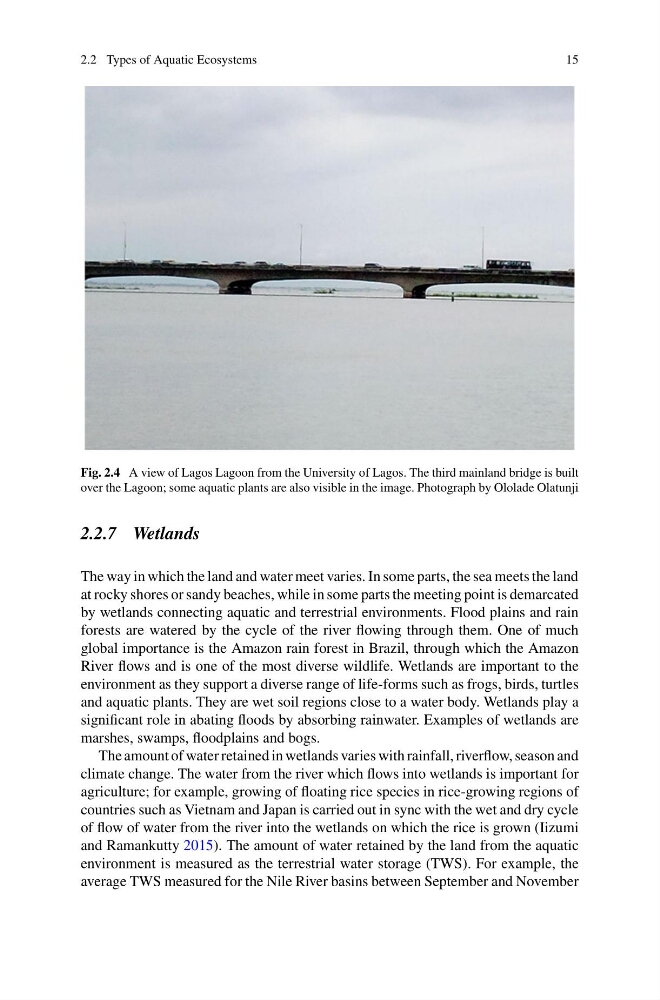
Fig. 2.4 A view of Lagos Lagoon from the University of Lagos. The third mainland bridge is built
over the Lagoon; some aquatic plants are also visible in the image. Photograph by Ololade Olatunji
2.2.7 Wetlands
The way in which the land and water meet varies. In some parts, the sea meets the land
at rocky shores or sandy beaches, while in some parts the meeting point is demarcated
by wetlands connecting aquatic and terrestrial environments. Flood plains and rain
forests are watered by the cycle of the river flowing through them. One of much
global importance is the Amazon rain forest in Brazil, through which the Amazon
River flows and is one of the most diverse wildlife. Wetlands are important to the
environment as they support a diverse range of life-forms such as frogs, birds, turtles
and aquatic plants. They are wet soil regions close to a water body. Wetlands play a
significant role in abating floods by absorbing rainwater. Examples of wetlands are
marshes, swamps, floodplains and bogs.
The amount of water retained in wetlands varies with rainfall, riverflow, season and
climate change. The water from the river which flows into wetlands is important for
agriculture; for example, growing of floating rice species in rice-growing regions of
countries such as Vietnam and Japan is carried out in sync with the wet and dry cycle
of flow of water from the river into the wetlands on which the rice is grown (Iizumi
and Ramankutty 2015). The amount of water retained by the land from the aquatic
environment is measured as the terrestrial water storage (TWS). For example, the
average TWS measured for the Nile River basins between September and November
15
Fig. 2.4 A view of Lagos Lagoon from the University of Lagos. The third mainland bridge is built
over the Lagoon; some aquatic plants are also visible in the image. Photograph by Ololade Olatunji
2.2.7 Wetlands
The way in which the land and water meet varies. In some parts, the sea meets the land
at rocky shores or sandy beaches, while in some parts the meeting point is demarcated
by wetlands connecting aquatic and terrestrial environments. Flood plains and rain
forests are watered by the cycle of the river flowing through them. One of much
global importance is the Amazon rain forest in Brazil, through which the Amazon
River flows and is one of the most diverse wildlife. Wetlands are important to the
environment as they support a diverse range of life-forms such as frogs, birds, turtles
and aquatic plants. They are wet soil regions close to a water body. Wetlands play a
significant role in abating floods by absorbing rainwater. Examples of wetlands are
marshes, swamps, floodplains and bogs.
The amount of water retained in wetlands varies with rainfall, riverflow, season and
climate change. The water from the river which flows into wetlands is important for
agriculture; for example, growing of floating rice species in rice-growing regions of
countries such as Vietnam and Japan is carried out in sync with the wet and dry cycle
of flow of water from the river into the wetlands on which the rice is grown (Iizumi
and Ramankutty 2015). The amount of water retained by the land from the aquatic
environment is measured as the terrestrial water storage (TWS). For example, the
average TWS measured for the Nile River basins between September and November