

14
2 Overview of the Aquatic Ecosystem
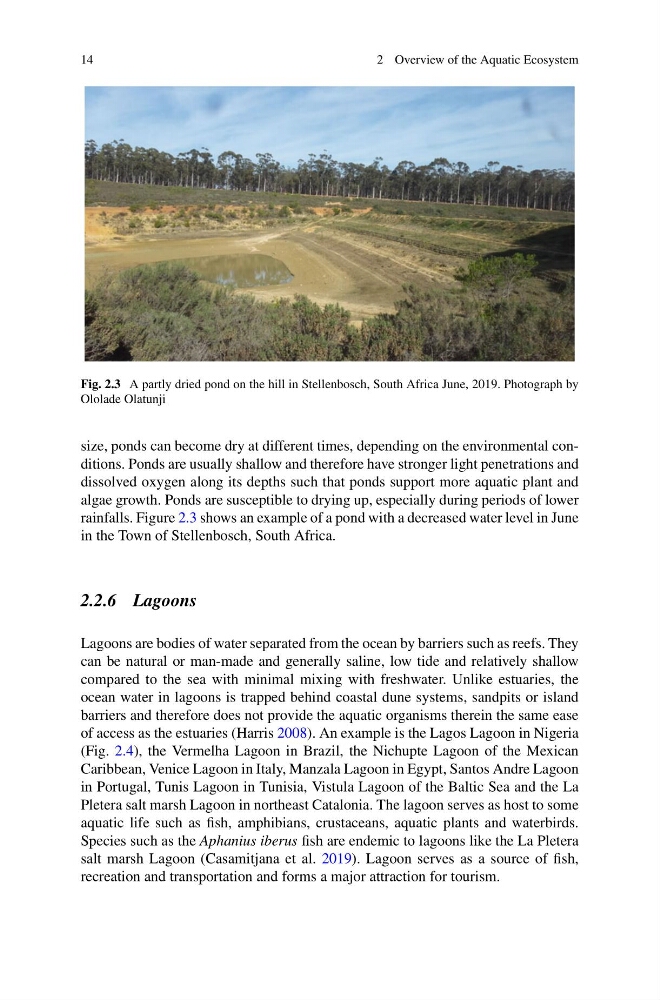
Fig. 2.3 A partly dried pond on the hill in Stellenbosch, South Africa June, 2019. Photograph by
Ololade Olatunji
size, ponds can become dry at different times, depending on the environmental conditions. Ponds are usually shallow and therefore have stronger light penetrations and
dissolved oxygen along its depths such that ponds support more aquatic plant and
algae growth. Ponds are susceptible to drying up, especially during periods of lower
rainfalls. Figure 2.3 shows an example of a pond with a decreased water level in June
in the Town of Stellenbosch, South Africa.
2.2.6 Lagoons
Lagoons are bodies of water separated from the ocean by barriers such as reefs. They
can be natural or man-made and generally saline, low tide and relatively shallow
compared to the sea with minimal mixing with freshwater. Unlike estuaries, the
ocean water in lagoons is trapped behind coastal dune systems, sandpits or island
barriers and therefore does not provide the aquatic organisms therein the same ease
of access as the estuaries (Harris 2008). An example is the Lagos Lagoon in Nigeria
(Fig. 2.4), the Vermelha Lagoon in Brazil, the Nichupte Lagoon of the Mexican
Caribbean, Venice Lagoon in Italy, Manzala Lagoon in Egypt, Santos Andre Lagoon
in Portugal, Tunis Lagoon in Tunisia, Vistula Lagoon of the Baltic Sea and the La
Pletera salt marsh Lagoon in northeast Catalonia. The lagoon serves as host to some
aquatic life such as fish, amphibians, crustaceans, aquatic plants and waterbirds.
Species such as the Aphanius iberus fish are endemic to lagoons like the La Pletera
salt marsh Lagoon (Casamitjana et al. 2019). Lagoon serves as a source of fish,
recreation and transportation and forms a major attraction for tourism.
2 Overview of the Aquatic Ecosystem
Fig. 2.3 A partly dried pond on the hill in Stellenbosch, South Africa June, 2019. Photograph by
Ololade Olatunji
size, ponds can become dry at different times, depending on the environmental conditions. Ponds are usually shallow and therefore have stronger light penetrations and
dissolved oxygen along its depths such that ponds support more aquatic plant and
algae growth. Ponds are susceptible to drying up, especially during periods of lower
rainfalls. Figure 2.3 shows an example of a pond with a decreased water level in June
in the Town of Stellenbosch, South Africa.
2.2.6 Lagoons
Lagoons are bodies of water separated from the ocean by barriers such as reefs. They
can be natural or man-made and generally saline, low tide and relatively shallow
compared to the sea with minimal mixing with freshwater. Unlike estuaries, the
ocean water in lagoons is trapped behind coastal dune systems, sandpits or island
barriers and therefore does not provide the aquatic organisms therein the same ease
of access as the estuaries (Harris 2008). An example is the Lagos Lagoon in Nigeria
(Fig. 2.4), the Vermelha Lagoon in Brazil, the Nichupte Lagoon of the Mexican
Caribbean, Venice Lagoon in Italy, Manzala Lagoon in Egypt, Santos Andre Lagoon
in Portugal, Tunis Lagoon in Tunisia, Vistula Lagoon of the Baltic Sea and the La
Pletera salt marsh Lagoon in northeast Catalonia. The lagoon serves as host to some
aquatic life such as fish, amphibians, crustaceans, aquatic plants and waterbirds.
Species such as the Aphanius iberus fish are endemic to lagoons like the La Pletera
salt marsh Lagoon (Casamitjana et al. 2019). Lagoon serves as a source of fish,
recreation and transportation and forms a major attraction for tourism.