

3 Catalysts via Atomic Layer Deposition
71
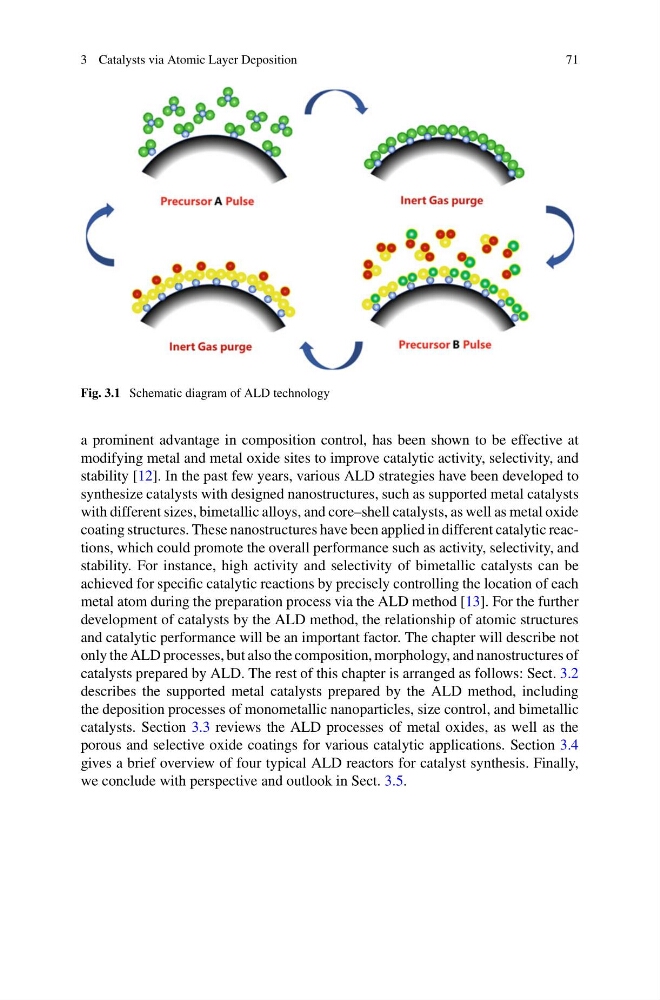
Fig. 3.1 Schematic diagram of ALD technology
a prominent advantage in composition control, has been shown to be effective at
modifying metal and metal oxide sites to improve catalytic activity, selectivity, and
stability [12]. In the past few years, various ALD strategies have been developed to
synthesize catalysts with designed nanostructures, such as supported metal catalysts
with different sizes, bimetallic alloys, and core–shell catalysts, as well as metal oxide
coating structures. These nanostructures have been applied in different catalytic reactions, which could promote the overall performance such as activity, selectivity, and
stability. For instance, high activity and selectivity of bimetallic catalysts can be
achieved for specific catalytic reactions by precisely controlling the location of each
metal atom during the preparation process via the ALD method [13]. For the further
development of catalysts by the ALD method, the relationship of atomic structures
and catalytic performance will be an important factor. The chapter will describe not
only the ALD processes, but also the composition, morphology, and nanostructures of
catalysts prepared by ALD. The rest of this chapter is arranged as follows: Sect. 3.2
describes the supported metal catalysts prepared by the ALD method, including
the deposition processes of monometallic nanoparticles, size control, and bimetallic
catalysts. Section 3.3 reviews the ALD processes of metal oxides, as well as the
porous and selective oxide coatings for various catalytic applications. Section 3.4
gives a brief overview of four typical ALD reactors for catalyst synthesis. Finally,
we conclude with perspective and outlook in Sect. 3.5.
71
Fig. 3.1 Schematic diagram of ALD technology
a prominent advantage in composition control, has been shown to be effective at
modifying metal and metal oxide sites to improve catalytic activity, selectivity, and
stability [12]. In the past few years, various ALD strategies have been developed to
synthesize catalysts with designed nanostructures, such as supported metal catalysts
with different sizes, bimetallic alloys, and core–shell catalysts, as well as metal oxide
coating structures. These nanostructures have been applied in different catalytic reactions, which could promote the overall performance such as activity, selectivity, and
stability. For instance, high activity and selectivity of bimetallic catalysts can be
achieved for specific catalytic reactions by precisely controlling the location of each
metal atom during the preparation process via the ALD method [13]. For the further
development of catalysts by the ALD method, the relationship of atomic structures
and catalytic performance will be an important factor. The chapter will describe not
only the ALD processes, but also the composition, morphology, and nanostructures of
catalysts prepared by ALD. The rest of this chapter is arranged as follows: Sect. 3.2
describes the supported metal catalysts prepared by the ALD method, including
the deposition processes of monometallic nanoparticles, size control, and bimetallic
catalysts. Section 3.3 reviews the ALD processes of metal oxides, as well as the
porous and selective oxide coatings for various catalytic applications. Section 3.4
gives a brief overview of four typical ALD reactors for catalyst synthesis. Finally,
we conclude with perspective and outlook in Sect. 3.5.