

12 Ligand Effects in Ruthenium Nanoparticle Catalysis
427
O
O
O
O
O
P
P
O
O
SiMe 3
SiMe 3
O
O
Me 3 Si
Me 3 Si
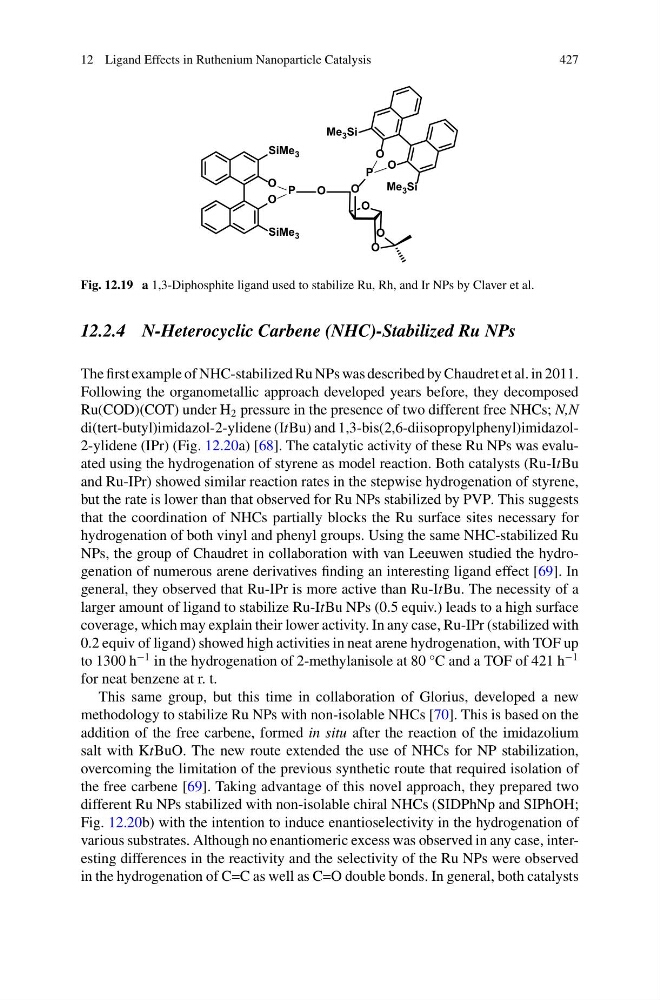
Fig. 12.19 a 1,3-Diphosphite ligand used to stabilize Ru, Rh, and Ir NPs by Claver et al.
12.2.4 N-Heterocyclic Carbene (NHC)-Stabilized Ru NPs
The first example of NHC-stabilized Ru NPs was described by Chaudret et al. in 2011.
Following the organometallic approach developed years before, they decomposed
Ru(COD)(COT) under H 2 pressure in the presence of two different free NHCs; N,N
di(tert-butyl)imidazol-2-ylidene (ItBu) and 1,3-bis(2,6-diisopropylphenyl)imidazol2-ylidene (IPr) (Fig. 12.20a) [68]. The catalytic activity of these Ru NPs was evaluated using the hydrogenation of styrene as model reaction. Both catalysts (Ru-ItBu
and Ru-IPr) showed similar reaction rates in the stepwise hydrogenation of styrene,
but the rate is lower than that observed for Ru NPs stabilized by PVP. This suggests
that the coordination of NHCs partially blocks the Ru surface sites necessary for
hydrogenation of both vinyl and phenyl groups. Using the same NHC-stabilized Ru
NPs, the group of Chaudret in collaboration with van Leeuwen studied the hydrogenation of numerous arene derivatives finding an interesting ligand effect [69]. In
general, they observed that Ru-IPr is more active than Ru-ItBu. The necessity of a
larger amount of ligand to stabilize Ru-ItBu NPs (0.5 equiv.) leads to a high surface
coverage, which may explain their lower activity. In any case, Ru-IPr (stabilized with
0.2 equiv of ligand) showed high activities in neat arene hydrogenation, with TOF up
to 1300 h
−1 in the hydrogenation of 2-methylanisole at 80 °C and a TOF of 421 h
−1
for neat benzene at r. t.
This same group, but this time in collaboration of Glorius, developed a new
methodology to stabilize Ru NPs with non-isolable NHCs [70]. This is based on the
addition of the free carbene, formed in situ after the reaction of the imidazolium
salt with KtBuO. The new route extended the use of NHCs for NP stabilization,
overcoming the limitation of the previous synthetic route that required isolation of
the free carbene [69]. Taking advantage of this novel approach, they prepared two
different Ru NPs stabilized with non-isolable chiral NHCs (SIDPhNp and SIPhOH;
Fig. 12.20b) with the intention to induce enantioselectivity in the hydrogenation of
various substrates. Although no enantiomeric excess was observed in any case, interesting differences in the reactivity and the selectivity of the Ru NPs were observed
in the hydrogenation of C=C as well as C=O double bonds. In general, both catalysts
427
O
O
O
O
O
P
P
O
O
SiMe 3
SiMe 3
O
O
Me 3 Si
Me 3 Si
Fig. 12.19 a 1,3-Diphosphite ligand used to stabilize Ru, Rh, and Ir NPs by Claver et al.
12.2.4 N-Heterocyclic Carbene (NHC)-Stabilized Ru NPs
The first example of NHC-stabilized Ru NPs was described by Chaudret et al. in 2011.
Following the organometallic approach developed years before, they decomposed
Ru(COD)(COT) under H 2 pressure in the presence of two different free NHCs; N,N
di(tert-butyl)imidazol-2-ylidene (ItBu) and 1,3-bis(2,6-diisopropylphenyl)imidazol2-ylidene (IPr) (Fig. 12.20a) [68]. The catalytic activity of these Ru NPs was evaluated using the hydrogenation of styrene as model reaction. Both catalysts (Ru-ItBu
and Ru-IPr) showed similar reaction rates in the stepwise hydrogenation of styrene,
but the rate is lower than that observed for Ru NPs stabilized by PVP. This suggests
that the coordination of NHCs partially blocks the Ru surface sites necessary for
hydrogenation of both vinyl and phenyl groups. Using the same NHC-stabilized Ru
NPs, the group of Chaudret in collaboration with van Leeuwen studied the hydrogenation of numerous arene derivatives finding an interesting ligand effect [69]. In
general, they observed that Ru-IPr is more active than Ru-ItBu. The necessity of a
larger amount of ligand to stabilize Ru-ItBu NPs (0.5 equiv.) leads to a high surface
coverage, which may explain their lower activity. In any case, Ru-IPr (stabilized with
0.2 equiv of ligand) showed high activities in neat arene hydrogenation, with TOF up
to 1300 h
−1 in the hydrogenation of 2-methylanisole at 80 °C and a TOF of 421 h
−1
for neat benzene at r. t.
This same group, but this time in collaboration of Glorius, developed a new
methodology to stabilize Ru NPs with non-isolable NHCs [70]. This is based on the
addition of the free carbene, formed in situ after the reaction of the imidazolium
salt with KtBuO. The new route extended the use of NHCs for NP stabilization,
overcoming the limitation of the previous synthetic route that required isolation of
the free carbene [69]. Taking advantage of this novel approach, they prepared two
different Ru NPs stabilized with non-isolable chiral NHCs (SIDPhNp and SIPhOH;
Fig. 12.20b) with the intention to induce enantioselectivity in the hydrogenation of
various substrates. Although no enantiomeric excess was observed in any case, interesting differences in the reactivity and the selectivity of the Ru NPs were observed
in the hydrogenation of C=C as well as C=O double bonds. In general, both catalysts