

426
L. M. Martínez-Prieto and P. W. N. M. van Leeuwen
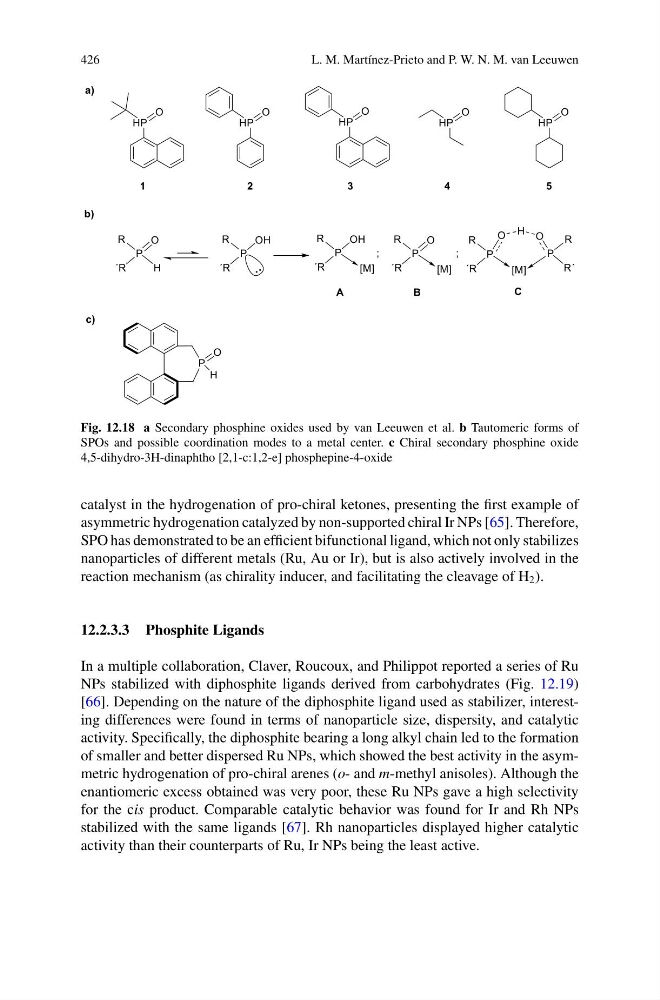
Fig. 12.18 a Secondary phosphine oxides used by van Leeuwen et al. b Tautomeric forms of
SPOs and possible coordination modes to a metal center. c Chiral secondary phosphine oxide
4,5-dihydro-3H-dinaphtho [2,1-c:1,2-e] phosphepine-4-oxide
catalyst in the hydrogenation of pro-chiral ketones, presenting the first example of
asymmetric hydrogenation catalyzed by non-supported chiral Ir NPs [65]. Therefore,
SPO has demonstrated to be an efficient bifunctional ligand, which not only stabilizes
nanoparticles of different metals (Ru, Au or Ir), but is also actively involved in the
reaction mechanism (as chirality inducer, and facilitating the cleavage of H 2 ).
12.2.3.3 Phosphite Ligands
In a multiple collaboration, Claver, Roucoux, and Philippot reported a series of Ru
NPs stabilized with diphosphite ligands derived from carbohydrates (Fig. 12.19)
[66]. Depending on the nature of the diphosphite ligand used as stabilizer, interesting differences were found in terms of nanoparticle size, dispersity, and catalytic
activity. Specifically, the diphosphite bearing a long alkyl chain led to the formation
of smaller and better dispersed Ru NPs, which showed the best activity in the asymmetric hydrogenation of pro-chiral arenes (o- and m-methyl anisoles). Although the
enantiomeric excess obtained was very poor, these Ru NPs gave a high selectivity
for the cis product. Comparable catalytic behavior was found for Ir and Rh NPs
stabilized with the same ligands [67]. Rh nanoparticles displayed higher catalytic
activity than their counterparts of Ru, Ir NPs being the least active.
L. M. Martínez-Prieto and P. W. N. M. van Leeuwen
Fig. 12.18 a Secondary phosphine oxides used by van Leeuwen et al. b Tautomeric forms of
SPOs and possible coordination modes to a metal center. c Chiral secondary phosphine oxide
4,5-dihydro-3H-dinaphtho [2,1-c:1,2-e] phosphepine-4-oxide
catalyst in the hydrogenation of pro-chiral ketones, presenting the first example of
asymmetric hydrogenation catalyzed by non-supported chiral Ir NPs [65]. Therefore,
SPO has demonstrated to be an efficient bifunctional ligand, which not only stabilizes
nanoparticles of different metals (Ru, Au or Ir), but is also actively involved in the
reaction mechanism (as chirality inducer, and facilitating the cleavage of H 2 ).
12.2.3.3 Phosphite Ligands
In a multiple collaboration, Claver, Roucoux, and Philippot reported a series of Ru
NPs stabilized with diphosphite ligands derived from carbohydrates (Fig. 12.19)
[66]. Depending on the nature of the diphosphite ligand used as stabilizer, interesting differences were found in terms of nanoparticle size, dispersity, and catalytic
activity. Specifically, the diphosphite bearing a long alkyl chain led to the formation
of smaller and better dispersed Ru NPs, which showed the best activity in the asymmetric hydrogenation of pro-chiral arenes (o- and m-methyl anisoles). Although the
enantiomeric excess obtained was very poor, these Ru NPs gave a high selectivity
for the cis product. Comparable catalytic behavior was found for Ir and Rh NPs
stabilized with the same ligands [67]. Rh nanoparticles displayed higher catalytic
activity than their counterparts of Ru, Ir NPs being the least active.