

424
L. M. Martínez-Prieto and P. W. N. M. van Leeuwen
Ph 2 P
O
O
PPh 2
Ph 2 P
O
O
PPh 2
H
H
Ph 2 P
O
O
H
H
O
O
PR 2
PR 2
R = Ph 2
R = Cy 5
1
3
4
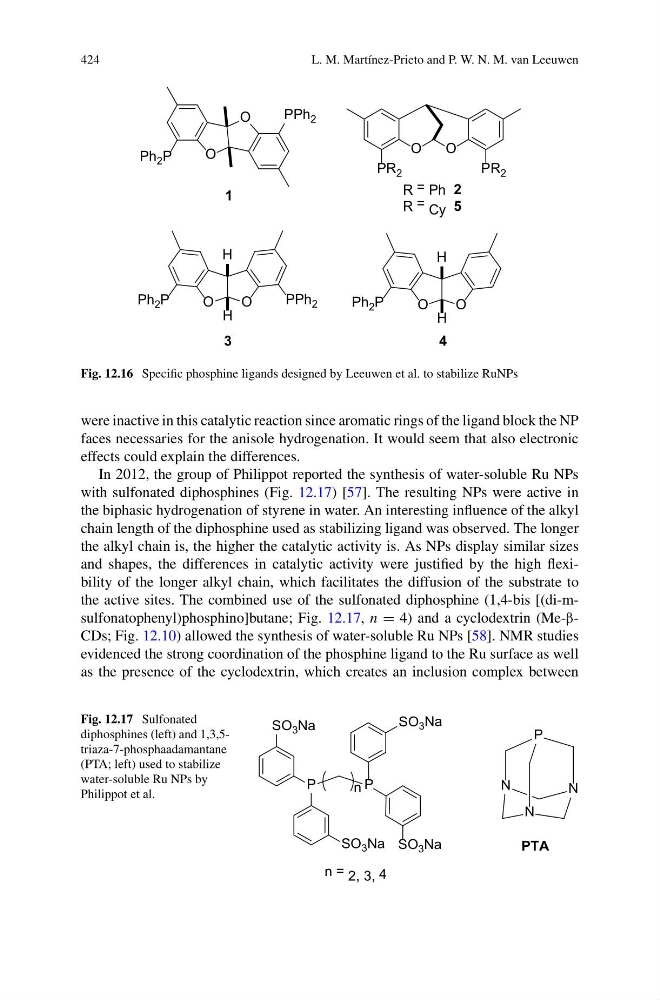
Fig. 12.16 Specific phosphine ligands designed by Leeuwen et al. to stabilize RuNPs
were inactive in this catalytic reaction since aromatic rings of the ligand block the NP
faces necessaries for the anisole hydrogenation. It would seem that also electronic
effects could explain the differences.
In 2012, the group of Philippot reported the synthesis of water-soluble Ru NPs
with sulfonated diphosphines (Fig. 12.17) [57]. The resulting NPs were active in
the biphasic hydrogenation of styrene in water. An interesting influence of the alkyl
chain length of the diphosphine used as stabilizing ligand was observed. The longer
the alkyl chain is, the higher the catalytic activity is. As NPs display similar sizes
and shapes, the differences in catalytic activity were justified by the high flexibility of the longer alkyl chain, which facilitates the diffusion of the substrate to
the active sites. The combined use of the sulfonated diphosphine (1,4-bis [(di-msulfonatophenyl)phosphino]butane; Fig. 12.17, n = 4) and a cyclodextrin (Me-βCDs; Fig. 12.10) allowed the synthesis of water-soluble Ru NPs [58]. NMR studies
evidenced the strong coordination of the phosphine ligand to the Ru surface as well
as the presence of the cyclodextrin, which creates an inclusion complex between
Fig. 12.17 Sulfonated
diphosphines (left) and 1,3,5triaza-7-phosphaadamantane
(PTA; left) used to stabilize
water-soluble Ru NPs by
Philippot et al.
P
P
SO 3 Na
SO 3 Na SO 3 Na
SO 3 Na
n
n = 2, 3, 4
P
N
N
N
PTA
L. M. Martínez-Prieto and P. W. N. M. van Leeuwen
Ph 2 P
O
O
PPh 2
Ph 2 P
O
O
PPh 2
H
H
Ph 2 P
O
O
H
H
O
O
PR 2
PR 2
R = Ph 2
R = Cy 5
1
3
4
Fig. 12.16 Specific phosphine ligands designed by Leeuwen et al. to stabilize RuNPs
were inactive in this catalytic reaction since aromatic rings of the ligand block the NP
faces necessaries for the anisole hydrogenation. It would seem that also electronic
effects could explain the differences.
In 2012, the group of Philippot reported the synthesis of water-soluble Ru NPs
with sulfonated diphosphines (Fig. 12.17) [57]. The resulting NPs were active in
the biphasic hydrogenation of styrene in water. An interesting influence of the alkyl
chain length of the diphosphine used as stabilizing ligand was observed. The longer
the alkyl chain is, the higher the catalytic activity is. As NPs display similar sizes
and shapes, the differences in catalytic activity were justified by the high flexibility of the longer alkyl chain, which facilitates the diffusion of the substrate to
the active sites. The combined use of the sulfonated diphosphine (1,4-bis [(di-msulfonatophenyl)phosphino]butane; Fig. 12.17, n = 4) and a cyclodextrin (Me-βCDs; Fig. 12.10) allowed the synthesis of water-soluble Ru NPs [58]. NMR studies
evidenced the strong coordination of the phosphine ligand to the Ru surface as well
as the presence of the cyclodextrin, which creates an inclusion complex between
Fig. 12.17 Sulfonated
diphosphines (left) and 1,3,5triaza-7-phosphaadamantane
(PTA; left) used to stabilize
water-soluble Ru NPs by
Philippot et al.
P
P
SO 3 Na
SO 3 Na SO 3 Na
SO 3 Na
n
n = 2, 3, 4
P
N
N
N
PTA