

10 Progress in the Selective Semi-hydrogenation of Alkynes …
313
3 bar H 2
THF, 30ºC
N
N
R
R'
N
N
R
R'
N
N
R
R'
N
N
R
R'
M NPs/CNTs
M = Ni, Cu, Pd, NiCu, PdCu
M + 0.5
N
+
N
3 bar H 2
THF, CNTs
60-70 ºC, 16h
Metallic precursors:
Ni(cod) 2 , Cu 5 Mes 5 , Pd(dba) 2
O
- O
PdCu/CNTs
R 1
R 2
X, % S C=C , %
CH 3 (CH 2 ) 5 H
>99
96
CH 3 CH 2
CH 3 CH 2 >99
99
R 1
R 2
R 1
R 2
-CO 2
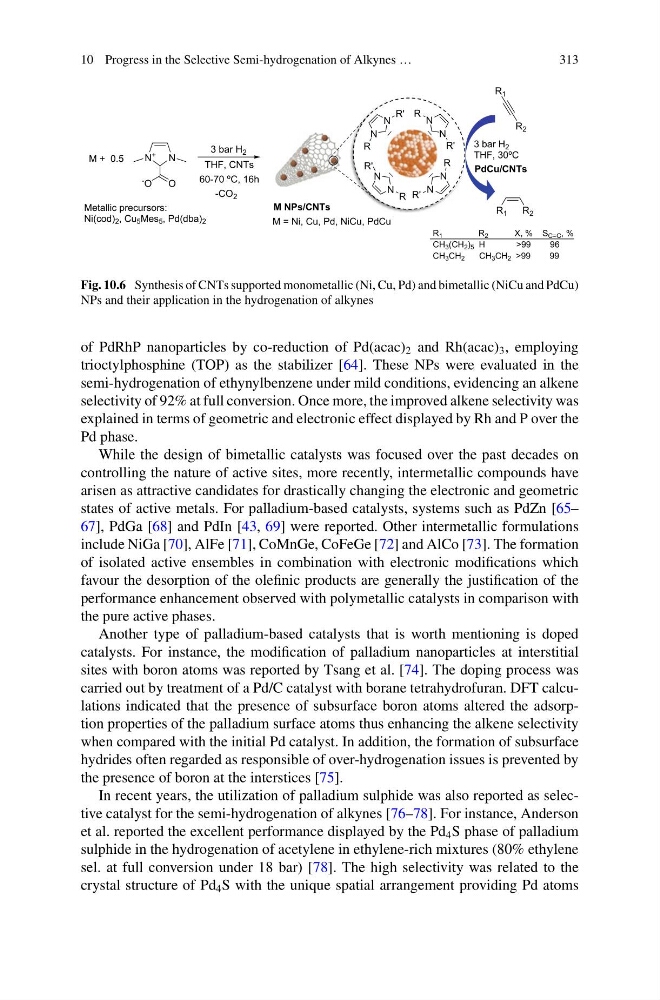
Fig. 10.6 Synthesis of CNTs supported monometallic (Ni, Cu, Pd) and bimetallic (NiCu and PdCu)
NPs and their application in the hydrogenation of alkynes
of PdRhP nanoparticles by co-reduction of Pd(acac) 2 and Rh(acac) 3 , employing
trioctylphosphine (TOP) as the stabilizer [64]. These NPs were evaluated in the
semi-hydrogenation of ethynylbenzene under mild conditions, evidencing an alkene
selectivity of 92% at full conversion. Once more, the improved alkene selectivity was
explained in terms of geometric and electronic effect displayed by Rh and P over the
Pd phase.
While the design of bimetallic catalysts was focused over the past decades on
controlling the nature of active sites, more recently, intermetallic compounds have
arisen as attractive candidates for drastically changing the electronic and geometric
states of active metals. For palladium-based catalysts, systems such as PdZn [65–
67], PdGa [68] and PdIn [43, 69] were reported. Other intermetallic formulations
include NiGa [70], AlFe [71], CoMnGe, CoFeGe [72] and AlCo [73]. The formation
of isolated active ensembles in combination with electronic modifications which
favour the desorption of the olefinic products are generally the justification of the
performance enhancement observed with polymetallic catalysts in comparison with
the pure active phases.
Another type of palladium-based catalysts that is worth mentioning is doped
catalysts. For instance, the modification of palladium nanoparticles at interstitial
sites with boron atoms was reported by Tsang et al. [74]. The doping process was
carried out by treatment of a Pd/C catalyst with borane tetrahydrofuran. DFT calculations indicated that the presence of subsurface boron atoms altered the adsorption properties of the palladium surface atoms thus enhancing the alkene selectivity
when compared with the initial Pd catalyst. In addition, the formation of subsurface
hydrides often regarded as responsible of over-hydrogenation issues is prevented by
the presence of boron at the interstices [75].
In recent years, the utilization of palladium sulphide was also reported as selective catalyst for the semi-hydrogenation of alkynes [76–78]. For instance, Anderson
et al. reported the excellent performance displayed by the Pd 4 S phase of palladium
sulphide in the hydrogenation of acetylene in ethylene-rich mixtures (80% ethylene
sel. at full conversion under 18 bar) [78]. The high selectivity was related to the
crystal structure of Pd 4 S with the unique spatial arrangement providing Pd atoms
313
3 bar H 2
THF, 30ºC
N
N
R
R'
N
N
R
R'
N
N
R
R'
N
N
R
R'
M NPs/CNTs
M = Ni, Cu, Pd, NiCu, PdCu
M + 0.5
N
+
N
3 bar H 2
THF, CNTs
60-70 ºC, 16h
Metallic precursors:
Ni(cod) 2 , Cu 5 Mes 5 , Pd(dba) 2
O
- O
PdCu/CNTs
R 1
R 2
X, % S C=C , %
CH 3 (CH 2 ) 5 H
>99
96
CH 3 CH 2
CH 3 CH 2 >99
99
R 1
R 2
R 1
R 2
-CO 2
Fig. 10.6 Synthesis of CNTs supported monometallic (Ni, Cu, Pd) and bimetallic (NiCu and PdCu)
NPs and their application in the hydrogenation of alkynes
of PdRhP nanoparticles by co-reduction of Pd(acac) 2 and Rh(acac) 3 , employing
trioctylphosphine (TOP) as the stabilizer [64]. These NPs were evaluated in the
semi-hydrogenation of ethynylbenzene under mild conditions, evidencing an alkene
selectivity of 92% at full conversion. Once more, the improved alkene selectivity was
explained in terms of geometric and electronic effect displayed by Rh and P over the
Pd phase.
While the design of bimetallic catalysts was focused over the past decades on
controlling the nature of active sites, more recently, intermetallic compounds have
arisen as attractive candidates for drastically changing the electronic and geometric
states of active metals. For palladium-based catalysts, systems such as PdZn [65–
67], PdGa [68] and PdIn [43, 69] were reported. Other intermetallic formulations
include NiGa [70], AlFe [71], CoMnGe, CoFeGe [72] and AlCo [73]. The formation
of isolated active ensembles in combination with electronic modifications which
favour the desorption of the olefinic products are generally the justification of the
performance enhancement observed with polymetallic catalysts in comparison with
the pure active phases.
Another type of palladium-based catalysts that is worth mentioning is doped
catalysts. For instance, the modification of palladium nanoparticles at interstitial
sites with boron atoms was reported by Tsang et al. [74]. The doping process was
carried out by treatment of a Pd/C catalyst with borane tetrahydrofuran. DFT calculations indicated that the presence of subsurface boron atoms altered the adsorption properties of the palladium surface atoms thus enhancing the alkene selectivity
when compared with the initial Pd catalyst. In addition, the formation of subsurface
hydrides often regarded as responsible of over-hydrogenation issues is prevented by
the presence of boron at the interstices [75].
In recent years, the utilization of palladium sulphide was also reported as selective catalyst for the semi-hydrogenation of alkynes [76–78]. For instance, Anderson
et al. reported the excellent performance displayed by the Pd 4 S phase of palladium
sulphide in the hydrogenation of acetylene in ethylene-rich mixtures (80% ethylene
sel. at full conversion under 18 bar) [78]. The high selectivity was related to the
crystal structure of Pd 4 S with the unique spatial arrangement providing Pd atoms