

288
A. Palazzolo et al.
N
N
N
N
N
O
S
N
N
HO
O
Deuterium labeling position
[X] Isotopic enrichment
[95%]
ax = [77%]
eq = [87%]
[94%]
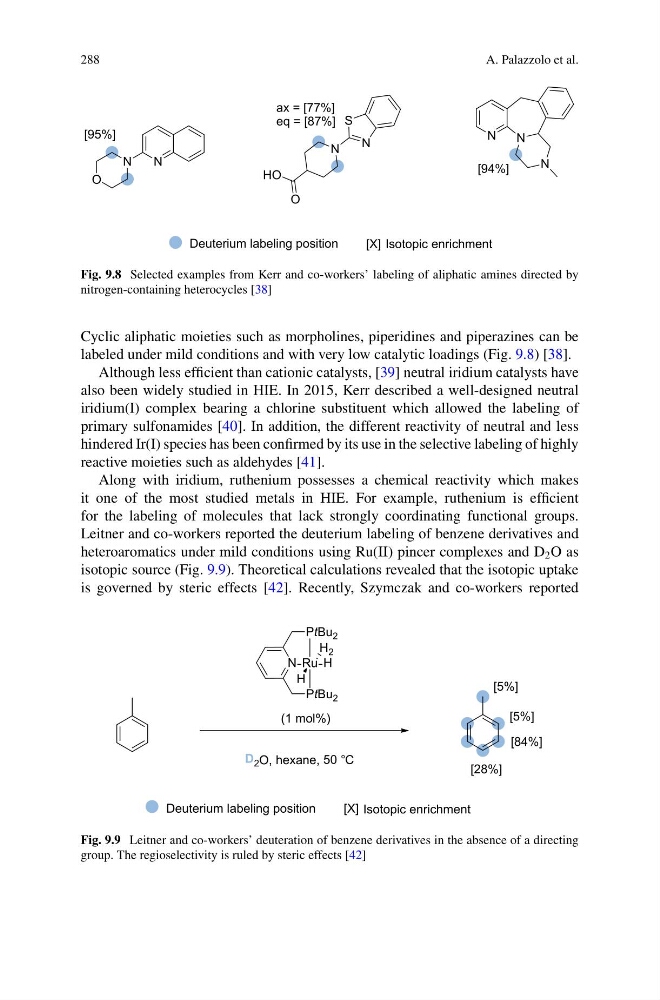
Fig. 9.8 Selected examples from Kerr and co-workers’ labeling of aliphatic amines directed by
nitrogen-containing heterocycles [38]
Cyclic aliphatic moieties such as morpholines, piperidines and piperazines can be
labeled under mild conditions and with very low catalytic loadings (Fig. 9.8) [38].
Although less efficient than cationic catalysts, [39] neutral iridium catalysts have
also been widely studied in HIE. In 2015, Kerr described a well-designed neutral
iridium(I) complex bearing a chlorine substituent which allowed the labeling of
primary sulfonamides [40]. In addition, the different reactivity of neutral and less
hindered Ir(I) species has been confirmed by its use in the selective labeling of highly
reactive moieties such as aldehydes [41].
Along with iridium, ruthenium possesses a chemical reactivity which makes
it one of the most studied metals in HIE. For example, ruthenium is efficient
for the labeling of molecules that lack strongly coordinating functional groups.
Leitner and co-workers reported the deuterium labeling of benzene derivatives and
heteroaromatics under mild conditions using Ru(II) pincer complexes and D 2 O as
isotopic source (Fig. 9.9). Theoretical calculations revealed that the isotopic uptake
is governed by steric effects [42]. Recently, Szymczak and co-workers reported
N Ru
PtBu 2
PtBu 2
H
H
H 2
D 2 O, hexane, 50 C
Deuterium labeling position
[X] Isotopic enrichment
[28%]
[84%]
[5%]
[5%]
(1 mol%)
°
Fig. 9.9 Leitner and co-workers’ deuteration of benzene derivatives in the absence of a directing
group. The regioselectivity is ruled by steric effects [42]
A. Palazzolo et al.
N
N
N
N
N
O
S
N
N
HO
O
Deuterium labeling position
[X] Isotopic enrichment
[95%]
ax = [77%]
eq = [87%]
[94%]
Fig. 9.8 Selected examples from Kerr and co-workers’ labeling of aliphatic amines directed by
nitrogen-containing heterocycles [38]
Cyclic aliphatic moieties such as morpholines, piperidines and piperazines can be
labeled under mild conditions and with very low catalytic loadings (Fig. 9.8) [38].
Although less efficient than cationic catalysts, [39] neutral iridium catalysts have
also been widely studied in HIE. In 2015, Kerr described a well-designed neutral
iridium(I) complex bearing a chlorine substituent which allowed the labeling of
primary sulfonamides [40]. In addition, the different reactivity of neutral and less
hindered Ir(I) species has been confirmed by its use in the selective labeling of highly
reactive moieties such as aldehydes [41].
Along with iridium, ruthenium possesses a chemical reactivity which makes
it one of the most studied metals in HIE. For example, ruthenium is efficient
for the labeling of molecules that lack strongly coordinating functional groups.
Leitner and co-workers reported the deuterium labeling of benzene derivatives and
heteroaromatics under mild conditions using Ru(II) pincer complexes and D 2 O as
isotopic source (Fig. 9.9). Theoretical calculations revealed that the isotopic uptake
is governed by steric effects [42]. Recently, Szymczak and co-workers reported
N Ru
PtBu 2
PtBu 2
H
H
H 2
D 2 O, hexane, 50 C
Deuterium labeling position
[X] Isotopic enrichment
[28%]
[84%]
[5%]
[5%]
(1 mol%)
°
Fig. 9.9 Leitner and co-workers’ deuteration of benzene derivatives in the absence of a directing
group. The regioselectivity is ruled by steric effects [42]