

6 Catalysis with MNPs on N-Doped Carbon
209
N-doped graphene activated
Co 3 O 4 -Co particles
supported on a-Al 2 O 3
R
N
R 1
R 2 (H)
O
R
NH 2
R 1
R 2 (H)
OH
* Stable and robust base metal heterogeneous catalyst
* Convenient recycling and reusable
* High active and selective
* Mild reaction conditions
* Functional group tolerance
H 2
H 2
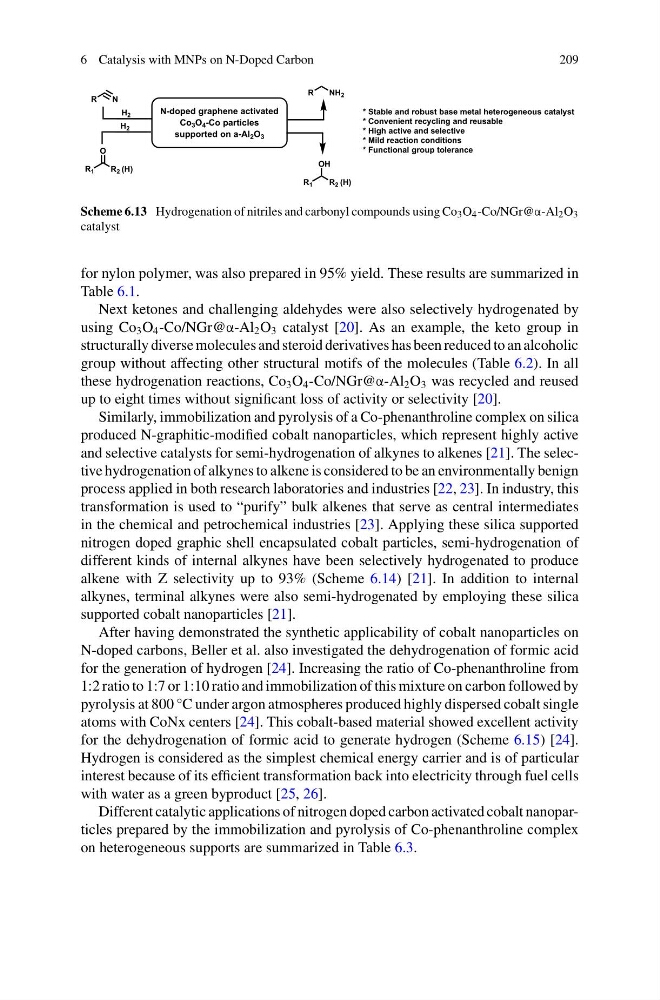
Scheme 6.13 Hydrogenation of nitriles and carbonyl compounds using Co 3 O 4 -Co/NGr@α-Al 2 O 3
catalyst
for nylon polymer, was also prepared in 95% yield. These results are summarized in
Table 6.1.
Next ketones and challenging aldehydes were also selectively hydrogenated by
using Co 3 O 4 -Co/NGr@α-Al 2 O 3 catalyst [20]. As an example, the keto group in
structurally diverse molecules and steroid derivatives has been reduced to an alcoholic
group without affecting other structural motifs of the molecules (Table 6.2). In all
these hydrogenation reactions, Co 3 O 4 -Co/NGr@α-Al 2 O 3 was recycled and reused
up to eight times without significant loss of activity or selectivity [20].
Similarly, immobilization and pyrolysis of a Co-phenanthroline complex on silica
produced N-graphitic-modified cobalt nanoparticles, which represent highly active
and selective catalysts for semi-hydrogenation of alkynes to alkenes [21]. The selective hydrogenation of alkynes to alkene is considered to be an environmentally benign
process applied in both research laboratories and industries [22, 23]. In industry, this
transformation is used to “purify” bulk alkenes that serve as central intermediates
in the chemical and petrochemical industries [23]. Applying these silica supported
nitrogen doped graphic shell encapsulated cobalt particles, semi-hydrogenation of
different kinds of internal alkynes have been selectively hydrogenated to produce
alkene with Z selectivity up to 93% (Scheme 6.14) [21]. In addition to internal
alkynes, terminal alkynes were also semi-hydrogenated by employing these silica
supported cobalt nanoparticles [21].
After having demonstrated the synthetic applicability of cobalt nanoparticles on
N-doped carbons, Beller et al. also investigated the dehydrogenation of formic acid
for the generation of hydrogen [24]. Increasing the ratio of Co-phenanthroline from
1:2 ratio to 1:7 or 1:10 ratio and immobilization of this mixture on carbon followed by
pyrolysis at 800 °C under argon atmospheres produced highly dispersed cobalt single
atoms with CoNx centers [24]. This cobalt-based material showed excellent activity
for the dehydrogenation of formic acid to generate hydrogen (Scheme 6.15) [24].
Hydrogen is considered as the simplest chemical energy carrier and is of particular
interest because of its efficient transformation back into electricity through fuel cells
with water as a green byproduct [25, 26].
Different catalytic applications of nitrogen doped carbon activated cobalt nanoparticles prepared by the immobilization and pyrolysis of Co-phenanthroline complex
on heterogeneous supports are summarized in Table 6.3.
209
N-doped graphene activated
Co 3 O 4 -Co particles
supported on a-Al 2 O 3
R
N
R 1
R 2 (H)
O
R
NH 2
R 1
R 2 (H)
OH
* Stable and robust base metal heterogeneous catalyst
* Convenient recycling and reusable
* High active and selective
* Mild reaction conditions
* Functional group tolerance
H 2
H 2
Scheme 6.13 Hydrogenation of nitriles and carbonyl compounds using Co 3 O 4 -Co/NGr@α-Al 2 O 3
catalyst
for nylon polymer, was also prepared in 95% yield. These results are summarized in
Table 6.1.
Next ketones and challenging aldehydes were also selectively hydrogenated by
using Co 3 O 4 -Co/NGr@α-Al 2 O 3 catalyst [20]. As an example, the keto group in
structurally diverse molecules and steroid derivatives has been reduced to an alcoholic
group without affecting other structural motifs of the molecules (Table 6.2). In all
these hydrogenation reactions, Co 3 O 4 -Co/NGr@α-Al 2 O 3 was recycled and reused
up to eight times without significant loss of activity or selectivity [20].
Similarly, immobilization and pyrolysis of a Co-phenanthroline complex on silica
produced N-graphitic-modified cobalt nanoparticles, which represent highly active
and selective catalysts for semi-hydrogenation of alkynes to alkenes [21]. The selective hydrogenation of alkynes to alkene is considered to be an environmentally benign
process applied in both research laboratories and industries [22, 23]. In industry, this
transformation is used to “purify” bulk alkenes that serve as central intermediates
in the chemical and petrochemical industries [23]. Applying these silica supported
nitrogen doped graphic shell encapsulated cobalt particles, semi-hydrogenation of
different kinds of internal alkynes have been selectively hydrogenated to produce
alkene with Z selectivity up to 93% (Scheme 6.14) [21]. In addition to internal
alkynes, terminal alkynes were also semi-hydrogenated by employing these silica
supported cobalt nanoparticles [21].
After having demonstrated the synthetic applicability of cobalt nanoparticles on
N-doped carbons, Beller et al. also investigated the dehydrogenation of formic acid
for the generation of hydrogen [24]. Increasing the ratio of Co-phenanthroline from
1:2 ratio to 1:7 or 1:10 ratio and immobilization of this mixture on carbon followed by
pyrolysis at 800 °C under argon atmospheres produced highly dispersed cobalt single
atoms with CoNx centers [24]. This cobalt-based material showed excellent activity
for the dehydrogenation of formic acid to generate hydrogen (Scheme 6.15) [24].
Hydrogen is considered as the simplest chemical energy carrier and is of particular
interest because of its efficient transformation back into electricity through fuel cells
with water as a green byproduct [25, 26].
Different catalytic applications of nitrogen doped carbon activated cobalt nanoparticles prepared by the immobilization and pyrolysis of Co-phenanthroline complex
on heterogeneous supports are summarized in Table 6.3.