

200
R. V. Jagadeesh
Fe(OAc) 2
N
N
+
Ethanol
Stir at rt
30-40 min
In situ generated
Fe-phenanthroline
complex
1. Addtion of
Carbon powder
2. Stir at 50
o C, 15h
3.Evaporation of solvent
Fe-phenanthroline
complex immobilized
on carbon
Pyrolysis
800 o C, Ar, 2h
Carbon supported
nanoscale Fe 2 O 3 -particles
surrounded by nitrogen
doped graphene layers
Fe 2 O 3 -nanoparticle
Nitrogen doped graphene layers
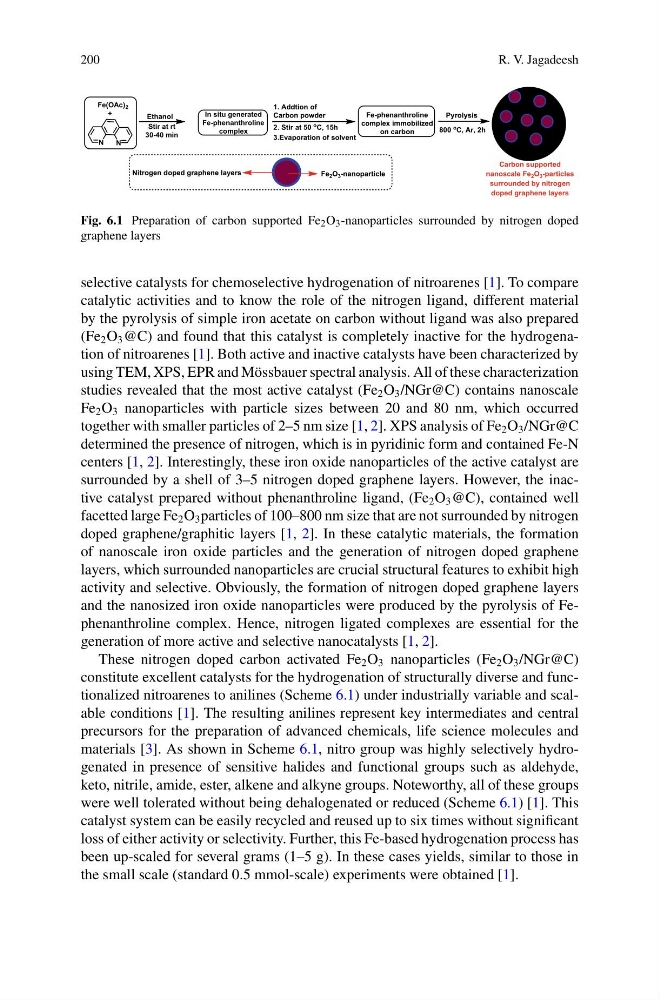
Fig. 6.1 Preparation of carbon supported Fe 2 O 3 -nanoparticles surrounded by nitrogen doped
graphene layers
selective catalysts for chemoselective hydrogenation of nitroarenes [1]. To compare
catalytic activities and to know the role of the nitrogen ligand, different material
by the pyrolysis of simple iron acetate on carbon without ligand was also prepared
(Fe 2 O 3 @C) and found that this catalyst is completely inactive for the hydrogenation of nitroarenes [1]. Both active and inactive catalysts have been characterized by
using TEM, XPS, EPR and Mössbauer spectral analysis. All of these characterization
studies revealed that the most active catalyst (Fe 2 O 3 /NGr@C) contains nanoscale
Fe 2 O 3 nanoparticles with particle sizes between 20 and 80 nm, which occurred
together with smaller particles of 2–5 nm size [1, 2]. XPS analysis of Fe 2 O 3 /NGr@C
determined the presence of nitrogen, which is in pyridinic form and contained Fe-N
centers [1, 2]. Interestingly, these iron oxide nanoparticles of the active catalyst are
surrounded by a shell of 3–5 nitrogen doped graphene layers. However, the inactive catalyst prepared without phenanthroline ligand, (Fe 2 O 3 @C), contained well
facetted large Fe 2 O 3 particles of 100–800 nm size that are not surrounded by nitrogen
doped graphene/graphitic layers [1, 2]. In these catalytic materials, the formation
of nanoscale iron oxide particles and the generation of nitrogen doped graphene
layers, which surrounded nanoparticles are crucial structural features to exhibit high
activity and selective. Obviously, the formation of nitrogen doped graphene layers
and the nanosized iron oxide nanoparticles were produced by the pyrolysis of Fephenanthroline complex. Hence, nitrogen ligated complexes are essential for the
generation of more active and selective nanocatalysts [1, 2].
These nitrogen doped carbon activated Fe 2 O 3 nanoparticles (Fe 2 O 3 /NGr@C)
constitute excellent catalysts for the hydrogenation of structurally diverse and functionalized nitroarenes to anilines (Scheme 6.1) under industrially variable and scalable conditions [1]. The resulting anilines represent key intermediates and central
precursors for the preparation of advanced chemicals, life science molecules and
materials [3]. As shown in Scheme 6.1, nitro group was highly selectively hydrogenated in presence of sensitive halides and functional groups such as aldehyde,
keto, nitrile, amide, ester, alkene and alkyne groups. Noteworthy, all of these groups
were well tolerated without being dehalogenated or reduced (Scheme 6.1) [1]. This
catalyst system can be easily recycled and reused up to six times without significant
loss of either activity or selectivity. Further, this Fe-based hydrogenation process has
been up-scaled for several grams (1–5 g). In these cases yields, similar to those in
the small scale (standard 0.5 mmol-scale) experiments were obtained [1].
R. V. Jagadeesh
Fe(OAc) 2
N
N
+
Ethanol
Stir at rt
30-40 min
In situ generated
Fe-phenanthroline
complex
1. Addtion of
Carbon powder
2. Stir at 50
o C, 15h
3.Evaporation of solvent
Fe-phenanthroline
complex immobilized
on carbon
Pyrolysis
800 o C, Ar, 2h
Carbon supported
nanoscale Fe 2 O 3 -particles
surrounded by nitrogen
doped graphene layers
Fe 2 O 3 -nanoparticle
Nitrogen doped graphene layers
Fig. 6.1 Preparation of carbon supported Fe 2 O 3 -nanoparticles surrounded by nitrogen doped
graphene layers
selective catalysts for chemoselective hydrogenation of nitroarenes [1]. To compare
catalytic activities and to know the role of the nitrogen ligand, different material
by the pyrolysis of simple iron acetate on carbon without ligand was also prepared
(Fe 2 O 3 @C) and found that this catalyst is completely inactive for the hydrogenation of nitroarenes [1]. Both active and inactive catalysts have been characterized by
using TEM, XPS, EPR and Mössbauer spectral analysis. All of these characterization
studies revealed that the most active catalyst (Fe 2 O 3 /NGr@C) contains nanoscale
Fe 2 O 3 nanoparticles with particle sizes between 20 and 80 nm, which occurred
together with smaller particles of 2–5 nm size [1, 2]. XPS analysis of Fe 2 O 3 /NGr@C
determined the presence of nitrogen, which is in pyridinic form and contained Fe-N
centers [1, 2]. Interestingly, these iron oxide nanoparticles of the active catalyst are
surrounded by a shell of 3–5 nitrogen doped graphene layers. However, the inactive catalyst prepared without phenanthroline ligand, (Fe 2 O 3 @C), contained well
facetted large Fe 2 O 3 particles of 100–800 nm size that are not surrounded by nitrogen
doped graphene/graphitic layers [1, 2]. In these catalytic materials, the formation
of nanoscale iron oxide particles and the generation of nitrogen doped graphene
layers, which surrounded nanoparticles are crucial structural features to exhibit high
activity and selective. Obviously, the formation of nitrogen doped graphene layers
and the nanosized iron oxide nanoparticles were produced by the pyrolysis of Fephenanthroline complex. Hence, nitrogen ligated complexes are essential for the
generation of more active and selective nanocatalysts [1, 2].
These nitrogen doped carbon activated Fe 2 O 3 nanoparticles (Fe 2 O 3 /NGr@C)
constitute excellent catalysts for the hydrogenation of structurally diverse and functionalized nitroarenes to anilines (Scheme 6.1) under industrially variable and scalable conditions [1]. The resulting anilines represent key intermediates and central
precursors for the preparation of advanced chemicals, life science molecules and
materials [3]. As shown in Scheme 6.1, nitro group was highly selectively hydrogenated in presence of sensitive halides and functional groups such as aldehyde,
keto, nitrile, amide, ester, alkene and alkyne groups. Noteworthy, all of these groups
were well tolerated without being dehalogenated or reduced (Scheme 6.1) [1]. This
catalyst system can be easily recycled and reused up to six times without significant
loss of either activity or selectivity. Further, this Fe-based hydrogenation process has
been up-scaled for several grams (1–5 g). In these cases yields, similar to those in
the small scale (standard 0.5 mmol-scale) experiments were obtained [1].