

174
Y. Min et al.
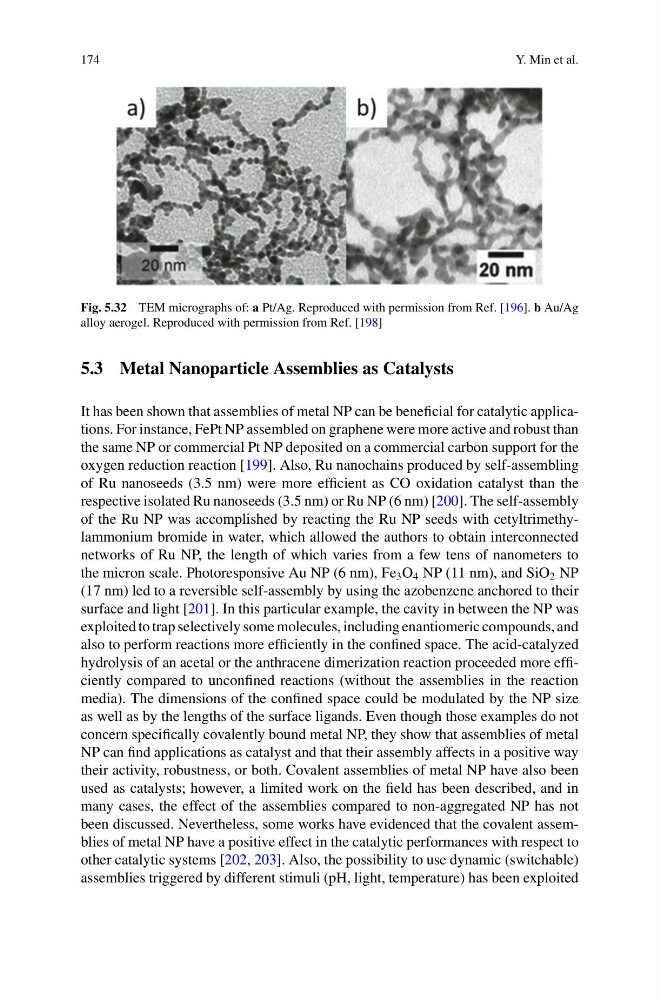
Fig. 5.32 TEM micrographs of: a Pt/Ag. Reproduced with permission from Ref. [196]. b Au/Ag
alloy aerogel. Reproduced with permission from Ref. [198]
5.3 Metal Nanoparticle Assemblies as Catalysts
It has been shown that assemblies of metal NP can be beneficial for catalytic applications. For instance, FePt NP assembled on graphene were more active and robust than
the same NP or commercial Pt NP deposited on a commercial carbon support for the
oxygen reduction reaction [199]. Also, Ru nanochains produced by self-assembling
of Ru nanoseeds (3.5 nm) were more efficient as CO oxidation catalyst than the
respective isolated Ru nanoseeds (3.5 nm) or Ru NP (6 nm) [200]. The self-assembly
of the Ru NP was accomplished by reacting the Ru NP seeds with cetyltrimethylammonium bromide in water, which allowed the authors to obtain interconnected
networks of Ru NP, the length of which varies from a few tens of nanometers to
the micron scale. Photoresponsive Au NP (6 nm), Fe 3 O 4 NP (11 nm), and SiO 2 NP
(17 nm) led to a reversible self-assembly by using the azobenzene anchored to their
surface and light [201]. In this particular example, the cavity in between the NP was
exploited to trap selectively some molecules, including enantiomeric compounds, and
also to perform reactions more efficiently in the confined space. The acid-catalyzed
hydrolysis of an acetal or the anthracene dimerization reaction proceeded more efficiently compared to unconfined reactions (without the assemblies in the reaction
media). The dimensions of the confined space could be modulated by the NP size
as well as by the lengths of the surface ligands. Even though those examples do not
concern specifically covalently bound metal NP, they show that assemblies of metal
NP can find applications as catalyst and that their assembly affects in a positive way
their activity, robustness, or both. Covalent assemblies of metal NP have also been
used as catalysts; however, a limited work on the field has been described, and in
many cases, the effect of the assemblies compared to non-aggregated NP has not
been discussed. Nevertheless, some works have evidenced that the covalent assemblies of metal NP have a positive effect in the catalytic performances with respect to
other catalytic systems [202, 203]. Also, the possibility to use dynamic (switchable)
assemblies triggered by different stimuli (pH, light, temperature) has been exploited
Y. Min et al.
Fig. 5.32 TEM micrographs of: a Pt/Ag. Reproduced with permission from Ref. [196]. b Au/Ag
alloy aerogel. Reproduced with permission from Ref. [198]
5.3 Metal Nanoparticle Assemblies as Catalysts
It has been shown that assemblies of metal NP can be beneficial for catalytic applications. For instance, FePt NP assembled on graphene were more active and robust than
the same NP or commercial Pt NP deposited on a commercial carbon support for the
oxygen reduction reaction [199]. Also, Ru nanochains produced by self-assembling
of Ru nanoseeds (3.5 nm) were more efficient as CO oxidation catalyst than the
respective isolated Ru nanoseeds (3.5 nm) or Ru NP (6 nm) [200]. The self-assembly
of the Ru NP was accomplished by reacting the Ru NP seeds with cetyltrimethylammonium bromide in water, which allowed the authors to obtain interconnected
networks of Ru NP, the length of which varies from a few tens of nanometers to
the micron scale. Photoresponsive Au NP (6 nm), Fe 3 O 4 NP (11 nm), and SiO 2 NP
(17 nm) led to a reversible self-assembly by using the azobenzene anchored to their
surface and light [201]. In this particular example, the cavity in between the NP was
exploited to trap selectively some molecules, including enantiomeric compounds, and
also to perform reactions more efficiently in the confined space. The acid-catalyzed
hydrolysis of an acetal or the anthracene dimerization reaction proceeded more efficiently compared to unconfined reactions (without the assemblies in the reaction
media). The dimensions of the confined space could be modulated by the NP size
as well as by the lengths of the surface ligands. Even though those examples do not
concern specifically covalently bound metal NP, they show that assemblies of metal
NP can find applications as catalyst and that their assembly affects in a positive way
their activity, robustness, or both. Covalent assemblies of metal NP have also been
used as catalysts; however, a limited work on the field has been described, and in
many cases, the effect of the assemblies compared to non-aggregated NP has not
been discussed. Nevertheless, some works have evidenced that the covalent assemblies of metal NP have a positive effect in the catalytic performances with respect to
other catalytic systems [202, 203]. Also, the possibility to use dynamic (switchable)
assemblies triggered by different stimuli (pH, light, temperature) has been exploited