

4 MNP Catalysis in Ionic Liquids
113
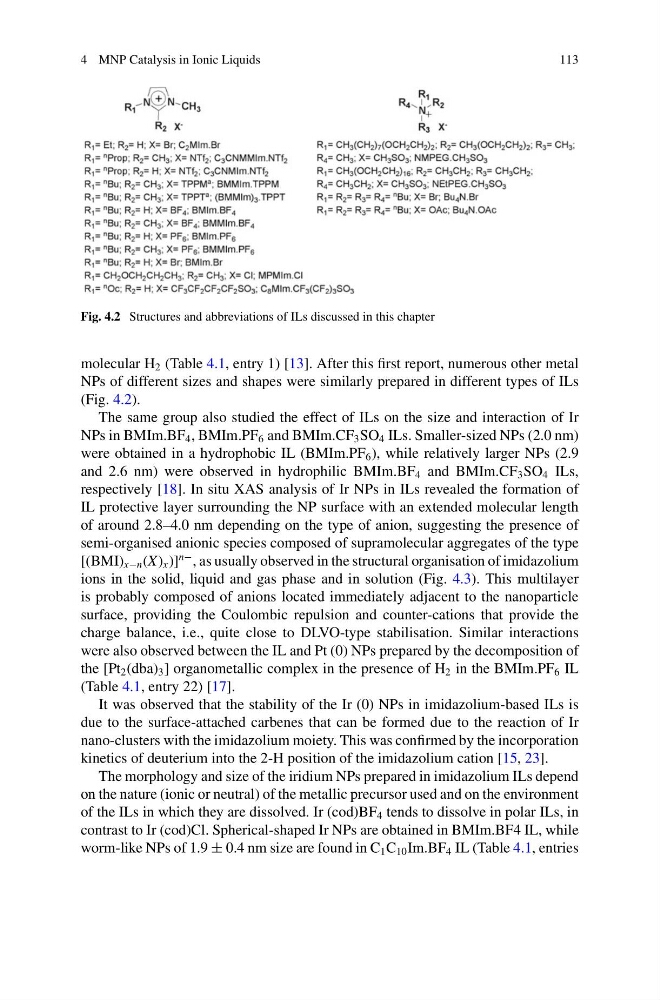
Fig. 4.2 Structures and abbreviations of ILs discussed in this chapter
molecular H 2 (Table 4.1, entry 1) [13]. After this first report, numerous other metal
NPs of different sizes and shapes were similarly prepared in different types of ILs
(Fig. 4.2).
The same group also studied the effect of ILs on the size and interaction of Ir
NPs in BMIm.BF 4 , BMIm.PF 6 and BMIm.CF 3 SO 4 ILs. Smaller-sized NPs (2.0 nm)
were obtained in a hydrophobic IL (BMIm.PF 6 ), while relatively larger NPs (2.9
and 2.6 nm) were observed in hydrophilic BMIm.BF 4 and BMIm.CF 3 SO 4 ILs,
respectively [18]. In situ XAS analysis of Ir NPs in ILs revealed the formation of
IL protective layer surrounding the NP surface with an extended molecular length
of around 2.8–4.0 nm depending on the type of anion, suggesting the presence of
semi-organised anionic species composed of supramolecular aggregates of the type
[(BMI) x−n (X) x )]
n− , as usually observed in the structural organisation of imidazolium
ions in the solid, liquid and gas phase and in solution (Fig. 4.3). This multilayer
is probably composed of anions located immediately adjacent to the nanoparticle
surface, providing the Coulombic repulsion and counter-cations that provide the
charge balance, i.e., quite close to DLVO-type stabilisation. Similar interactions
were also observed between the IL and Pt (0) NPs prepared by the decomposition of
the [Pt 2 (dba) 3 ] organometallic complex in the presence of H 2 in the BMIm.PF 6 IL
(Table 4.1, entry 22) [17].
It was observed that the stability of the Ir (0) NPs in imidazolium-based ILs is
due to the surface-attached carbenes that can be formed due to the reaction of Ir
nano-clusters with the imidazolium moiety. This was confirmed by the incorporation
kinetics of deuterium into the 2-H position of the imidazolium cation [15, 23].
The morphology and size of the iridium NPs prepared in imidazolium ILs depend
on the nature (ionic or neutral) of the metallic precursor used and on the environment
of the ILs in which they are dissolved. Ir (cod)BF 4 tends to dissolve in polar ILs, in
contrast to Ir (cod)Cl. Spherical-shaped Ir NPs are obtained in BMIm.BF4 IL, while
worm-like NPs of 1.9 ± 0.4 nm size are found in C 1 C 10 Im.BF 4 IL (Table 4.1, entries
113
Fig. 4.2 Structures and abbreviations of ILs discussed in this chapter
molecular H 2 (Table 4.1, entry 1) [13]. After this first report, numerous other metal
NPs of different sizes and shapes were similarly prepared in different types of ILs
(Fig. 4.2).
The same group also studied the effect of ILs on the size and interaction of Ir
NPs in BMIm.BF 4 , BMIm.PF 6 and BMIm.CF 3 SO 4 ILs. Smaller-sized NPs (2.0 nm)
were obtained in a hydrophobic IL (BMIm.PF 6 ), while relatively larger NPs (2.9
and 2.6 nm) were observed in hydrophilic BMIm.BF 4 and BMIm.CF 3 SO 4 ILs,
respectively [18]. In situ XAS analysis of Ir NPs in ILs revealed the formation of
IL protective layer surrounding the NP surface with an extended molecular length
of around 2.8–4.0 nm depending on the type of anion, suggesting the presence of
semi-organised anionic species composed of supramolecular aggregates of the type
[(BMI) x−n (X) x )]
n− , as usually observed in the structural organisation of imidazolium
ions in the solid, liquid and gas phase and in solution (Fig. 4.3). This multilayer
is probably composed of anions located immediately adjacent to the nanoparticle
surface, providing the Coulombic repulsion and counter-cations that provide the
charge balance, i.e., quite close to DLVO-type stabilisation. Similar interactions
were also observed between the IL and Pt (0) NPs prepared by the decomposition of
the [Pt 2 (dba) 3 ] organometallic complex in the presence of H 2 in the BMIm.PF 6 IL
(Table 4.1, entry 22) [17].
It was observed that the stability of the Ir (0) NPs in imidazolium-based ILs is
due to the surface-attached carbenes that can be formed due to the reaction of Ir
nano-clusters with the imidazolium moiety. This was confirmed by the incorporation
kinetics of deuterium into the 2-H position of the imidazolium cation [15, 23].
The morphology and size of the iridium NPs prepared in imidazolium ILs depend
on the nature (ionic or neutral) of the metallic precursor used and on the environment
of the ILs in which they are dissolved. Ir (cod)BF 4 tends to dissolve in polar ILs, in
contrast to Ir (cod)Cl. Spherical-shaped Ir NPs are obtained in BMIm.BF4 IL, while
worm-like NPs of 1.9 ± 0.4 nm size are found in C 1 C 10 Im.BF 4 IL (Table 4.1, entries