

140
liquefaction (Xu and Etcheverry 2008; Duan and Savage 2011), direct liquefaction
(Elliott et al. 1991), liquefaction in supercritical alcohols (Yamazaki et al. 2006;
Chen et al. 2018), liquefaction under high temperature and pressure (Huang et al.
2013), etc. It has been shown that the composition of liquefied products (such as
biopolyols) depends largely on liquefaction conditions and the type of raw material.
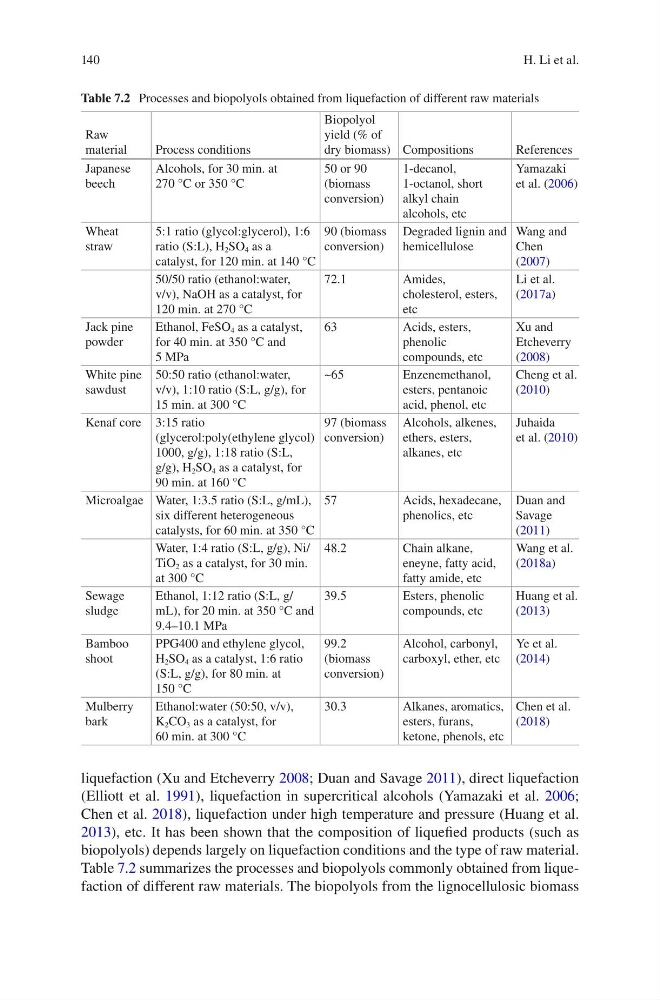
Table 7.2 summarizes the processes and biopolyols commonly obtained from liquefaction of different raw materials. The biopolyols from the lignocellulosic biomass
Table 7.2 Processes and biopolyols obtained from liquefaction of different raw materials
Raw
material
Process conditions
Biopolyol
yield (% of
dry biomass) Compositions
References
Japanese
beech
Alcohols, for 30 min. at
270 °C or 350 °C
50 or 90
(biomass
conversion)
1-decanol,
1-octanol, short
alkyl chain
alcohols, etc
Yamazaki
et al. (2006)
Wheat
straw
5:1 ratio (glycol:glycerol), 1:6
ratio (S:L), H 2 SO 4 as a
catalyst, for 120 min. at 140 °C
90 (biomass
conversion)
Degraded lignin and
hemicellulose
Wang and
Chen
(2007)
50/50 ratio (ethanol:water,
v/v), NaOH as a catalyst, for
120 min. at 270 °C
72.1
Amides,
cholesterol, esters,
etc
Li et al.
(2017a)
Jack pine
powder
Ethanol, FeSO 4 as a catalyst,
for 40 min. at 350 °C and
5 MPa
63
Acids, esters,
phenolic
compounds, etc
Xu and
Etcheverry
(2008)
White pine
sawdust
50:50 ratio (ethanol:water,
v/v), 1:10 ratio (S:L, g/g), for
15 min. at 300 °C
~65
Enzenemethanol,
esters, pentanoic
acid, phenol, etc
Cheng et al.
(2010)
Kenaf core 3:15 ratio
(glycerol:poly(ethylene glycol)
1000, g/g), 1:18 ratio (S:L,
g/g), H 2 SO 4 as a catalyst, for
90 min. at 160 °C
97 (biomass
conversion)
Alcohols, alkenes,
ethers, esters,
alkanes, etc
Juhaida
et al. (2010)
Microalgae Water, 1:3.5 ratio (S:L, g/mL),
six different heterogeneous
catalysts, for 60 min. at 350 °C
57
Acids, hexadecane,
phenolics, etc
Duan and
Savage
(2011)
Water, 1:4 ratio (S:L, g/g), Ni/
TiO 2 as a catalyst, for 30 min.
at 300 °C
48.2
Chain alkane,
eneyne, fatty acid,
fatty amide, etc
Wang et al.
(2018a)
Sewage
sludge
Ethanol, 1:12 ratio (S:L, g/
mL), for 20 min. at 350 °C and
9.4–10.1 MPa
39.5
Esters, phenolic
compounds, etc
Huang et al.
(2013)
Bamboo
shoot
PPG400 and ethylene glycol,
H 2 SO 4 as a catalyst, 1:6 ratio
(S:L, g/g), for 80 min. at
150 °C
99.2
(biomass
conversion)
Alcohol, carbonyl,
carboxyl, ether, etc
Ye et al.
(2014)
Mulberry
bark
Ethanol:water (50:50, v/v),
K 2 CO 3 as a catalyst, for
60 min. at 300 °C
30.3
Alkanes, aromatics,
esters, furans,
ketone, phenols, etc
Chen et al.
(2018)
H. Li et al.
liquefaction (Xu and Etcheverry 2008; Duan and Savage 2011), direct liquefaction
(Elliott et al. 1991), liquefaction in supercritical alcohols (Yamazaki et al. 2006;
Chen et al. 2018), liquefaction under high temperature and pressure (Huang et al.
2013), etc. It has been shown that the composition of liquefied products (such as
biopolyols) depends largely on liquefaction conditions and the type of raw material.
Table 7.2 summarizes the processes and biopolyols commonly obtained from liquefaction of different raw materials. The biopolyols from the lignocellulosic biomass
Table 7.2 Processes and biopolyols obtained from liquefaction of different raw materials
Raw
material
Process conditions
Biopolyol
yield (% of
dry biomass) Compositions
References
Japanese
beech
Alcohols, for 30 min. at
270 °C or 350 °C
50 or 90
(biomass
conversion)
1-decanol,
1-octanol, short
alkyl chain
alcohols, etc
Yamazaki
et al. (2006)
Wheat
straw
5:1 ratio (glycol:glycerol), 1:6
ratio (S:L), H 2 SO 4 as a
catalyst, for 120 min. at 140 °C
90 (biomass
conversion)
Degraded lignin and
hemicellulose
Wang and
Chen
(2007)
50/50 ratio (ethanol:water,
v/v), NaOH as a catalyst, for
120 min. at 270 °C
72.1
Amides,
cholesterol, esters,
etc
Li et al.
(2017a)
Jack pine
powder
Ethanol, FeSO 4 as a catalyst,
for 40 min. at 350 °C and
5 MPa
63
Acids, esters,
phenolic
compounds, etc
Xu and
Etcheverry
(2008)
White pine
sawdust
50:50 ratio (ethanol:water,
v/v), 1:10 ratio (S:L, g/g), for
15 min. at 300 °C
~65
Enzenemethanol,
esters, pentanoic
acid, phenol, etc
Cheng et al.
(2010)
Kenaf core 3:15 ratio
(glycerol:poly(ethylene glycol)
1000, g/g), 1:18 ratio (S:L,
g/g), H 2 SO 4 as a catalyst, for
90 min. at 160 °C
97 (biomass
conversion)
Alcohols, alkenes,
ethers, esters,
alkanes, etc
Juhaida
et al. (2010)
Microalgae Water, 1:3.5 ratio (S:L, g/mL),
six different heterogeneous
catalysts, for 60 min. at 350 °C
57
Acids, hexadecane,
phenolics, etc
Duan and
Savage
(2011)
Water, 1:4 ratio (S:L, g/g), Ni/
TiO 2 as a catalyst, for 30 min.
at 300 °C
48.2
Chain alkane,
eneyne, fatty acid,
fatty amide, etc
Wang et al.
(2018a)
Sewage
sludge
Ethanol, 1:12 ratio (S:L, g/
mL), for 20 min. at 350 °C and
9.4–10.1 MPa
39.5
Esters, phenolic
compounds, etc
Huang et al.
(2013)
Bamboo
shoot
PPG400 and ethylene glycol,
H 2 SO 4 as a catalyst, 1:6 ratio
(S:L, g/g), for 80 min. at
150 °C
99.2
(biomass
conversion)
Alcohol, carbonyl,
carboxyl, ether, etc
Ye et al.
(2014)
Mulberry
bark
Ethanol:water (50:50, v/v),
K 2 CO 3 as a catalyst, for
60 min. at 300 °C
30.3
Alkanes, aromatics,
esters, furans,
ketone, phenols, etc
Chen et al.
(2018)
H. Li et al.