

67
In addition to cellulose and hemicellulose, lignin is the most abundant component in the plant (Álvarez et al. 2017; Gutiérrez et al. 2017). The structural representation of lignin is shown in Fig. 5.3. Lignin is a biopolymer formed by the
interconnection of three phenylpropane units: p-hydroxyphenol alcohol, guaiacyl
alcohol, and syringyl alcohol, linked by ether and carbon-carbon bonds (Fig. 5.4).
Lignin is an abundant resource with an estimated annual production of approximately 100 billion tons (Tribot et al. 2019). Lignin can be applied in many other
fields in addition to its common uses in the paper and energy industries (Table 5.1).
Lignin links to cell wall polysaccharides by covalent bonds (Qin et al. 2018a) to
form the lignin-carbohydrate complex (LCC), which also has antioxidant activity
due to the presence of the lignin or carbohydrate constituents (Niu et al. 2016;
Huang et al. 2018). The application of lignin as an antioxidant is an effective way to
increase its value.
5.2 Antioxidant Activity-Structure Relationship
Understanding how lignin structure affects antioxidant activity is useful not only to
design more effective antioxidants, but also to reveal the free radical scavenging
mechanism for different applications. The 2,2-diphenyl-1-picrylhydrazyl radical
(DPPH•) free radical scavenging assay is a widely used method to measure the antioxidant activity of lignin. The hypothetical pathways for the reaction of lignin with
DPPH• free radicals are shown in Fig. 5.5.
Energy/Fuels
5.26%
Biotechnology/Applied Microbiology
6.21%
Materials Science
6.7%
Plant Sciences
7.3%
Engineering
7.49%
Biochemistry and Molecular Biology
8.77%
Chemistry
7.78%
Agriculture
7.71%
Environmental Sciences/Ecology
7.50%
Others
35.28%
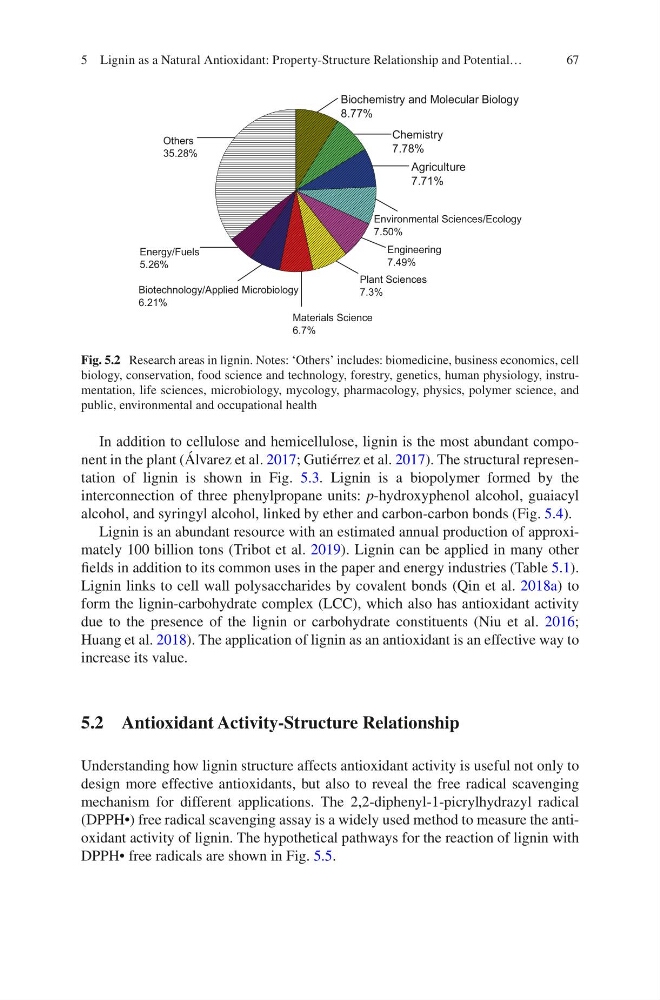
Fig. 5.2 Research areas in lignin. Notes: ‘Others’ includes: biomedicine, business economics, cell
biology, conservation, food science and technology, forestry, genetics, human physiology, instrumentation, life sciences, microbiology, mycology, pharmacology, physics, polymer science, and
public, environmental and occupational health
5 Lignin as a Natural Antioxidant: Property-Structure Relationship and Potential…
In addition to cellulose and hemicellulose, lignin is the most abundant component in the plant (Álvarez et al. 2017; Gutiérrez et al. 2017). The structural representation of lignin is shown in Fig. 5.3. Lignin is a biopolymer formed by the
interconnection of three phenylpropane units: p-hydroxyphenol alcohol, guaiacyl
alcohol, and syringyl alcohol, linked by ether and carbon-carbon bonds (Fig. 5.4).
Lignin is an abundant resource with an estimated annual production of approximately 100 billion tons (Tribot et al. 2019). Lignin can be applied in many other
fields in addition to its common uses in the paper and energy industries (Table 5.1).
Lignin links to cell wall polysaccharides by covalent bonds (Qin et al. 2018a) to
form the lignin-carbohydrate complex (LCC), which also has antioxidant activity
due to the presence of the lignin or carbohydrate constituents (Niu et al. 2016;
Huang et al. 2018). The application of lignin as an antioxidant is an effective way to
increase its value.
5.2 Antioxidant Activity-Structure Relationship
Understanding how lignin structure affects antioxidant activity is useful not only to
design more effective antioxidants, but also to reveal the free radical scavenging
mechanism for different applications. The 2,2-diphenyl-1-picrylhydrazyl radical
(DPPH•) free radical scavenging assay is a widely used method to measure the antioxidant activity of lignin. The hypothetical pathways for the reaction of lignin with
DPPH• free radicals are shown in Fig. 5.5.
Energy/Fuels
5.26%
Biotechnology/Applied Microbiology
6.21%
Materials Science
6.7%
Plant Sciences
7.3%
Engineering
7.49%
Biochemistry and Molecular Biology
8.77%
Chemistry
7.78%
Agriculture
7.71%
Environmental Sciences/Ecology
7.50%
Others
35.28%
Fig. 5.2 Research areas in lignin. Notes: ‘Others’ includes: biomedicine, business economics, cell
biology, conservation, food science and technology, forestry, genetics, human physiology, instrumentation, life sciences, microbiology, mycology, pharmacology, physics, polymer science, and
public, environmental and occupational health
5 Lignin as a Natural Antioxidant: Property-Structure Relationship and Potential…