

15.7.2 Climate Change and Hydrological Impacts
of Invasions
The effects of climate change on the hydrological impacts of invasions have been
assessed in three differing but somewhat complementary ways, one being to examine the likely impacts on the major invaders in different biomes, another being to
assess the impacts of increasing CO 2 concentration, and the third being to compare
the effects on the impacts of current invasions under current and future climates.
There have been some studies which have evaluated the impacts of climate
change using their understanding of the impacts of climate change at the biome
level on invading plant species which are characteristic for particular biomes
(Thuiller et al. 2006; Henderson 2007; Richardson et al. 2010; Rouget et al. 2015).
Although the impacts of climate change on the Fynbos Biome, and the more arid
biomes, were initially predicted to be substantial (Rutherford et al. 1999), more
recent predictions suggest less drastic shifts in the west and a significant expansion
of the Savanna into the Grassland Biomes (DEA 2013a). However, these projections
are based on the direct effects of the changes in climatic conditions. Equally
important, if not more so, are the changes in key ecosystem drivers like disturbance
regimes, one of which is fire; changes in fire regimes could have a particularly
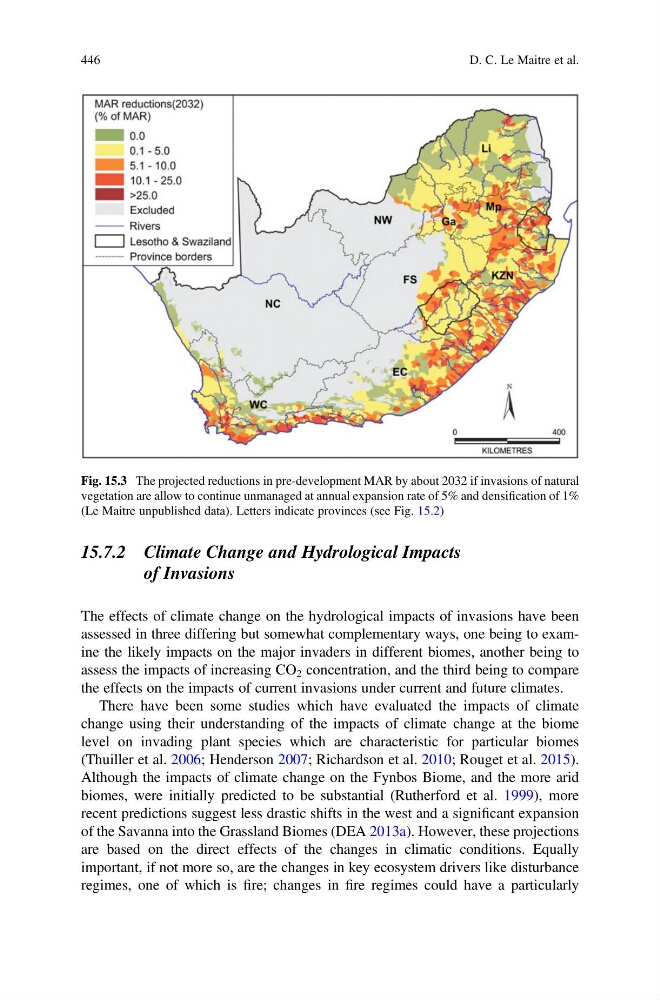
Fig. 15.3 The projected reductions in pre-development MAR by about 2032 if invasions of natural
vegetation are allow to continue unmanaged at annual expansion rate of 5% and densification of 1%
(Le Maitre unpublished data). Letters indicate provinces (see Fig. 15.2)
446
D. C. Le Maitre et al.
of Invasions
The effects of climate change on the hydrological impacts of invasions have been
assessed in three differing but somewhat complementary ways, one being to examine the likely impacts on the major invaders in different biomes, another being to
assess the impacts of increasing CO 2 concentration, and the third being to compare
the effects on the impacts of current invasions under current and future climates.
There have been some studies which have evaluated the impacts of climate
change using their understanding of the impacts of climate change at the biome
level on invading plant species which are characteristic for particular biomes
(Thuiller et al. 2006; Henderson 2007; Richardson et al. 2010; Rouget et al. 2015).
Although the impacts of climate change on the Fynbos Biome, and the more arid
biomes, were initially predicted to be substantial (Rutherford et al. 1999), more
recent predictions suggest less drastic shifts in the west and a significant expansion
of the Savanna into the Grassland Biomes (DEA 2013a). However, these projections
are based on the direct effects of the changes in climatic conditions. Equally
important, if not more so, are the changes in key ecosystem drivers like disturbance
regimes, one of which is fire; changes in fire regimes could have a particularly
Fig. 15.3 The projected reductions in pre-development MAR by about 2032 if invasions of natural
vegetation are allow to continue unmanaged at annual expansion rate of 5% and densification of 1%
(Le Maitre unpublished data). Letters indicate provinces (see Fig. 15.2)
446
D. C. Le Maitre et al.