

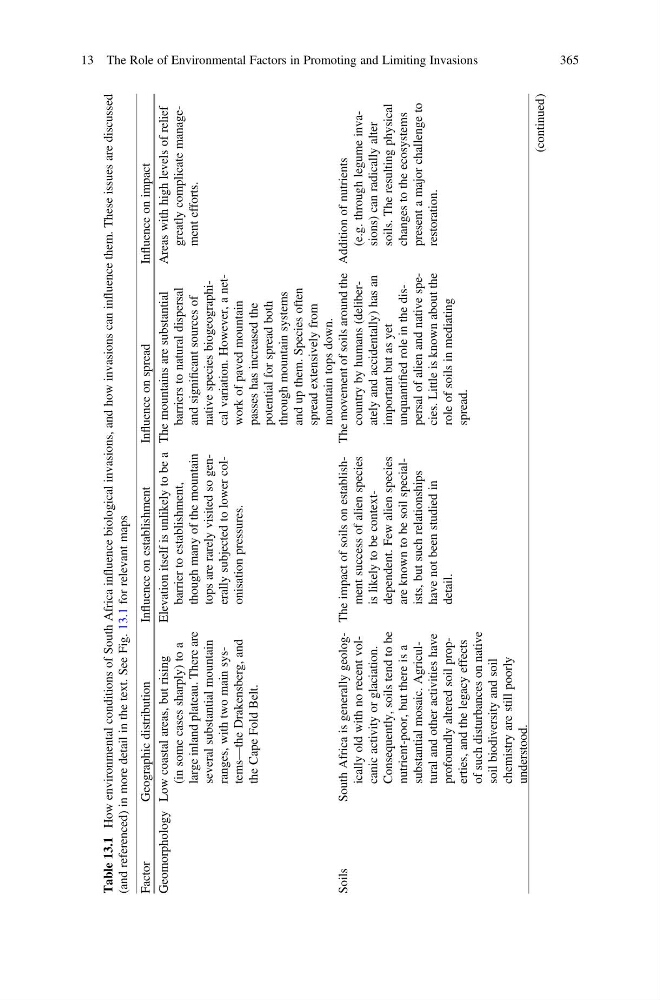
Table 13.1
How environmental conditions of South Africa influence biological invasions, and how invasions can influence them. These issues are discussed
(and referenced) in more detail in the text. See Fig. 13.1 for relevant maps
Factor
Geographic distribution
Influence on establishment
Influence on spread
Influence on impact
Geomorphology Low coastal areas, but rising
(in some cases sharply) to a
large inland plateau. There are
several substantial mountain
ranges, with two main systems—the Drakensberg, and
the Cape Fold Belt.
Elevation itself is unlikely to be a
barrier to establishment,
though many of the mountain
tops are rarely visited so generally subjected to lower colonisation pressures.
The mountains are substantial
barriers to natural dispersal
and significant sources of
native species biogeographical variation. However, a network of paved mountain
passes has increased the
potential for spread both
through mountain systems
and up them. Species often
spread extensively from
mountain tops down.
Areas with high levels of relief
greatly complicate management efforts.
Soils
South Africa is generally geologically old with no recent volcanic activity or glaciation.
Consequently, soils tend to be
nutrient-poor, but there is a
substantial mosaic. Agricultural and other activities have
profoundly altered soil properties, and the legacy effects
of such disturbances on native
soil biodiversity and soil
chemistry are still poorly
understood.
The impact of soils on establishment success of alien species
is likely to be contextdependent. Few alien species
are known to be soil specialists, but such relationships
have not been studied in
detail.
The movement of soils around the
country by humans (deliberately and accidentally) has an
important but as yet
unquantified role in the dispersal of alien and native species. Little is known about the
role of soils in mediating
spread.
Addition of nutrients
(e.g. through legume invasions) can radically alter
soils. The resulting physical
changes to the ecosystems
present a major challenge to
restoration.
(continued)
13 The Role of Environmental Factors in Promoting and Limiting Invasions
365
How environmental conditions of South Africa influence biological invasions, and how invasions can influence them. These issues are discussed
(and referenced) in more detail in the text. See Fig. 13.1 for relevant maps
Factor
Geographic distribution
Influence on establishment
Influence on spread
Influence on impact
Geomorphology Low coastal areas, but rising
(in some cases sharply) to a
large inland plateau. There are
several substantial mountain
ranges, with two main systems—the Drakensberg, and
the Cape Fold Belt.
Elevation itself is unlikely to be a
barrier to establishment,
though many of the mountain
tops are rarely visited so generally subjected to lower colonisation pressures.
The mountains are substantial
barriers to natural dispersal
and significant sources of
native species biogeographical variation. However, a network of paved mountain
passes has increased the
potential for spread both
through mountain systems
and up them. Species often
spread extensively from
mountain tops down.
Areas with high levels of relief
greatly complicate management efforts.
Soils
South Africa is generally geologically old with no recent volcanic activity or glaciation.
Consequently, soils tend to be
nutrient-poor, but there is a
substantial mosaic. Agricultural and other activities have
profoundly altered soil properties, and the legacy effects
of such disturbances on native
soil biodiversity and soil
chemistry are still poorly
understood.
The impact of soils on establishment success of alien species
is likely to be contextdependent. Few alien species
are known to be soil specialists, but such relationships
have not been studied in
detail.
The movement of soils around the
country by humans (deliberately and accidentally) has an
important but as yet
unquantified role in the dispersal of alien and native species. Little is known about the
role of soils in mediating
spread.
Addition of nutrients
(e.g. through legume invasions) can radically alter
soils. The resulting physical
changes to the ecosystems
present a major challenge to
restoration.
(continued)
13 The Role of Environmental Factors in Promoting and Limiting Invasions
365