

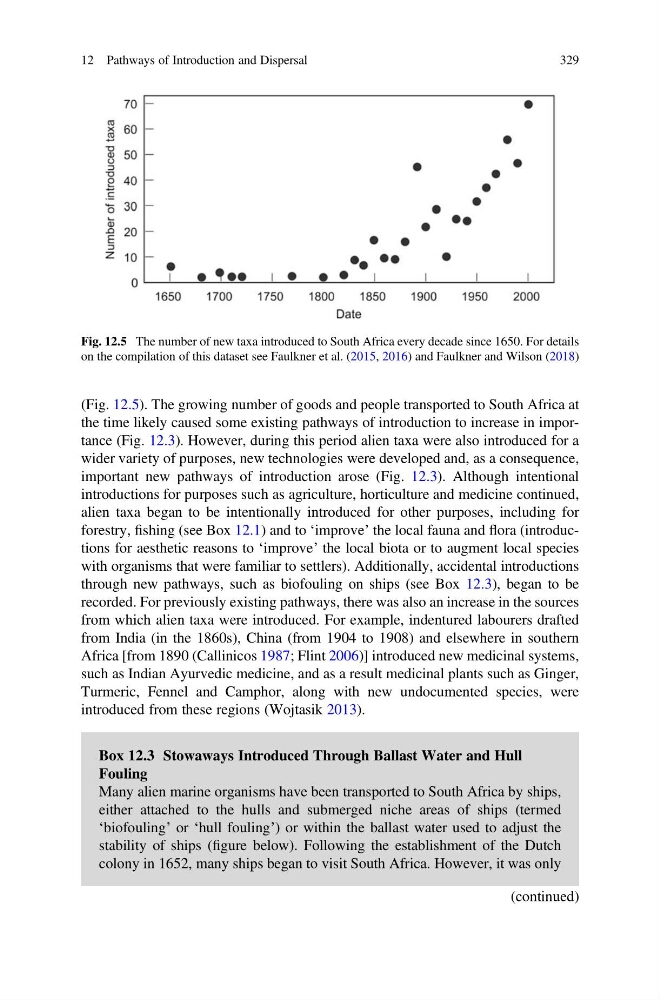
(Fig. 12.5). The growing number of goods and people transported to South Africa at
the time likely caused some existing pathways of introduction to increase in importance (Fig. 12.3). However, during this period alien taxa were also introduced for a
wider variety of purposes, new technologies were developed and, as a consequence,
important new pathways of introduction arose (Fig. 12.3). Although intentional
introductions for purposes such as agriculture, horticulture and medicine continued,
alien taxa began to be intentionally introduced for other purposes, including for
forestry, fishing (see Box 12.1) and to ‘improve’ the local fauna and flora (introductions for aesthetic reasons to ‘improve’ the local biota or to augment local species
with organisms that were familiar to settlers). Additionally, accidental introductions
through new pathways, such as biofouling on ships (see Box 12.3), began to be
recorded. For previously existing pathways, there was also an increase in the sources
from which alien taxa were introduced. For example, indentured labourers drafted
from India (in the 1860s), China (from 1904 to 1908) and elsewhere in southern
Africa [from 1890 (Callinicos 1987; Flint 2006)] introduced new medicinal systems,
such as Indian Ayurvedic medicine, and as a result medicinal plants such as Ginger,
Turmeric, Fennel and Camphor, along with new undocumented species, were
introduced from these regions (Wojtasik 2013).
Box 12.3 Stowaways Introduced Through Ballast Water and Hull
Fouling
Many alien marine organisms have been transported to South Africa by ships,
either attached to the hulls and submerged niche areas of ships (termed
‘biofouling’ or ‘hull fouling’) or within the ballast water used to adjust the
stability of ships (figure below). Following the establishment of the Dutch
colony in 1652, many ships began to visit South Africa. However, it was only
(continued)
Fig. 12.5 The number of new taxa introduced to South Africa every decade since 1650. For details
on the compilation of this dataset see Faulkner et al. (2015, 2016) and Faulkner and Wilson (2018)
12 Pathways of Introduction and Dispersal
329
the time likely caused some existing pathways of introduction to increase in importance (Fig. 12.3). However, during this period alien taxa were also introduced for a
wider variety of purposes, new technologies were developed and, as a consequence,
important new pathways of introduction arose (Fig. 12.3). Although intentional
introductions for purposes such as agriculture, horticulture and medicine continued,
alien taxa began to be intentionally introduced for other purposes, including for
forestry, fishing (see Box 12.1) and to ‘improve’ the local fauna and flora (introductions for aesthetic reasons to ‘improve’ the local biota or to augment local species
with organisms that were familiar to settlers). Additionally, accidental introductions
through new pathways, such as biofouling on ships (see Box 12.3), began to be
recorded. For previously existing pathways, there was also an increase in the sources
from which alien taxa were introduced. For example, indentured labourers drafted
from India (in the 1860s), China (from 1904 to 1908) and elsewhere in southern
Africa [from 1890 (Callinicos 1987; Flint 2006)] introduced new medicinal systems,
such as Indian Ayurvedic medicine, and as a result medicinal plants such as Ginger,
Turmeric, Fennel and Camphor, along with new undocumented species, were
introduced from these regions (Wojtasik 2013).
Box 12.3 Stowaways Introduced Through Ballast Water and Hull
Fouling
Many alien marine organisms have been transported to South Africa by ships,
either attached to the hulls and submerged niche areas of ships (termed
‘biofouling’ or ‘hull fouling’) or within the ballast water used to adjust the
stability of ships (figure below). Following the establishment of the Dutch
colony in 1652, many ships began to visit South Africa. However, it was only
(continued)
Fig. 12.5 The number of new taxa introduced to South Africa every decade since 1650. For details
on the compilation of this dataset see Faulkner et al. (2015, 2016) and Faulkner and Wilson (2018)
12 Pathways of Introduction and Dispersal
329