

harbour, in the Natal ecoregion, has received the highest number of international
vessels in recent times (Faulkner et al. 2017), demonstrating that vector strength
alone does not explain the observed numbers of alien species. In fact, relative similarity
of climate between donor and recipient regions may moderate invasion success of
arriving species (Ashton 2006). This has been highlighted in Saldanha Bay, where six
new alien species have been recorded since 2004, 50% of which come from Chile and
Peru (Peters and Robinson 2018). The temperate upwelling nature of that region very
closely matches the environmental conditions of Saldanha Bay (Branch and Griffiths
1988; Arntz et al. 1991), highlighting the importance of climatic matching in explaining
spatial invasion patterns.
9.4 Vectors Driving Marine Invasions
The vectors responsible for marine introductions to South Africa have changed
considerably through time (Faulkner et al. 2020, Chap. 12). Initially, wooden sailing
ships carried wood-boring and fouling species on their hulls, as well as species
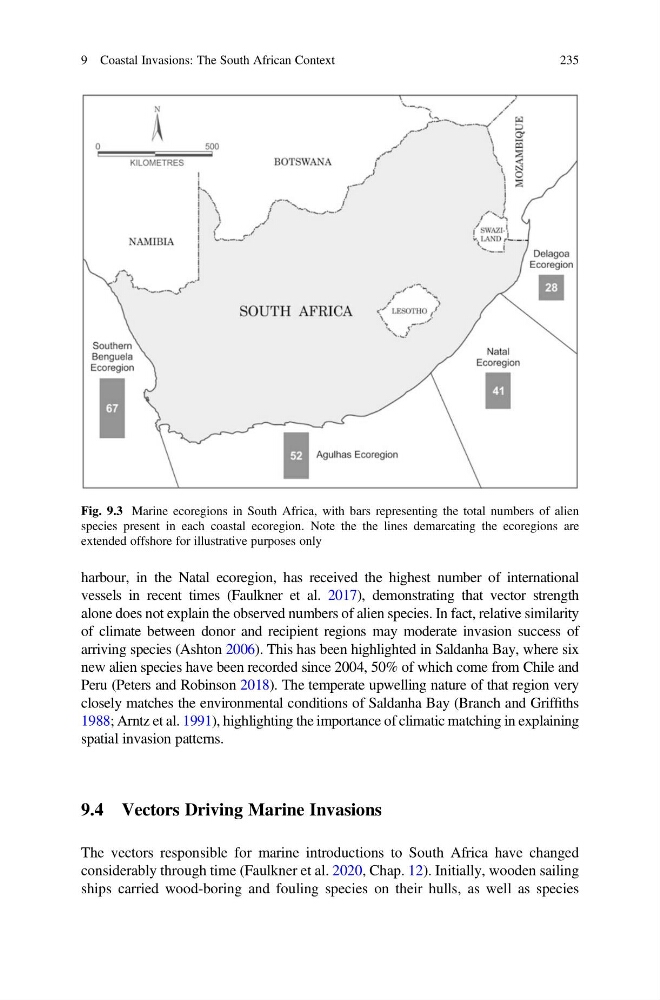
Fig. 9.3 Marine ecoregions in South Africa, with bars representing the total numbers of alien
species present in each coastal ecoregion. Note the the lines demarcating the ecoregions are
extended offshore for illustrative purposes only
9 Coastal Invasions: The South African Context
235
vessels in recent times (Faulkner et al. 2017), demonstrating that vector strength
alone does not explain the observed numbers of alien species. In fact, relative similarity
of climate between donor and recipient regions may moderate invasion success of
arriving species (Ashton 2006). This has been highlighted in Saldanha Bay, where six
new alien species have been recorded since 2004, 50% of which come from Chile and
Peru (Peters and Robinson 2018). The temperate upwelling nature of that region very
closely matches the environmental conditions of Saldanha Bay (Branch and Griffiths
1988; Arntz et al. 1991), highlighting the importance of climatic matching in explaining
spatial invasion patterns.
9.4 Vectors Driving Marine Invasions
The vectors responsible for marine introductions to South Africa have changed
considerably through time (Faulkner et al. 2020, Chap. 12). Initially, wooden sailing
ships carried wood-boring and fouling species on their hulls, as well as species
Fig. 9.3 Marine ecoregions in South Africa, with bars representing the total numbers of alien
species present in each coastal ecoregion. Note the the lines demarcating the ecoregions are
extended offshore for illustrative purposes only
9 Coastal Invasions: The South African Context
235