

ecology of invasions by animals and plants” (widely acknowledged as the first work
to focus scientific attention on biological invasions). The volume that resulted from
the symposium (Richardson 2011) brought together accounts by more than 50 international authors, and re-examined the origins, foundations, current dimensions and
potential trajectories of invasion science.
The CÁIÁB, led by Chown and Richardson, has boosted invasion science in
South Africa through research outputs and human capacity development, and it is
regarded as a model centre of excellence by its funders [for details see van Wilgen
et al. (2014); Richardson et al. 2020, Chap. 30]. Between 2004 and 2018, the CÁIÁB
generated over 1700 publications, which collectively have attracted over 42,000
citations with an h-index of 89 on Google Scholar as of mid-2019. During this
period, 125 honours, 128 masters, and 64 doctoral degrees have been awarded to
students based at the CÁIÁB, making an important contribution to building human
capacity in the field of biological invasions. Although the CÁIÁB had a stated
intention to carry out research into all aspects of invasion science (i.e. to go beyond
biology and ecology, and to address history, sociology, economics and management), its strength has always been in basic and applied ecology. It deliberately
avoided pursing research in the field of biological control, given the country’s
existing strengths in this areas. For example, the original proposal for the establishment of the CÁIÁB (Chown 2004) stated that “Some fields, such as biological control
. . . are well-funded from other sources . . . and do not form the major focus of the
work proposed here”. In addition, studies in the humanities have not featured
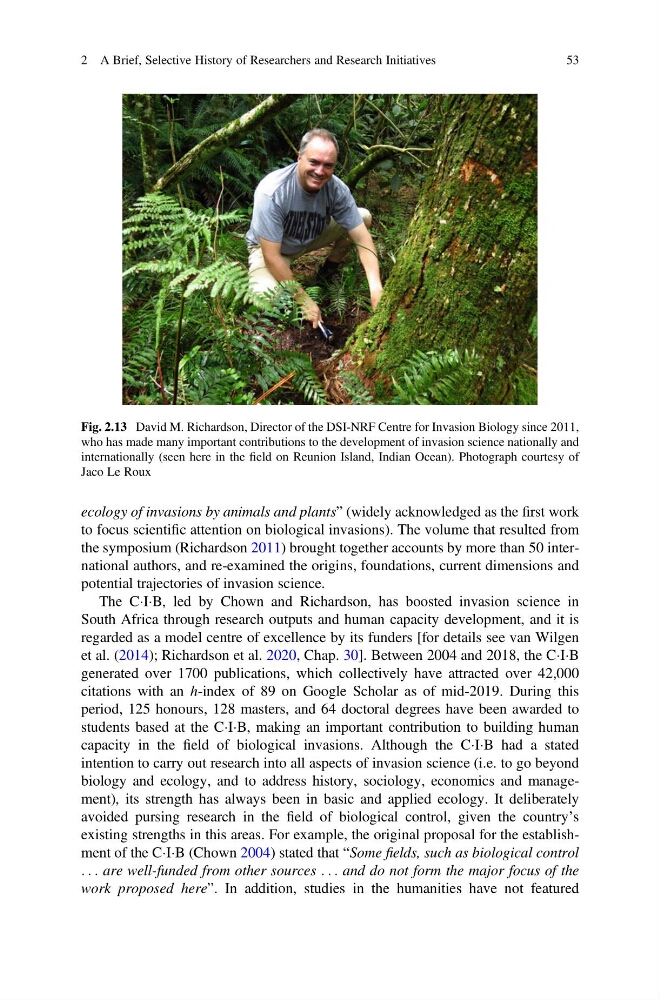
Fig. 2.13 David M. Richardson, Director of the DSI-NRF Centre for Invasion Biology since 2011,
who has made many important contributions to the development of invasion science nationally and
internationally (seen here in the field on Reunion Island, Indian Ocean). Photograph courtesy of
Jaco Le Roux
2 A Brief, Selective History of Researchers and Research Initiatives
53
to focus scientific attention on biological invasions). The volume that resulted from
the symposium (Richardson 2011) brought together accounts by more than 50 international authors, and re-examined the origins, foundations, current dimensions and
potential trajectories of invasion science.
The CÁIÁB, led by Chown and Richardson, has boosted invasion science in
South Africa through research outputs and human capacity development, and it is
regarded as a model centre of excellence by its funders [for details see van Wilgen
et al. (2014); Richardson et al. 2020, Chap. 30]. Between 2004 and 2018, the CÁIÁB
generated over 1700 publications, which collectively have attracted over 42,000
citations with an h-index of 89 on Google Scholar as of mid-2019. During this
period, 125 honours, 128 masters, and 64 doctoral degrees have been awarded to
students based at the CÁIÁB, making an important contribution to building human
capacity in the field of biological invasions. Although the CÁIÁB had a stated
intention to carry out research into all aspects of invasion science (i.e. to go beyond
biology and ecology, and to address history, sociology, economics and management), its strength has always been in basic and applied ecology. It deliberately
avoided pursing research in the field of biological control, given the country’s
existing strengths in this areas. For example, the original proposal for the establishment of the CÁIÁB (Chown 2004) stated that “Some fields, such as biological control
. . . are well-funded from other sources . . . and do not form the major focus of the
work proposed here”. In addition, studies in the humanities have not featured
Fig. 2.13 David M. Richardson, Director of the DSI-NRF Centre for Invasion Biology since 2011,
who has made many important contributions to the development of invasion science nationally and
internationally (seen here in the field on Reunion Island, Indian Ocean). Photograph courtesy of
Jaco Le Roux
2 A Brief, Selective History of Researchers and Research Initiatives
53