

10 Sesterterpenoids Found by a Genome-Based Approach
Recently, a genome-based approach to the search for novel sesterterpenoids has been
reported [126, 127]. As in a typical search for new natural products, researchers
extract mixtures of compounds from natural sources and search for new compounds
in the crude extracts. However, in the genome-based approach, investigators extract
the genomic DNA from such natural resources and perform genome sequencing.
From the obtained genomic data, a search is made for genes that could be involved in
sesterterpenoid biosynthesis. These genes are expressed inducibly utilizing genetic
engineering techniques. If the expressed genes are responsible for the formation of
unknown sesterterpenoids, then these new sesterterpenoids can be isolated. By
utilizing this approach, several new sesterterpenoids have been identified from
fungi, plants, and bacteria.
OPP
H
H
H
H
H
139
138
8
A
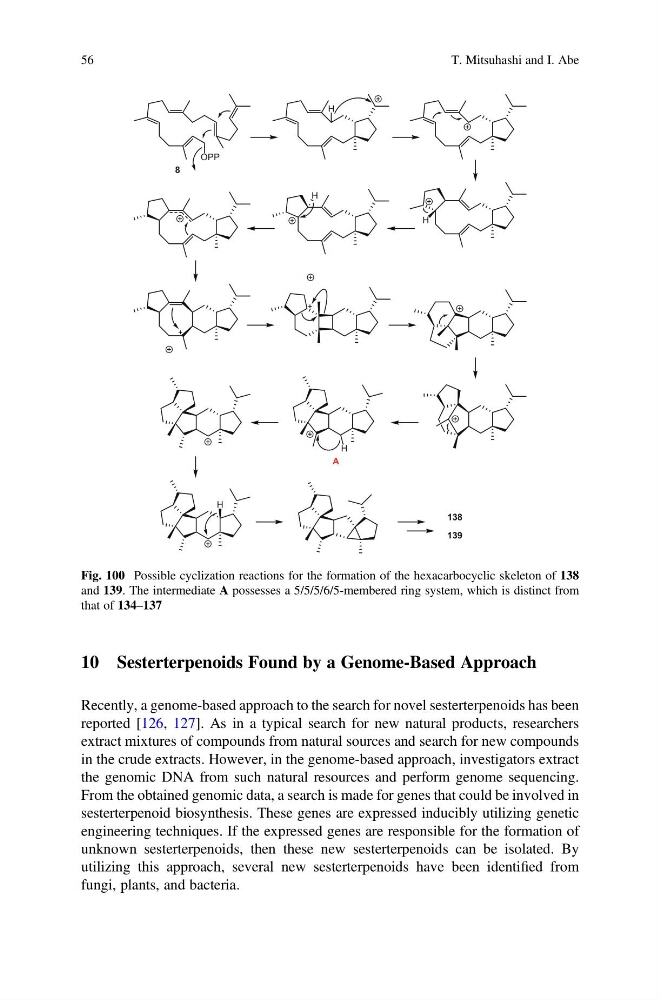
Fig. 100 Possible cyclization reactions for the formation of the hexacarbocyclic skeleton of 138
and 139. The intermediate A possesses a 5/5/5/6/5-membered ring system, which is distinct from
that of 134–137
56
T. Mitsuhashi and I. Abe
Recently, a genome-based approach to the search for novel sesterterpenoids has been
reported [126, 127]. As in a typical search for new natural products, researchers
extract mixtures of compounds from natural sources and search for new compounds
in the crude extracts. However, in the genome-based approach, investigators extract
the genomic DNA from such natural resources and perform genome sequencing.
From the obtained genomic data, a search is made for genes that could be involved in
sesterterpenoid biosynthesis. These genes are expressed inducibly utilizing genetic
engineering techniques. If the expressed genes are responsible for the formation of
unknown sesterterpenoids, then these new sesterterpenoids can be isolated. By
utilizing this approach, several new sesterterpenoids have been identified from
fungi, plants, and bacteria.
OPP
H
H
H
H
H
139
138
8
A
Fig. 100 Possible cyclization reactions for the formation of the hexacarbocyclic skeleton of 138
and 139. The intermediate A possesses a 5/5/5/6/5-membered ring system, which is distinct from
that of 134–137
56
T. Mitsuhashi and I. Abe